I think what people are most concerned about is the August CPI data that will be released at 8:30 this evening. In fact, there isn't much to discuss about the CPI itself this time. The probability of falling below the pre-CPI value is very high, but it's not that falling below the pre-CPI value is good. In fact, as many small partners know, the value of the CPI value is not so important. What is important is that the Federal Reserve will choose to raise interest rates after obtaining the CPI value. Since I have to play the data in the evening, I will share my own very personal views. The first is the CPI forecast data, which currently ranges from 8.2% to 8.1%. And from the actual situation, the gap between the data that should be released and the data that should be released will not be very large. Then I will divide the data into two possibilities. One is more than 8%, which is in line with the present probability, and the other is less than 8%, which is relatively unlikely. The reason for this is that inflation dropped from 9.1% to 8.5% from its June high the previous July, and since then, both the Fed and the White House have considered the decline to be good, with the Fed even stating several times that the reduction should be good, meaning that a 0.6% reduction in the consumer price index would be good for the Fed, so I personally think a 0.5% reduction would be desirable.
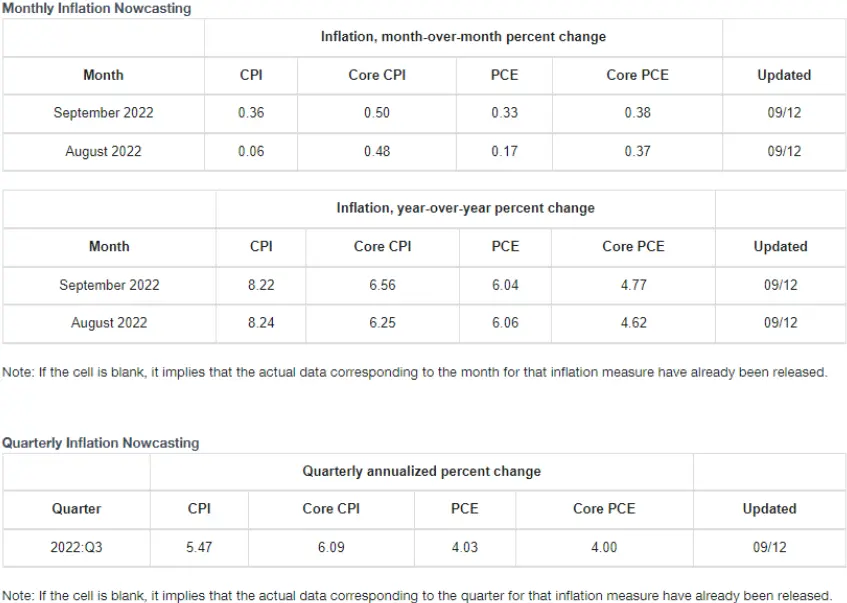
The reason for analyzing the data is that the Fed has given no rebuttal to the Fed's long-held insistence that it will raise interest rates by 75 basis points in September, which has been interpreted as a tacit acknowledgment that three consecutive 75 basis points are not only a blow to US finances, but also to jobs and public sentiment, which is why the Fed has not publicly opposed it, but it has not agreed unanimously. This is why Powell has been stressing that the Fed's decision is based on data execution, which can be seen from this fact that although there is a strong possibility within the Fed that it raised interest rates by 75 basis points in September, this does not preclude the Fed from opting for a 50 basis-point increase if the CPI data drop is larger than they expected. And the other, more important data is the federal funds rate at the end of the year, which is what I call the terminal rate. I tweeted earlier about the Fed's choice of three ways to raise rates at the end of the day, and what that might mean for risk markets, and for interested and unseen cohorts to look at, it basically covered about 95% of what could happen. In this tweet, the importance of the terminal interest rate was also highlighted. After all, even a 75 increase in interest rates would have a time-bound impact. What happens after the 75% rate increase is what investors value most right now. Therefore, I personally think that when CPI is below 8%, it opens up the possibility of the worst coordination within the Fed. Especially if the core CPI is also flat or falling, the disagreement within the Fed will spread even more, and even if the doves agree to raise rates by 75 basis points, the year-end terminal rate will not necessarily have to be strong enough to get to 4%. If the CPI is only above 8%, the Fed does tend to prefer a 75-basis-point rate increase as a result, and it should be reassured that the terminal rate could rise to 4%. For, prior to June, Powell and a group of Fed officials had repeatedly affirmed that the 2022 goal was to keep inflation below 4%, but now there are up to four more chances for rate hikes in 2022, including an additional October meeting.
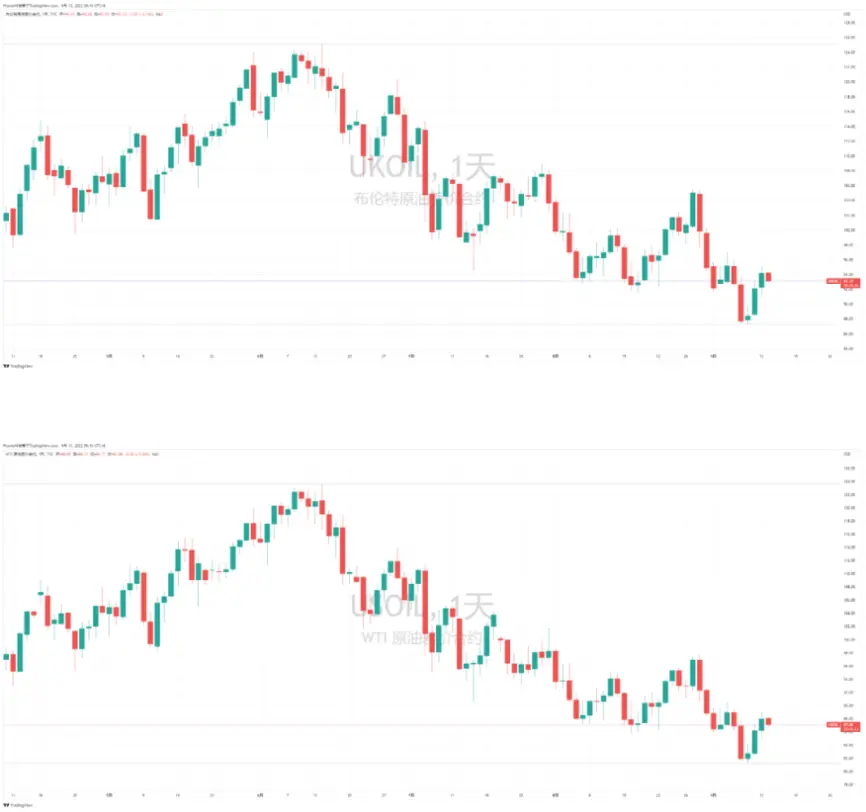
It is also the number of CPIs that occur up to four times. The Federal Reserve will be able to keep the CPI at about 4% only if each CPI is reduced by 1%. But a 1% reduction is really too difficult, especially now that it is clear that oil and used cars tend to fall, and that oil bounces back when it hits about $80 a time. It is not yet known whether it will still be able to provide a CPI reduction of nearly 0.4% after September.
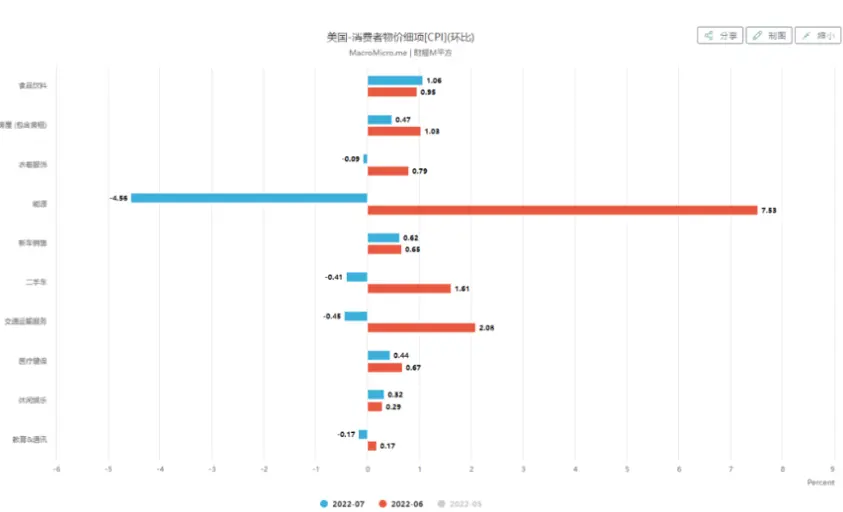
(CPI per $10 decline in oil prices is about 0.4%) In fact, from now on, if the oil supply chain cannot be solved, 80 US dollars is probably the bottom of oil in the near future, chip supply will be up, used car prices will be down, and new car prices should also be down. But housing and services have not improved so much. It is estimated that it will be difficult to make up for the 1% drop in CPI after oil prices have stabilized in the short term, so it is too difficult to make up for the 1% drop. That is why the Fed is signaling to the markets that it will not cut interest rates in 2023, rather than say what inflation will be at the end of the year. Because even at a 0.5% rate, a year from now it will be no more than 2.5% today. If it is less than 2%, that would be two more months. That would be a 0.5% rate every month when September and October, especially October, might not be so easy. Even a staged CPI rally is not impossible. Of course, this should be after the mid-term elections. So from the analysis above, it can be generally confirmed that as long as the CPI data is released this evening, there will be no small possibility that the risk market will usher in a wave of increases if the CPI data is released. The magnitude of the increase is proportional to the value of the CPI decrease, and the more the decrease, the higher the increase. (Not available for billing) But if the magnitude of the decline is unsatisfactory - no more than 0.5%, and even if the core CPI is rising as expected - then the possibility that the increase could be followed by a fall cannot be ruled out, and the timing and magnitude of the decline depends on the data and interpretation at the time, including statements by the Fed and the White House following the CPI data. Remember that this is not something that will happen immediately, or even likely not. This is not and will not result in overly dramatic price changes, but rather in volatile trends, with larger changes still to be announced in the evening CPI, so again, deleveraging, high leverage in any direction, is likely to produce losses. Of course, more small partners are more concerned about the trend of the BTC and ETH. According to the current situation, we are prepared to say that if CPI can drive the Federal Reserve to lower interest rates, then everything will be fine. And if both the rate increase and the terminal interest rates are not optimistic, then the development of the currency market still depends on the accumulation of external funds. If the accumulation is sufficient, it may not be able to get out of an independent market which is different from the US stock market.
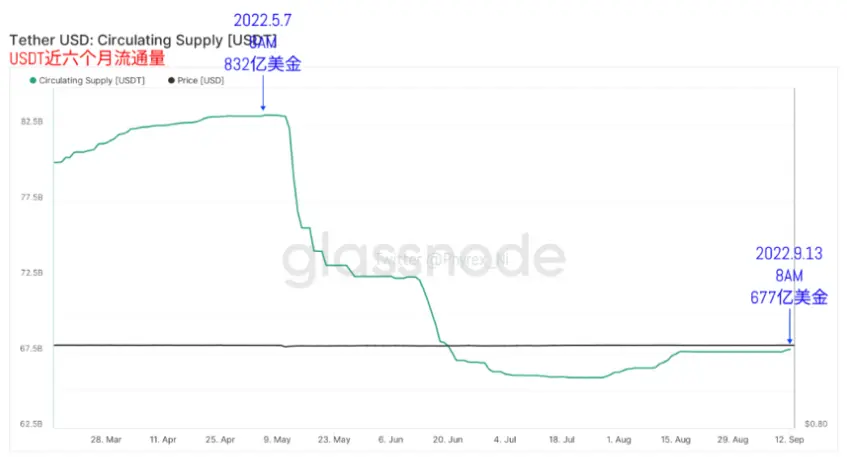
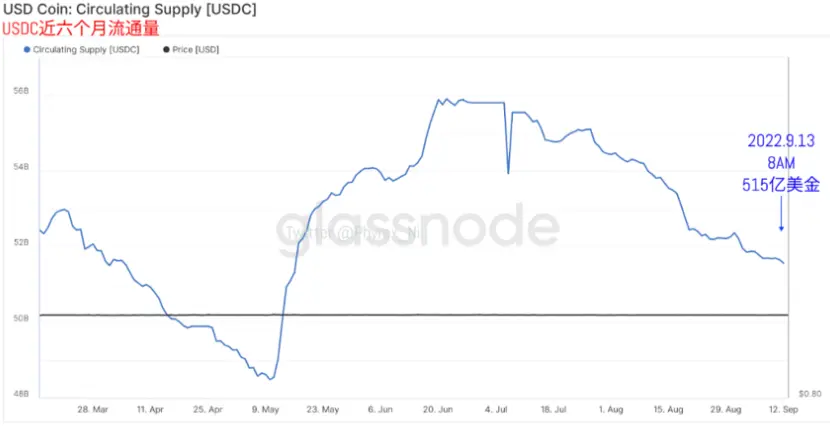
Judging from the changes in the market value of USDT, there has been a slight change today, but the change value is still relatively low. This also represents that the major funds in Asia and Europe are not afraid to enter the market before the situation becomes clear. USDC, which has been in a downward spiral, according to the data up to 8:00 a.m. this morning, the trend is not optimistic. The market value has still dropped by nearly 100 million US dollars, which also means that the domestic funds are gradually withdrawing from the currency market.
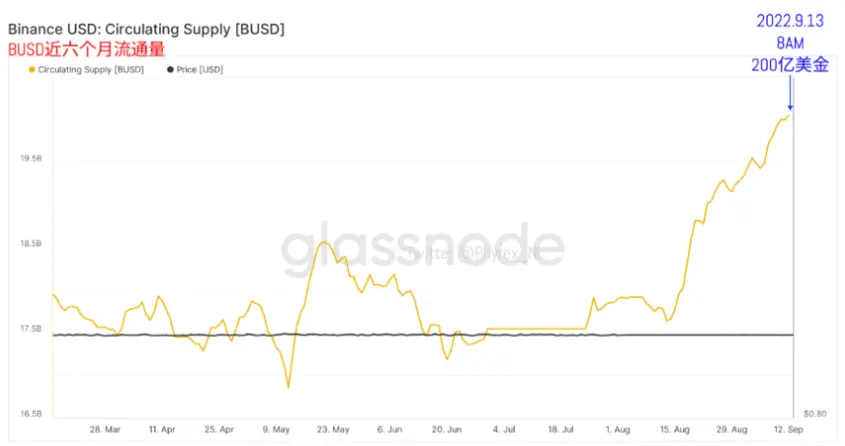
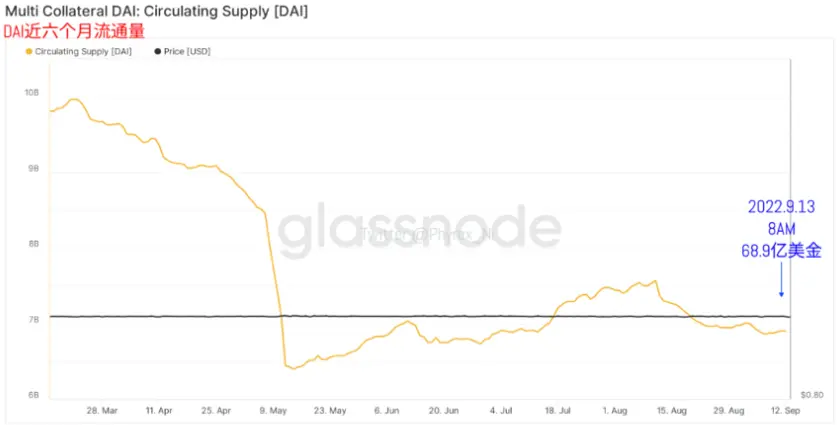
And BUSD, which has a market value of more than 20 billion dollars, has been doing very well lately, and again as of 8 a.m. this morning, you can see that BUSD's market value is continuing to grow, and it's still showing that external money is going into the money market through BUSD, and that's a good trend. And as the ETH merger approached, DAI's market value remained in a small, volatile decline, losing about $5 million.
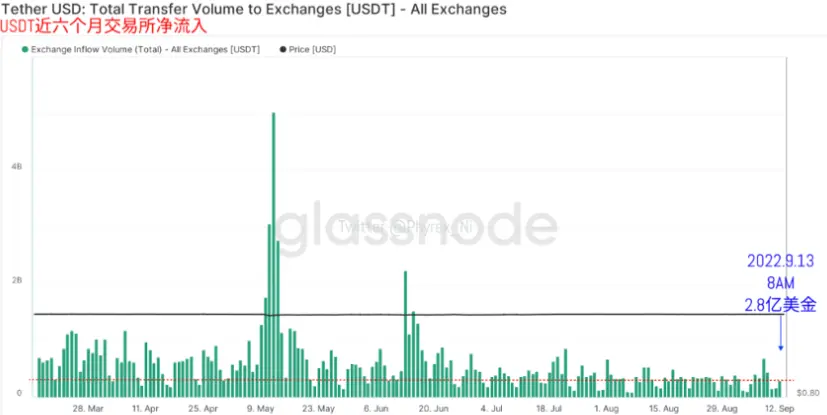
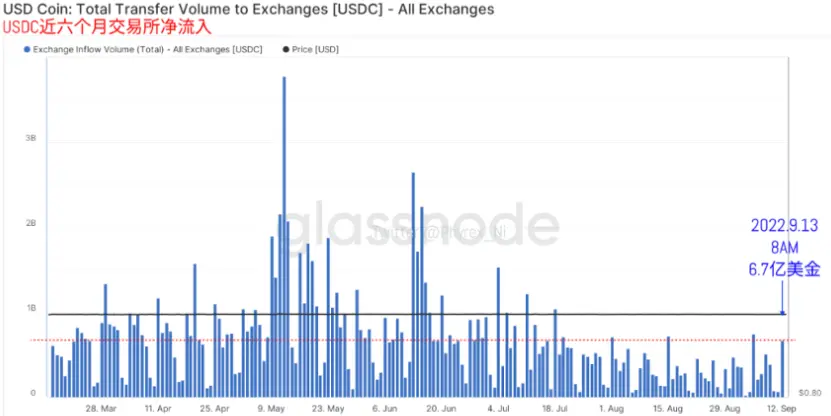
So looking at the overall market value of the stable currency, in the absence of CPI announcement, the overall trend of a stable upward trend has been almost maintained. Although the daily growth rate is still very low, it can still maintain an optimistic attitude. And to cut to 8 a.m. this morning, USDT and USDC to the exchanges are still at more normal levels of volatility, and that is only very low relative to recent times. From the overall situation, the BTC and ETH price fluctuation is frequent in the early morning, which is highly consistent with the BTC and ETH holdings and price changes in the three time zones in Asia, Europe and the United States issued yesterday. But now that it is in the Asian timezone, there may be a periodic price rebound as the shift to the European timezone follows.
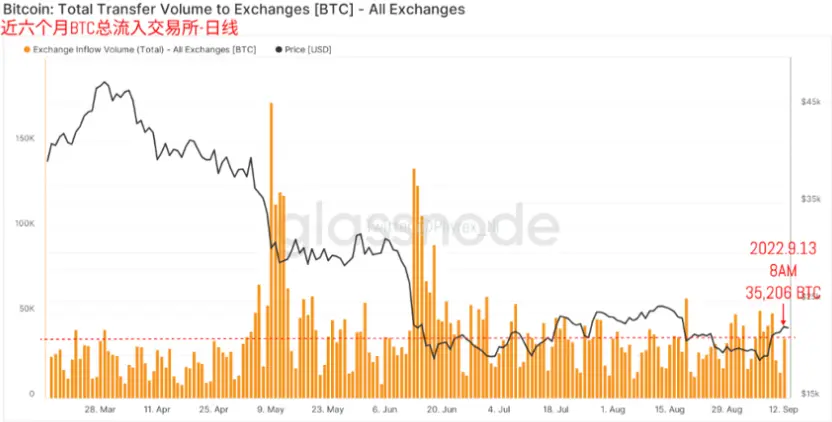
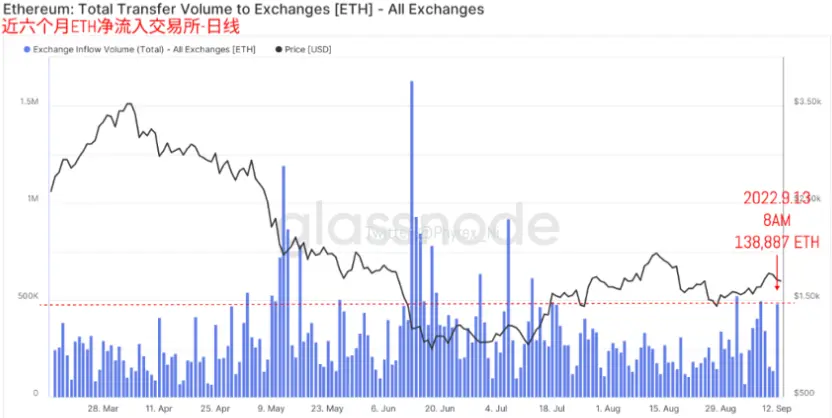
Looking at the overall selling pressure on BTC and ETH, both the number of BTC and ETH transfers to exchanges increased substantially over the same period, primarily because the announcement of the CPI this evening will cause many short-term holders and investors with little understanding of the macro to move their chips early to exchanges, in preparation for an immediate exit should prices collapse, as is normal.
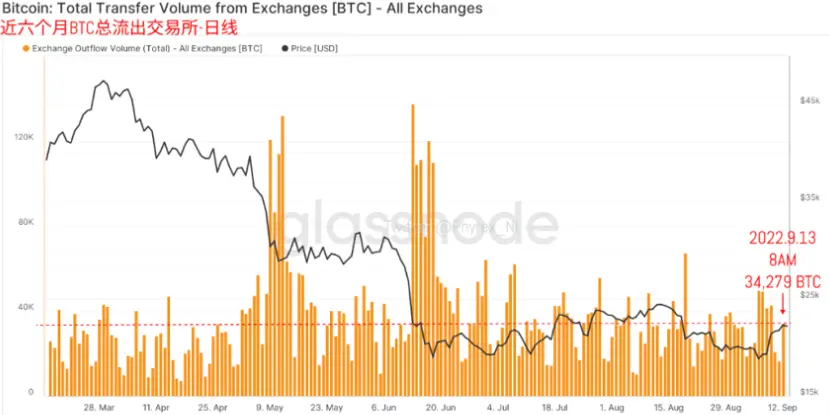
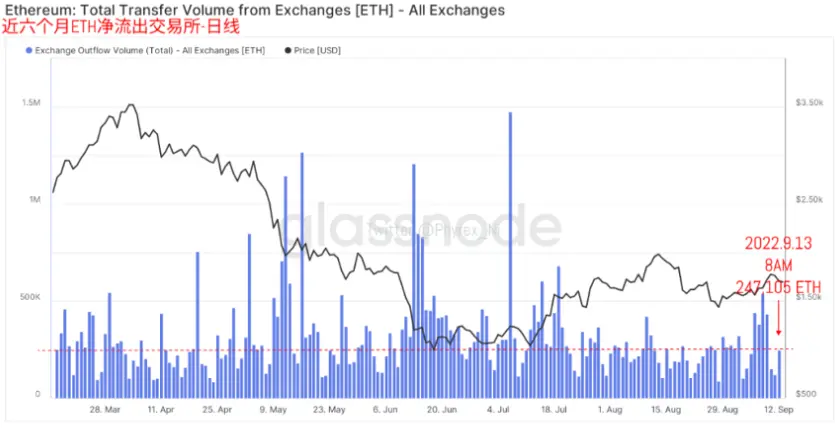
The corresponding exchange withdrawal data is not so ideal, especially for BTC, although the price is still relatively firm, there are still more chips or stranded on the exchange actively or passively due to the emotion, and ETH, though the same is true, is far behind the BTC in the amount of transfers, more chips remain on the exchange, but some of the chips should return to their wallets as the merger approaches.
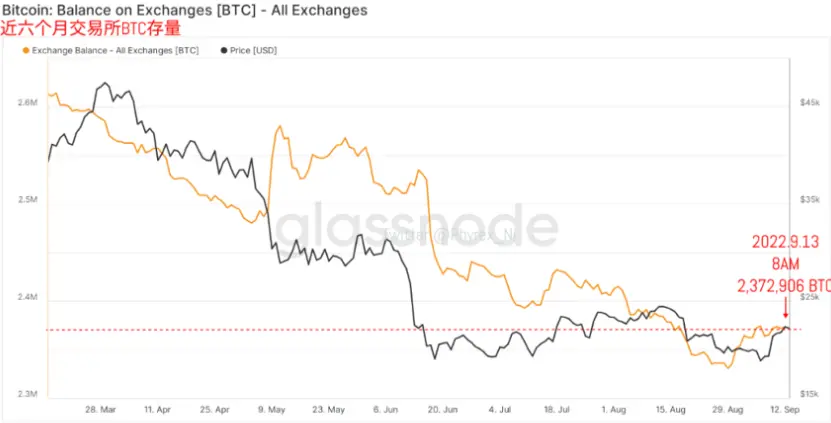
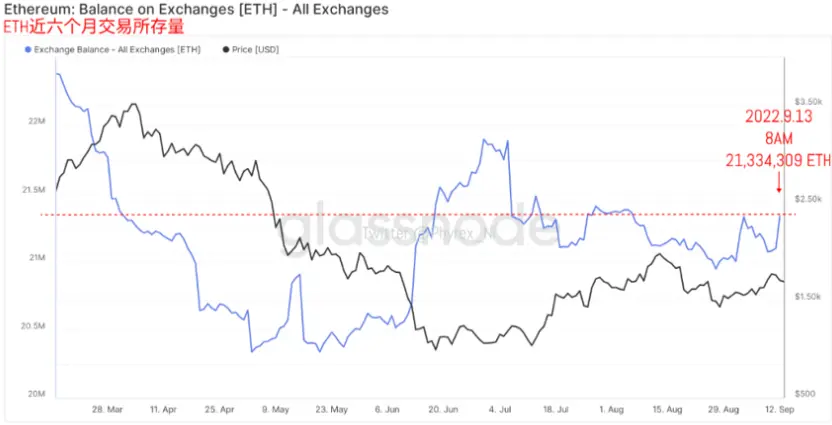
The stock of BTC and ETH in the Exchange is also a good example of this problem. Although the stock levels of both are higher now, they are still at a low point based on four years' data, but they can't be used as a basis for measuring price, only from the perspective of long-term holders, who are bound to target 2024 if prices continue to decline. From the BTC's long-term holdings data, it can be seen that long-term holdings with no circulation for more than 155 days continue to increase, so far the total volume of circulation has again returned to above 71%, up 0.04% from the same period yesterday. The BTCs, which miners own, fell slightly, but only by more than 100, which is modest compared with the stock of more than 1.83 million. But it also represents a continuing decline in liquidity. On the emotional side, the BTC and ETH are still taking a different view from the pressures that will be announced. BTC, while also slightly bearish, remains objective. The ETH is even more bearish because of its early-morning decline, which is also because the price of ETH has reached its peak. There's nothing evaluable about that. Just be safe All in all, the evening's release of CPI data, while not as decisive as next week's rate increase, must not be overlooked. This is certainly the biggest reason the Fed measured it. Even now, the upward trend seems to be holding up. But if we look at the futures after the close, it looks like a downward path has been opened. The most important thing is what happened an hour before the opening of trading at night.




