Current Summary:
Look out to see if the extreme moves will happen early. At 7:30 a.m., despite the continuous decline, prices show signs of stabilizing for the time being. I don't know if it can continue. On the other hand, after the struggles of the last day of U.S. stocks, the S&P 500 still failed to make it to 4,300. If the current moves are more negative, according to U.S. stock market commentators, there will also be more short positions betting against U.S. stocks. The dollar index, meanwhile, continues to rise with volatility. It has now passed 108, the last point away from its all-time high. The main reason for the DXY's rise is also the euro's depreciation, especially the higher-than-expected inflation in the euro area, and the forecast that US interest-rate hikes will continue to raise the value of the dollar, causing the euro to fall against the dollar, which is likely to continue to decline if the Fed does not move to plan.
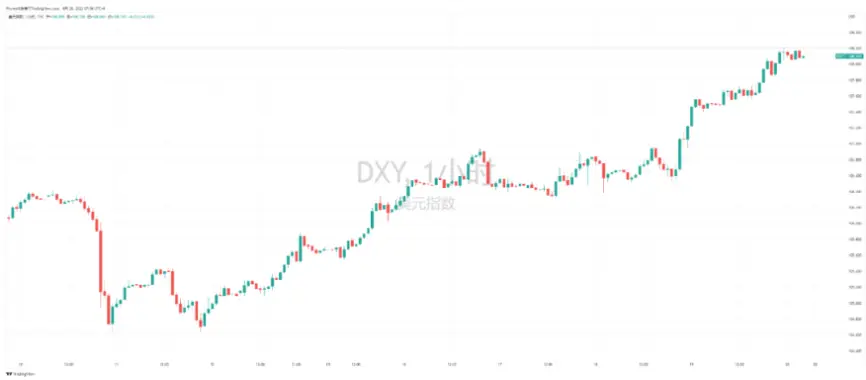
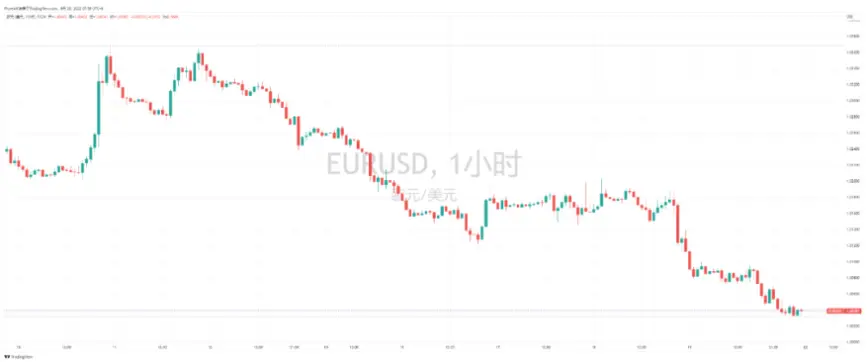
That means that a peak in the dollar is not possible, and the euro's decline against the dollar is likely to continue next week. It is far from certain that, in anticipation of the euro's depreciation, the eurozone will shift its focus to digital currencies during the two-day pause. After all, there will be insufficient appetite for euro-denominated products and the closing of US stocks and bonds over the weekend should the euro's purchasing power decline. So the first step is to see if the currency market will continue to fall over the weekend. That is, the dynamics of the Asian time zone, whether there will be a market breakdown or a bottom-fishing for falling prices. Previously, there was more attention paid to ETH consolidation and hard bifurcations. There have also been larger ETH purchases in the Asian time zone. And this choice of chips and investors largely determines whether a smooth transition can be made today.
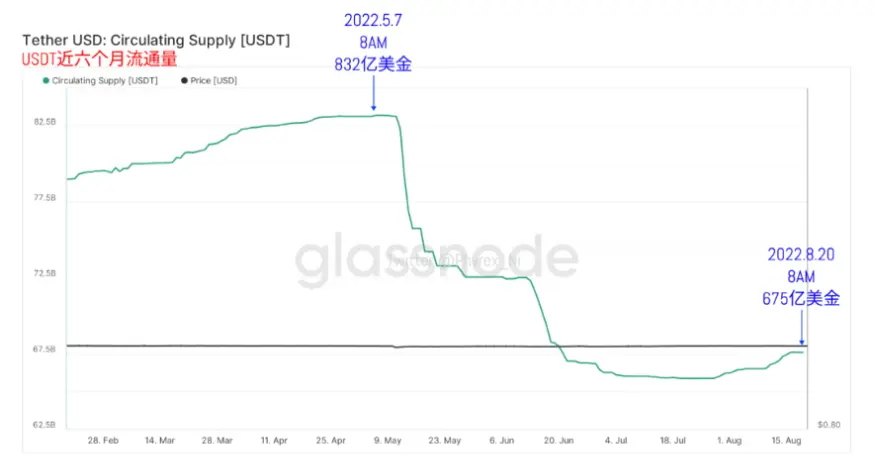
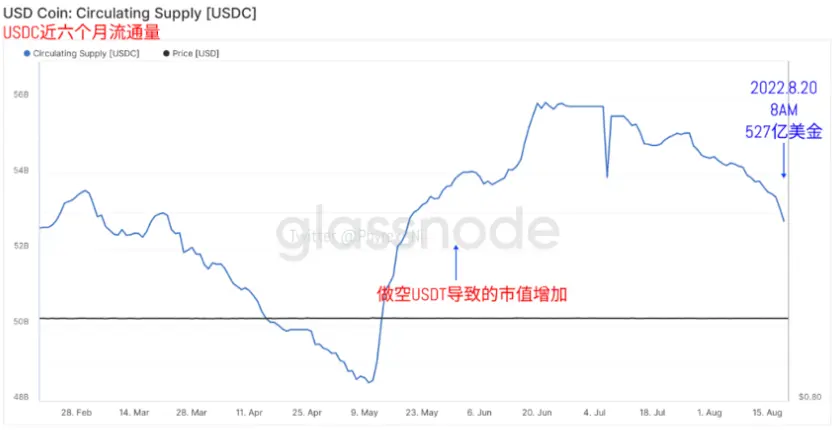
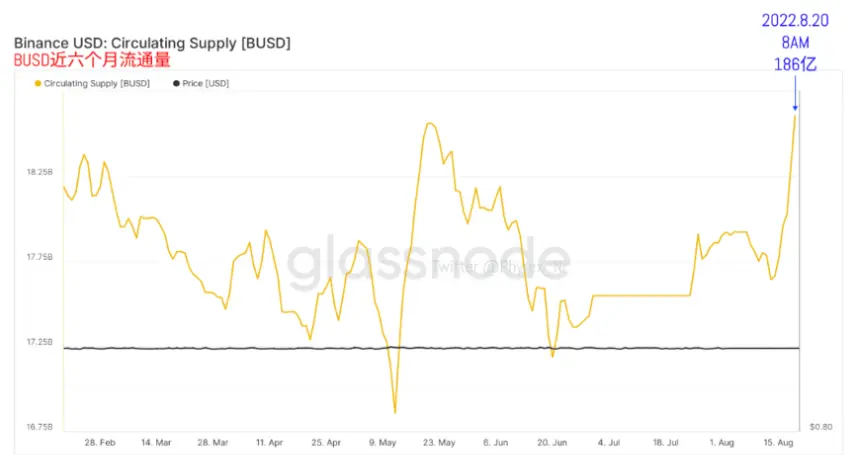
The dollar index continues to rise, the value of the dollar continues to rise, and once again, the value of dollar holdings and dollar assets hit risk markets. From the market value of the stablecoin as of 8 a.m. this morning, USDT's market value has been slightly reduced by $10 million for three days in a row, while USDC's has continued to fall sharply, directly reducing $340 million, most likely due to the rise in DXY and the USDC lockdowns. But as USDC's market value continued to decline, BUSD's market value rose dramatically, and today it's up $300 million. That hasn't offset the declines in USDT and USDC, but it shows that a lot of money is changing shape, not just leaving. In the last week, USDC sold down $1.05 billion and BUSD increased its holdings by $950 million, while even USDT increased its holdings by $650 million, so the total amount of funds increased. This is also thanks to Pony. I've been reminded of the BUSD issue for the last two days. The shift in sentiment from USDC to BUSD should be more likely because USDC's ban on Tornado Cash has encouraged more investors to think that holding USDC is riskier than holding BUSD, thereby choosing a similarly compliant, equally 1:1-endorsed SAFE, but this trend has not affected the exchange-rate spread between stable currencies.
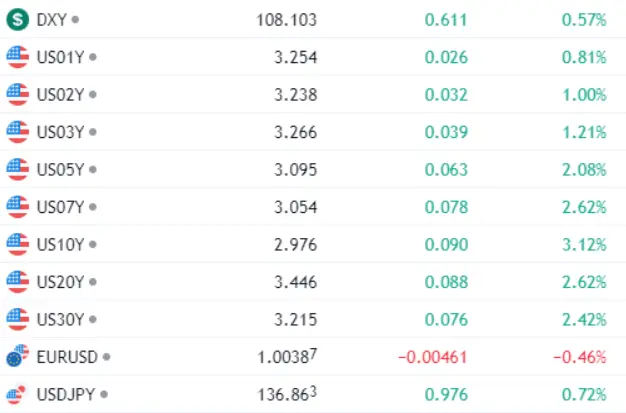
From the performance before the U.S. bond market closed, although the overall trend of the bond market is still in a state of rising colonial interest rates, but there has been a downward trend from yesterday's high. With the decline in the stock market, there are more signs of capital returning to U.S. bonds. Even the inversion of the two-year and ten-year U.S. bond yields have been greatly alleviated. The current interest rate differential has been less than 25 basis points. The bond market has begun to expect the Federal Reserve to raise interest rates.
As of 8:00 this morning, the BTC position price distribution, from the US stock opened last night to the current BTC chain address change data, it can be clearly seen that although the total BTC volatility is reducing holdings, the falling prices still caused panic situation from various price levels. From the extreme prices on both sides, the ancient position chips have experienced a large selling, more than 1,500 BTC units have undergone address change. This is more than three times the previous weekend's figures, with more than 1,000 BTCs out of the market at a cost of around $10,000, and a closer 1,100 BTCs in the high-priced holdout, and a more fragmented price picture that looks more like a direct sell-off by users. This is one of the symptoms of panic, but because the extreme price movements on both sides are not too dramatic, it is not too much of a panic just yet. The overall loss-making chips above the $25,000 mark have also increased significantly, and the increase has exceeded yesterday evening's data, with more than 13,500 BTCs sold, but more than 7,300 of those around $44,000 are one-off sales, which is not user behavior, but more like exchanges' hot and cold wallets, so the overall loss-making chips from the current situation, while improving the sales.
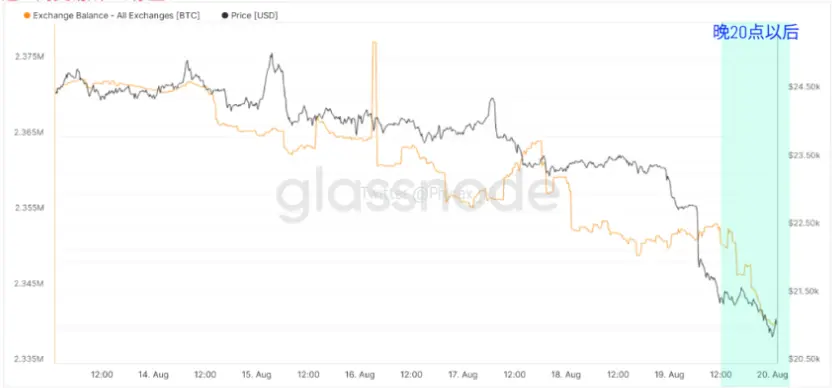
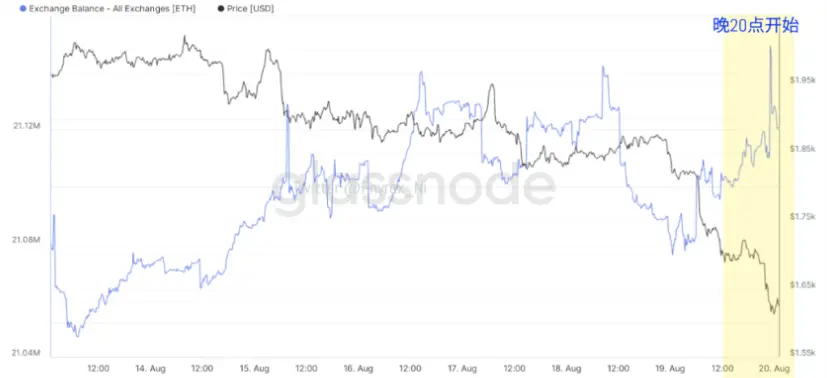
However, the increase is not very large. Judging from the current data, the possibility of causing a panic before 8 a.m. is not very strong. Especially from the stock of the BTC and ETH exchanges, the BTC is better and in a state of continuous decline. Although the stock of ETH is relatively large, there are also a large number of underholdings. It is 11:30 pm now, after four hours since I started to look at the market. The price is still volatile and even has a slight upward trend. However, it is still not certain that the mentality of Asian investors. As it has already entered the state of the weekend, the main funds and the selling pressure of the main forces have gradually started to leave the market. It has returned to the state that a small amount of funds can pull the market, and a small amount of chips can smash the market. The rest is whether the current mood can be stabilized. But on the macro-emotional side, there has not been a big change in itself, so the likelihood of a big change is relatively low.





