Risk market sentiment has been hit hardest by the U.S. dollar index breaking new highs every day. The U.S. dollar index broke new DXY highs three times in a row on three days. All this meant further distancing investors from risk markets. The main reason for the U.S. dollar index's rise is still the expectation of rising inflation in Europe and energy problems. More importantly, it is not known whether the U.S. dollar index will break new highs and break new highs several times before the Euro zone rate hike.
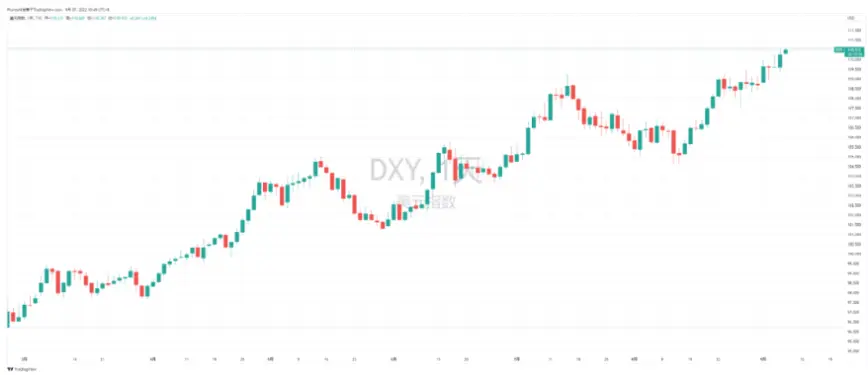
But the current probability is not too low. The new high of USD index shows that investors would prefer to hold dollar or its equivalent assets such as US Treasuries. However, judging from the current US Treasury situation, except for a month's worth of short-term US Treasuries specifically purchased, all maturities of US Treasuries are on the trend of capital flight, which indicates that investors' pessimism about the US economy has increased significantly at present.
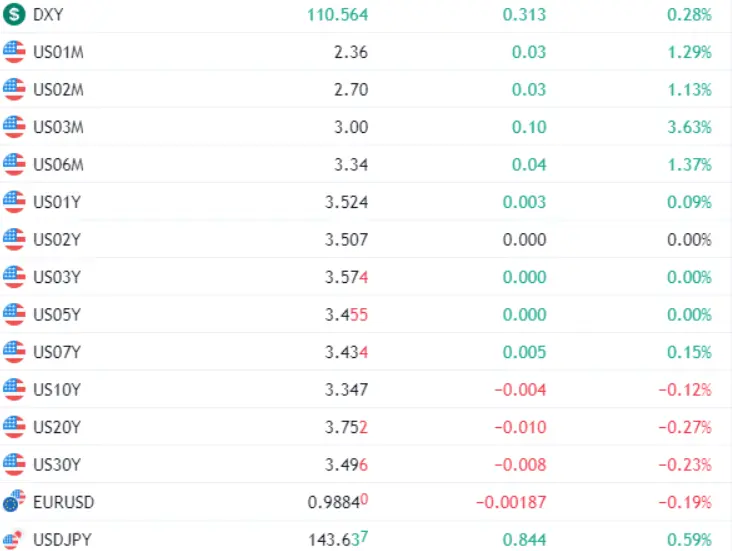
More investors and even institutions are only willing to hold U.S. dollar cash, even short-term U.S. debt, of course, this also represents two different possibilities, first of all, cash is the easiest to enter into various markets, including U.S. debt, risk markets, non-ferrous metals, etc., and if there is an extreme economic situation, cash is enough to cope with the daily expenses, so holding U.S. dollars can also be seen as a wait-and-see to the risk market. I also talked with some teachers about the situation of U.S. Treasury bonds, and found that indeed everyone is also more confused, let alone say that the same exchange rate, namely, the lower exchange rate will be rushed in July last year, and will only continue to push up in September, even investors who are prepared to short U.S. Treasury bonds are in a very passive situation, and a large number of U.S. Treasury bonds being sold could lead to the gradual decline of liquidity in the secondary market of U.S. Treasury bonds. The short-term focus here is on the Fed raising interest rates in September. Although the 75-basis-point probability of a Fed rate hike is currently projected to reach 72%, the Fed will ultimately have to rely on the CPI data to make its own estimates of September's CPI, in addition to the August CPI. In particular, both the United States and Europe are facing an energy crisis, and both oil and gas prices are causing inflation to stall
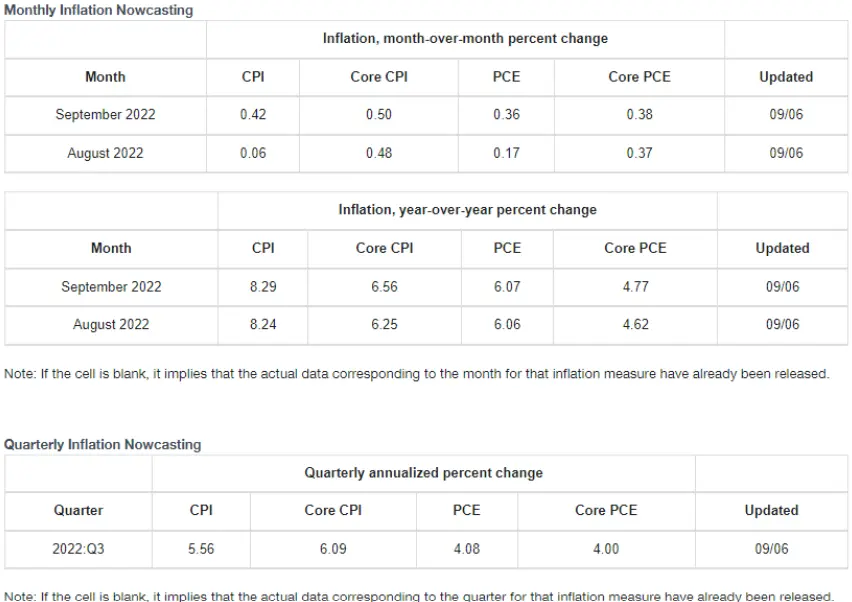
In particular, as things stand, the oil price in September not only didn't fall, but also rose in the first week of September compared with August. This means that if September's CPI wants to continue falling, it will have to fall even more steeply. Otherwise, even if August's CPI has come down, the Fed will probably raise interest rates by 75 basis points, which is the biggest headache.
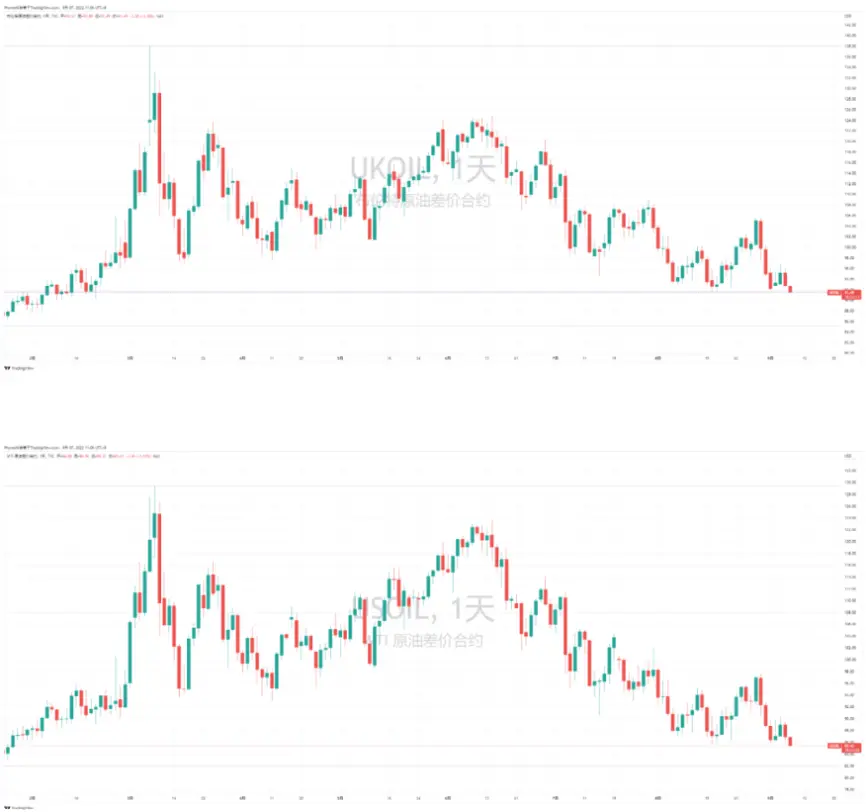
Better still, judging from today's data, both oil prices are once again trending downward in anticipation of a recession. In particular, WTI is now at its lowest level since 2022, and Brent oil is at its lowest level for almost half a year. It is not impossible to flatten the first-week increase at that rate, given that oil prices are now one of the most disinflationary forces on the agenda. But after all, these are the expectations. Before the release of the August CPI data on September 13, the overall macro sentiment will not change too much. Even if the NPI fell at 00:00 a.m. this morning, leading to the declines of both BTC and ETH, the overall volatility may not be considered a change of market sentiment. After all, there is no trend to change the macro level, and even the futures prices of natural gas are falling in the fatal energy crisis in Europe and the United States. I also know that the small partners will pay more attention to the ups and downs of the BTC and the ETH, especially as the downturn is emotionally heavy and has not occurred in Asia for a long time. It is also the case that today's follow-ups in Asia are happening, which means that panic is already on the rise, and many investors are beginning to wonder if there is a big macro-emotional bear event at the moment. But, to be honest, despite the headwinds, the focus of the game remains on raising interest rates.
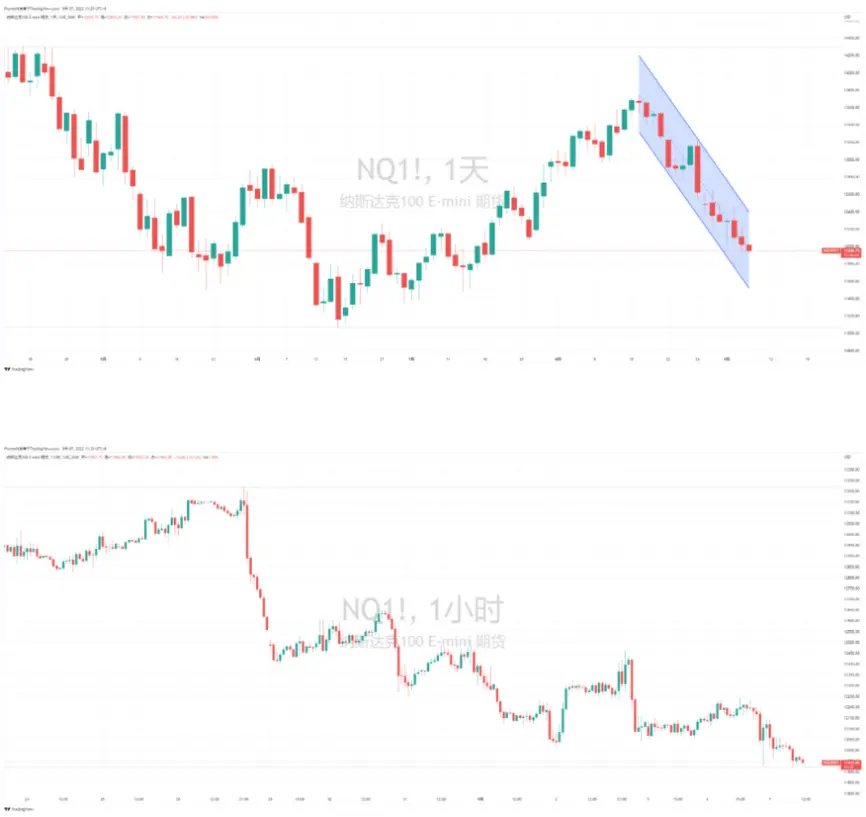
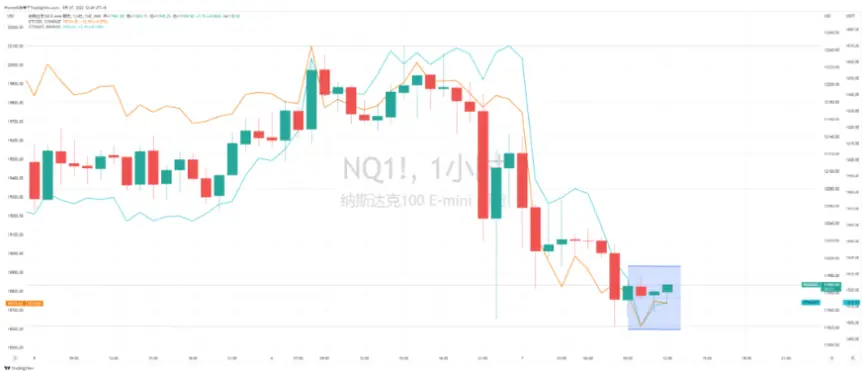
The BTC and ETH, in particular, are moving more in the direction of the Nasdaq, which has recently been pushed lower by the ongoing energy crisis and the expected decline in the economy. And if you switch to the hourly data, it is clear that from August 26 onwards there have indeed been several times that Nasdaq futures have led declines since 1am, interested in comparing for yourself in tradingview.
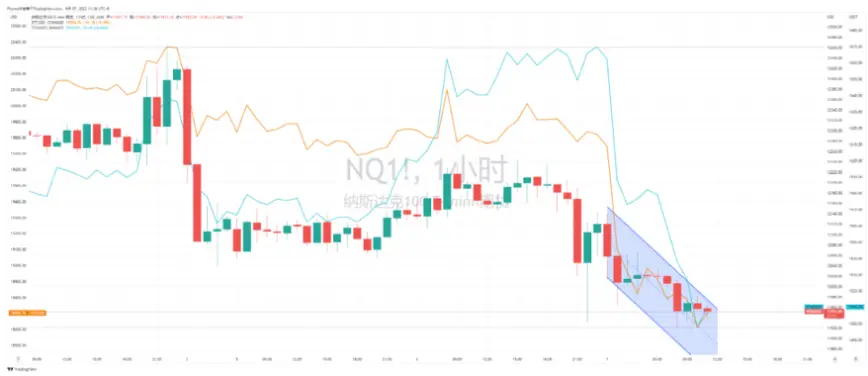
Many of the other small partners also thought that the BTC and ETH's fall was a rout by the dealer or a rout by the beneficiary of ETH. But in fact, if we overlap the movement of the index futures and BTC and ETH in the hourly level, we can clearly find that the index is the main reason for the BTC and ETH to fall, and the movement of BTC and ETH futures is highly overlapping (yellow line). Therefore, although it can not be ruled out that this is a premeditated selling behavior at the macro level, it can be seen that this is a linkage, that is to say, it is indeed possible that a multi-position investor (institution) could not bear the pressure of continuous downward volatility and chose to smash the market away, but it cannot be judged that it is a single main force of the currency market to carry out the so-called multi-harvest or induced air explosion and so on. And the losses for the Nasdaq and the money market are not very large. More simply because of the fermentation of sentiment in the currency market, given that prices have been volatile for so long, there are so many BTCs accumulating between $19,000 and $20,000, that it really amplifies the effect when there is a panic. But the overall macro picture is that the game has not been played, and the September outcome has not yet been seen, so the overall macro mood has not fundamentally changed.
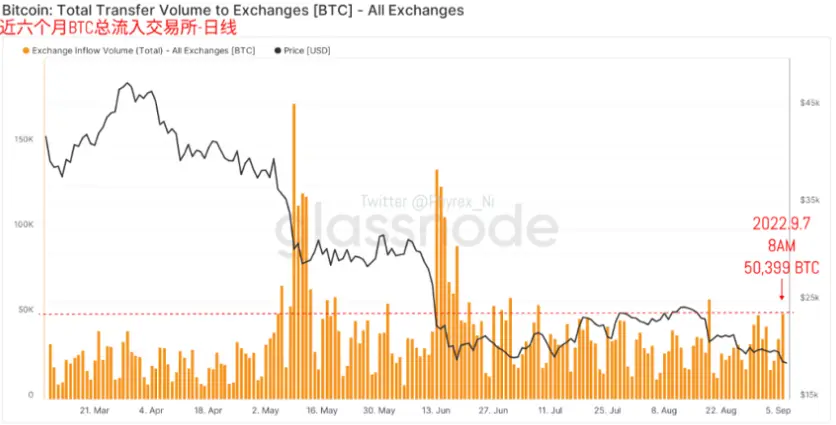
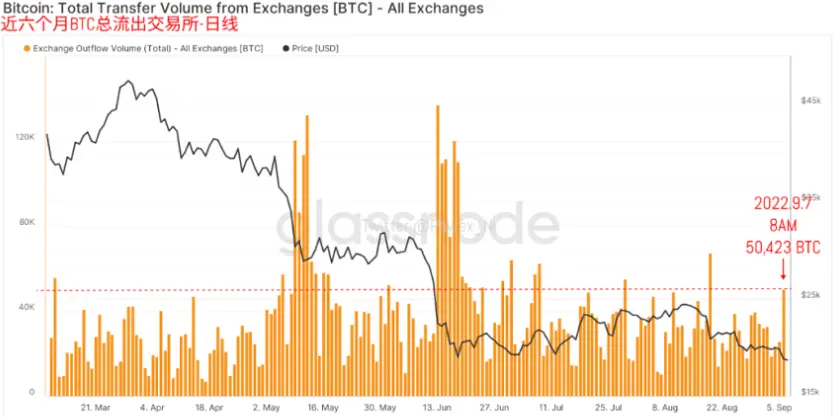
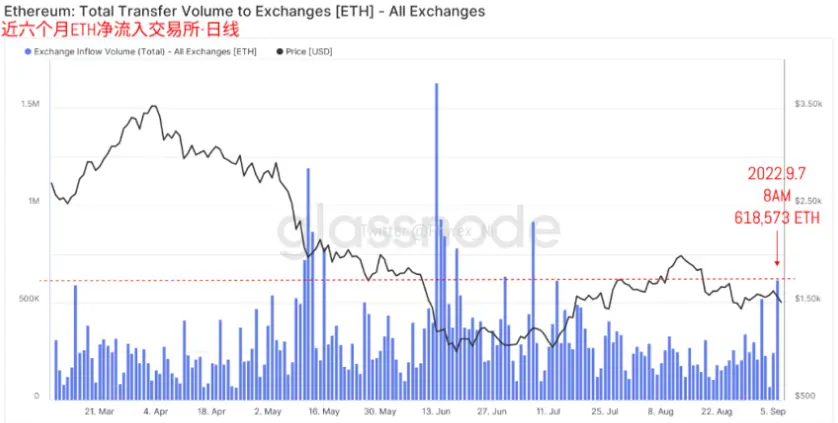
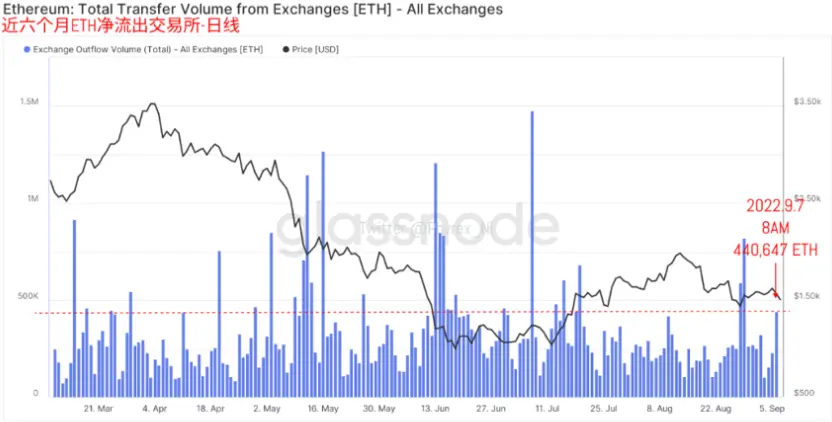
According to the current BTC and ETH selling pressure on exchanges and the data on cash withdrawn from exchanges, although both have seen a sharp increase in selling pressure, the buying mood is completely different, and BTC's purchasing power has increased significantly after prices hit $19,000. Full selling pressure has been covered and stock levels on exchanges are falling. And the ETH, because the price is still above $1,500, is not buying very much, so the stock of the exchange is greatly increased.
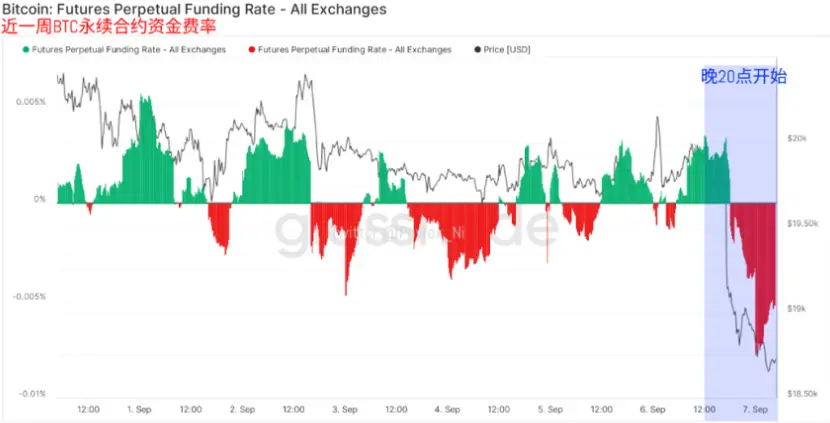
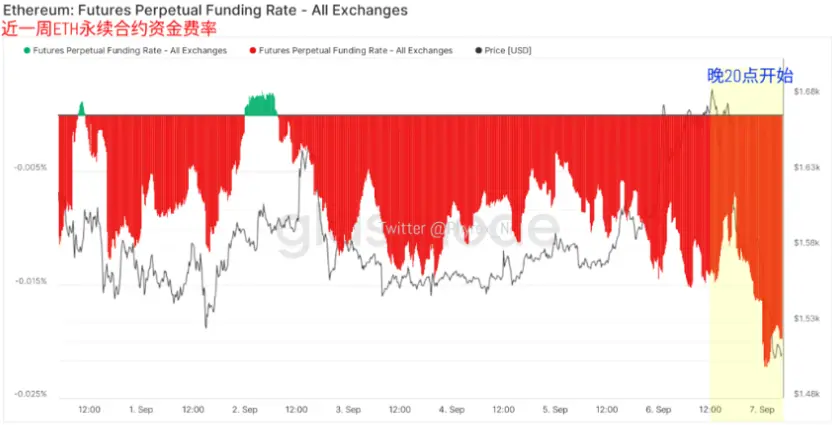
On the emotional side, although the Nasdaq futures were already possible to stop falling and make corrections before the market, there were still widespread bearish sentiment among investors in BTC and ETH. Especially, ETH is already the strongest and largest bearish sentiment in the week. BTC was also the highest bearish sentiment on the weekend in the early morning, but it has slowed down the all-directional bearish sentiment as the price has stabilized. I've been analyzing the Fed rate hikes in September and November and the risk markets at Space. This is an opportunity to put analysis into practice today. Here is an analysis of the likely Fed response, not as a guide to investment. First of all, we draw a line between the mid-term elections in the United States and the two periods before the mid-term elections, which are September and October, and after the mid-term elections, which are November. The Fed's likely response after August is then divided into three possibilities, reflecting the direction of risk markets (including the currency market): bearish (falling), volatile (flat), and positive (rising). First, if the CPI is now projected to be in a slow-moving downward trend, and the Fed opts for a 75-basis-point increase in September, while simultaneously adjusting the 2022 terminal rate to 4% (3.75%) to combat high inflation, this implies considerable downward pressure in September and October, a "peak in inflation, failure of the Fed's pivot" and a new trough in risk markets, possibly even a break from the previous trough. Interest rates will also be raised by 50 basis points in November and 25 basis points in December. In line with the US mid-term elections, as long as the Federal Reserve sounds that inflation has been tamed and is considering starting to slow down the noise of rate hikes, risky markets in November are also expected to raise interest rates. But in the face of the upcoming turn, they will still make bottom-fishing moves, and thus US stocks are likely to have a bottoming rally before the mid-term elections. Second, if the Fed had raised interest rates by 50 basis points in September, and had chosen to raise the terminal rate to 4% (3.75%) to combat inflation, the markets would have viewed the taper as a victory for the economists. But a further 50 basis point increase in November is likely, though not the best-case scenario for September and October, to stimulate a rise in US stocks. But when it comes to November's weakness, when interest rates go up by another 50 basis points, economists can only get feedback from the stock market by speculating about the next tightening or tapering. But for the mid-term elections, a slow rise or even a slight (shock) fall in US stocks is not necessarily what the Democrats want. After all, historically, US stocks have risen at every mid-term election, and if this turns into a fall, the Democrats really suffer. The second change that is still possible is that the Fed chose to raise interest rates by 75 basis points in September, but did not change the terminal interest rate. Although this is a negative move, it is not difficult for economists to interpret this as the Fed's last big increase, and will choose to change direction after that. This is similar to June's CPI reading, which was the highest in nearly 40 years, but which Biden interpreted as a sign that U.S. stocks were rising. Third, if the Fed chooses to raise rates by 50 basis points in September, and does not adjust the terminal rate, it will maintain its 3.5% forecast. So, for the economic camp, the odds are pretty much in the bag. September will start to taper off, and November will start a second round of interest-rate hikes and tapering. Even the last 50 basis points of November's interest-rate hike could be touted as the start of December to stop raising interest rates, both of which are ways to stimulate US stocks. And a third, albeit modest, US mid-term election is likely to produce a buoyant market in anticipation of economic recovery and speculation that interest-rate hikes might be halted in 2023. And the market recovery that has been underway since September will be good for the DPJ's face, given that the "Robber Act" was the DPJ's formula since August. And as for the other three possibilities, it's not impossible to say no. But as things stand, unless inflation really does rise significantly and uncontrollably, the Fed's options will remain broadly within that framework. So we can also see clearly, on a macro level, how important the Fed's choice in September will be for the last quarter of 2022 and the US mid-term elections, in which currency markets are an appendage.





