At 14:00 yesterday, after the dollar index once again broke a new high for nearly 20 years, the interest rate hike in Europe could no longer serve as the basis for the dollar index to peak. This is mainly because yesterday Russia cut off the supply of natural gas in Europe. At present, the storage volume of natural gas in Europe, although already reaching 80% of the basic value, has not yet reached 95% of the safe storage volume. Therefore, under the circumstance of worsening inflation in Europe, the price of natural gas again soared.
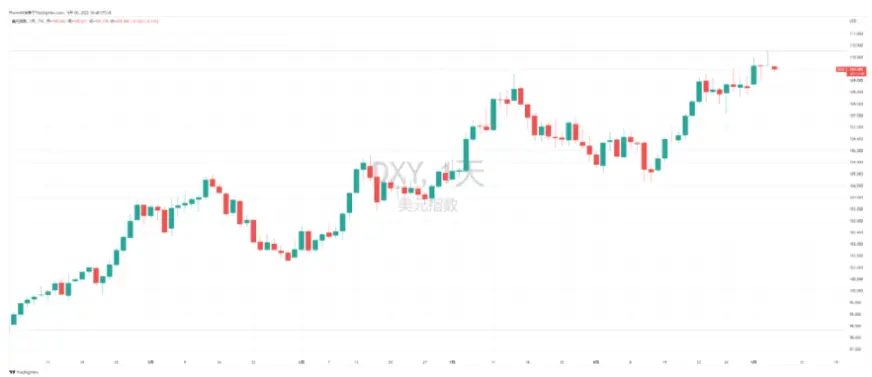
It is also because of this that the eurozone has been in a state of panic over winter energy prices, after much data analysis, that it is clear that the main users of USDT and the main buyers of BTC and ETH are in the European time zone, and possibly even Europeans. But is it possible to finance risk markets when Europe's pervasive energy crisis has to save for the winter? It's not yet known, but Monday's data, which already show the U.S. on Labor Day, suggests Europe isn't. But the purchasing power of the USDT conversion is still not what it would be on a normal weekday, only a little higher than at weekends. And if Europeans do not continue to be the main source of purchases, or if they reduce their purchases significantly, risk markets, especially currencies, will have to depend on the Fed's monetary policy.
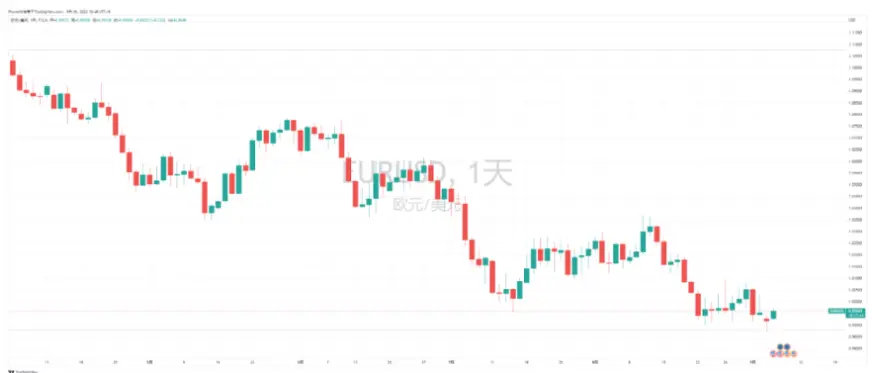
Of course, it is not so pessimistic. More to the point, developments need to take place, not least last night's offer by Ukraine to supply the EU with 30 billion cubic meters of natural gas reserves and even indicate that it can substitute, if conditions permit, for all of Russia's Nord Stream 1 deliveries. So the dollar index is trending downward, and the euro is beginning to rise. This is a big help for risk markets.
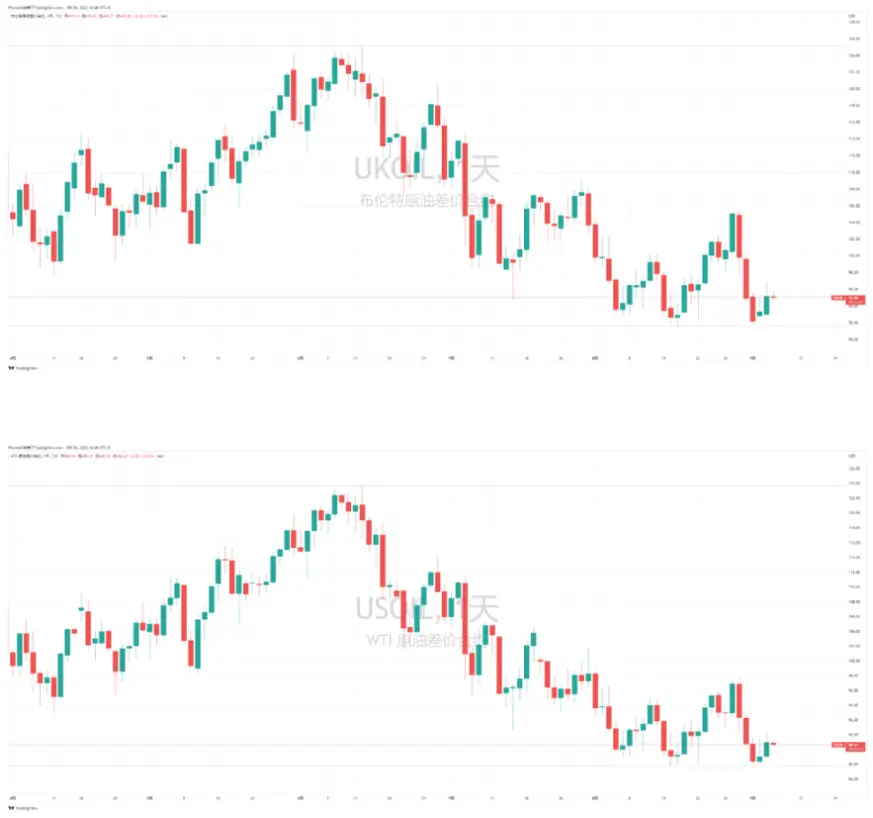
But there is an old Chinese saying that good fortune never come in pairs and bad fortune never come in pairs. While Russia announced that it would stop supplying natural gas, OPEC+ also officially announced that it would reduce daily production starting from October. Although the production cut is not very large, it is very unfavorable to the United States because oil prices are already reducing CPI on the news. Oil prices rose immediately after the announcement, and have remained at a high level since now, erasing the decline caused by the prospect of economic recession at the beginning of the month. That would be extremely disadvantageous for America's next inflation.
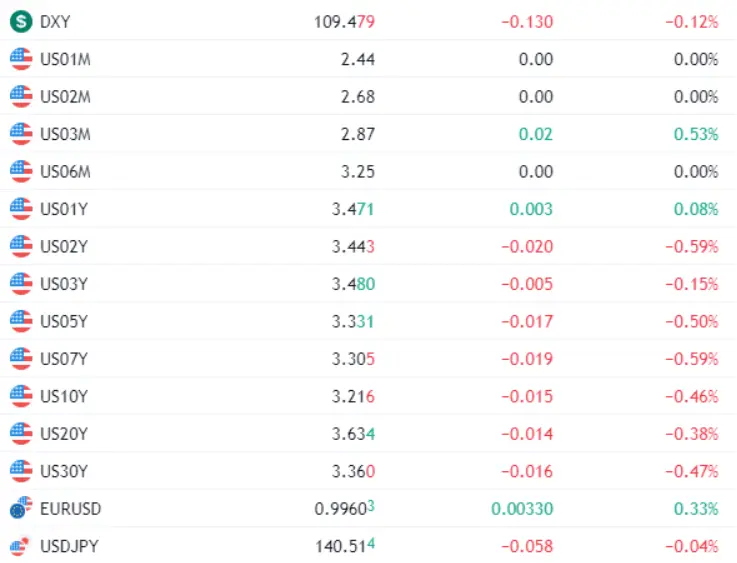
The U.S. bond market is not optimistic, especially the short-term U.S. bond yields have been in a rising trend in the last two weeks. This also shows that a lot of money is leaving the short-term U.S. bond market. Although the medium and long-term U.S. bonds have signs of getting in, they are still in a high position from the perspective of the colonial interest rate. This also shows that investors do not have a good view on the next economic trend of the United States. As the dollar index rises, cash becomes the best investment tool.
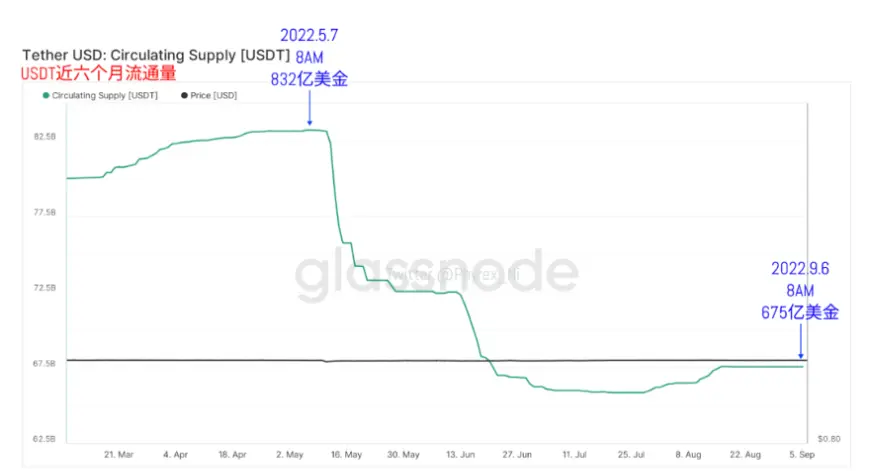
The market for stablecoins is even more cruel. Although dollars can be exchanged back at any time, it is not as easy as holding dollars directly, especially now that the risk market is too constrained by the Federal Reserve and the currency market has to look at the US dollar. So it's been some time since we've seen the arrival of over-the-counter money, and USDT, the company behind the deal, has not changed its market value for 20 days. It is well known that USDT is mainly invested in Asia and Europe, and the fact that USDT's market value has not changed indicates that the over-the-counter capital in Europe and Asia, especially Europe, is still sitting on the sidelines. It should be noted here that as inflation in Europe intensifies, the possibility of a sharp interest rate rise in the euro zone will cause a downturn in European risk markets, and even the solvency of individual countries in the euro zone cannot be compared. Therefore, it cannot be excluded that there will be European funds to enter the risk market of the "dollar" system. After all, it has been seen from history that Europeans prefer American stocks to European stocks.
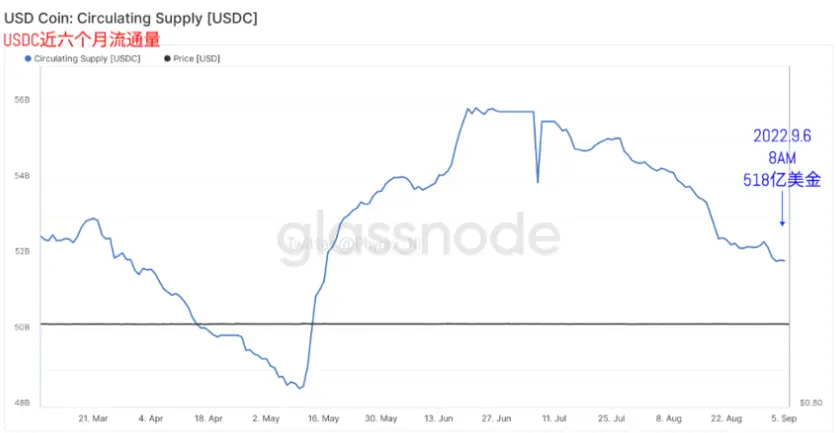
And the USDC, led by American institutions and major players, began to recover after the TornDao incident. Even now, it seems that it has gone through the stage of substantial devaluation of its market value. However, the combination of the economic situation of the United States and investment confidence is still difficult to stem the loss of funds in stock. By 8:00 this morning, USDC's market value had dropped slightly by about USD 10 million.
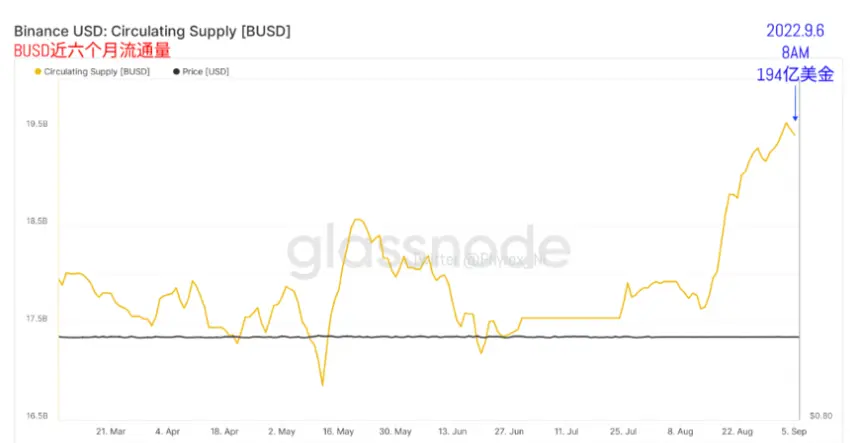
But the recent winner, BUSD, has not been boosted by USDC's divestment. Not even more money has been pumped into Binance's "all-in-one" stablecoin program, but as of 8 a.m. this morning, BUSD's market value has declined by about $50 million, or three days in a row.
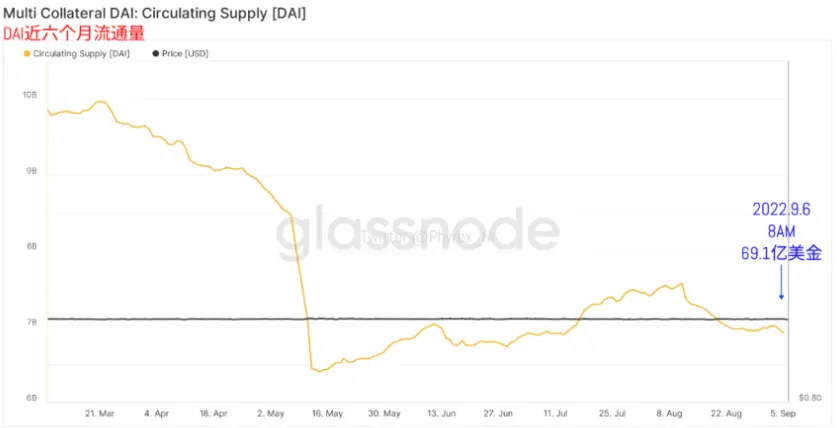
And from the DAI's market value, the $45 million reduction shows that the ETH in the mortgage is in the stage of continuous underweight. The current DAI reduction is not only the ETH spot leverage problem, but also not the ETH price problem. Because closer to the merger, more chips begin to be intentionally scattered in the smart contract and cash into their wallets, which can better get the dividend. So it is quite possible that not only will the assets in the linked contracts be transferred to the users' wallets until the ETH merger, but even the ETHs temporarily stored by users on the exchange will show signs of trickling out. It is easier to store on the exchange and you will get some short-term rewards, but you won't get all the branches. But for the small partners who are not used to the interaction on the chain, it is safer and avoids a lot of trouble.
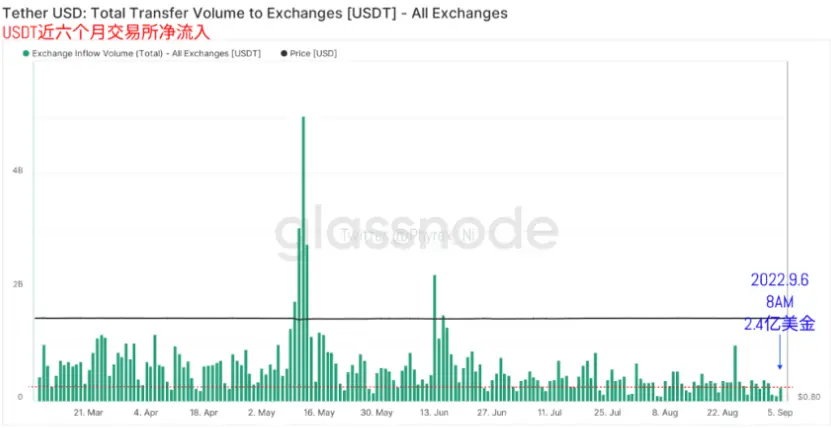
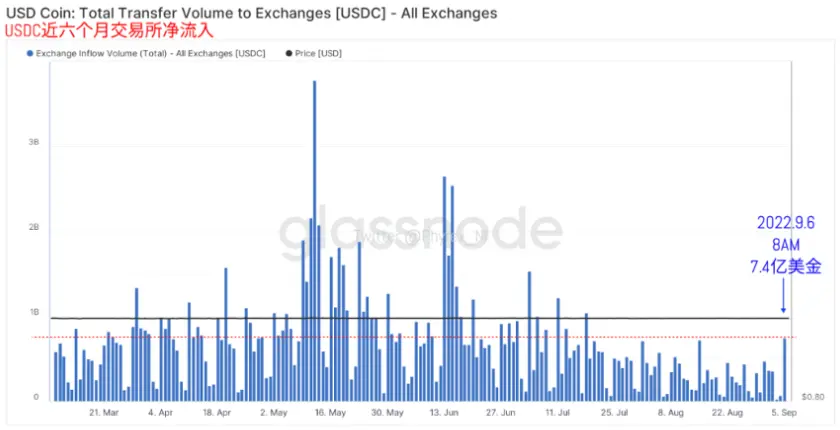
In addition, from the purchasing power of the stablecoin, we can see that in the data up to 8:00 a.m. this morning, although the volume of funds USDT transfers to the Exchange has increased significantly compared to the weekend, it is still relatively low compared to the working day. However, considering the United States vacation will also bring a certain drop, so the current purchasing power is still in line with the rules. And USDC saw a big jump, bringing in $740 million.
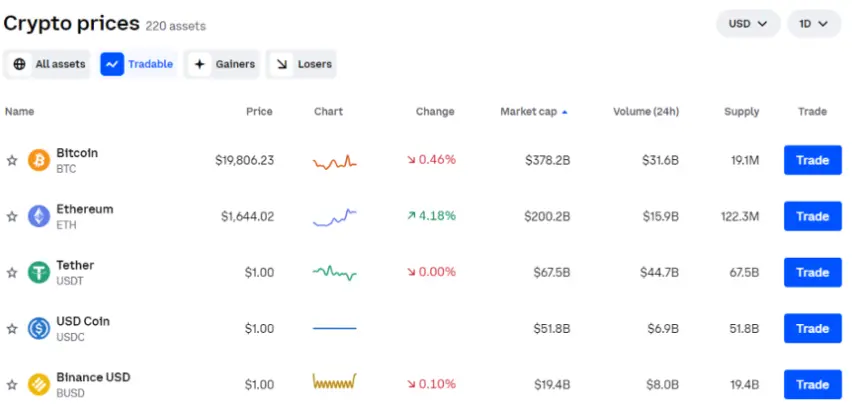
Of that, $650 million was transferred to Coinbase, and a comparison of BTC and ETH transactions for Coinbase and Binance showed that while Binance's ETHBUSD pair had no transaction fees, Coinbase appeared to have a higher turnover in the nearly 24 hours (Coinbase and Coinmarketcap were nearly 40 times worse, but more USDC did transfer to Coinbase).
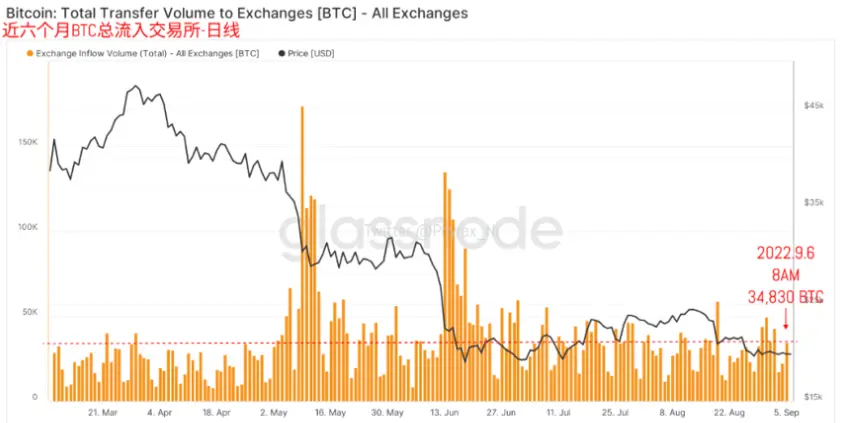
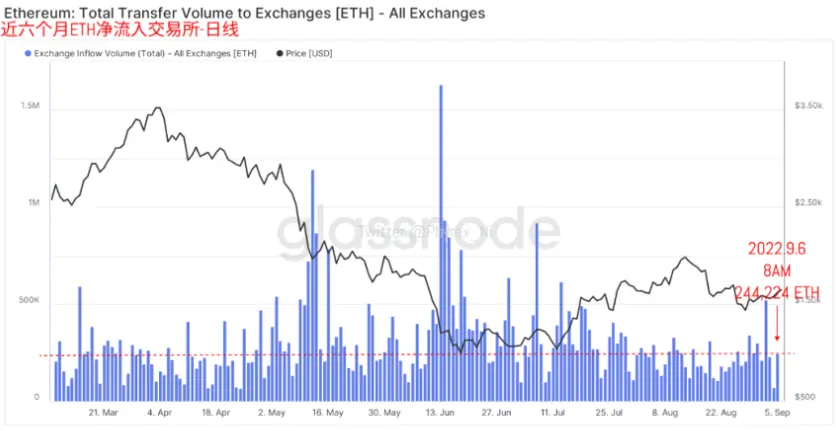
Judging by the selling pressure from the BTC and ETH shifts into exchanges, it is almost impossible to see that Monday was in a state of holiday or that the US is already taking too small a share of the main trading time zone. Both the BTC and ETH selling pressure are at recent high levels, especially since last week has been gradually increased the level of selling pressure, and purchasing power has not increased significantly, but the impact on prices is not obvious.
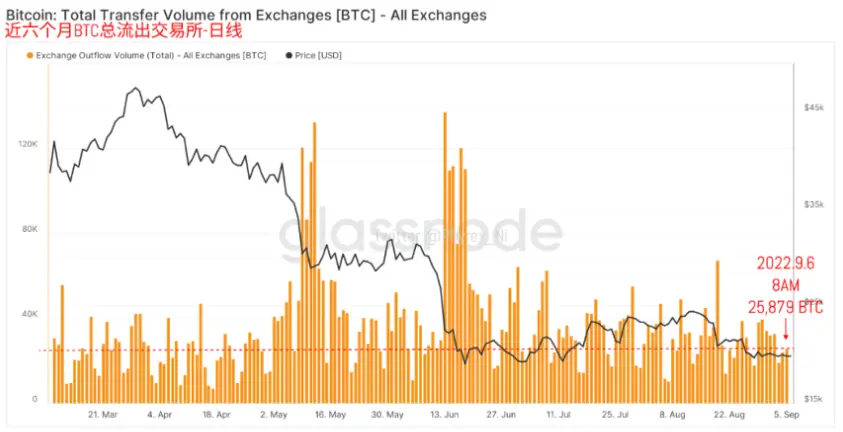
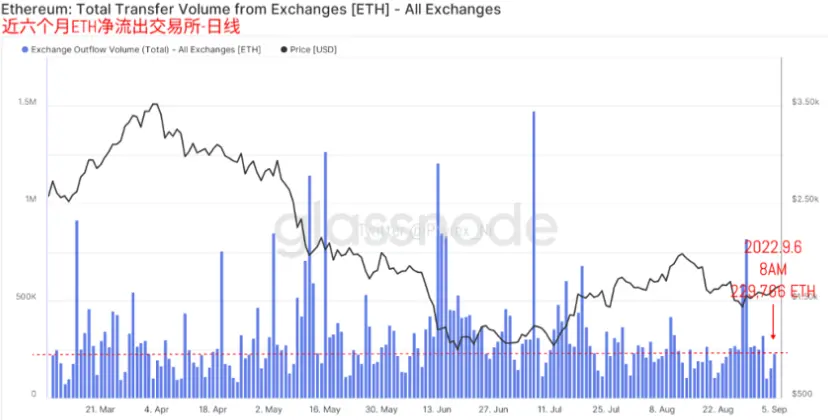
Therefore, it can be judged that more chips are actively staying on the exchange, especially BTC is more obvious, the purpose should be to jump the market, and missed the best time to leave. And the same is true of the amount of withdrawals from the exchange. Although the amount of ETH transfer can not cover all the pressure, but almost the same, but the BTC transfer amount is relatively large gap, which has a lot to do with the recent price of BTC is relatively weak.
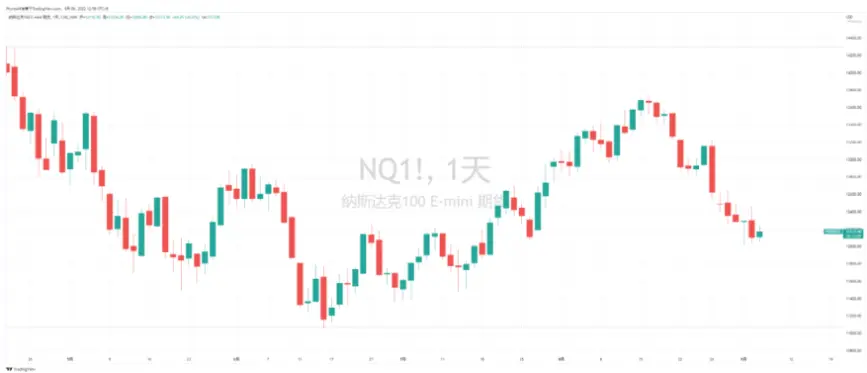
Therefore, looking from the overall situation at present, although there has not been a significant change in the macro view, the current direction of the currency market is still dominated by volatility. But from the pre-market status of the Nasdaq futures now, it is more likely that the US stock market will open higher this evening after the opening of the market. In particular, it is affected by the favorable rise of ETH. If the Nasdaq futures can still maintain the upward trend during the intraday trading, the price trend in the currency market will certainly not be too bad.





