Up to 11:00 this morning, the BTC position price distribution, from 22:00 last night to the present BTC chain address change, the sampling time has also exceeded 13 hours, but looking at the fluctuations in the chain can be found that the increase in BTC data is only 31,000 or less, which directly tells us that the US market and the Asian market in the morning are in a very low circulation, which means selling pressure and buying fewer users in both directions. From the extreme prices on both sides, only 310 BTCs have been sold in the past half-year for profits and high-value hedged chips, while over USD 25,000 total loss chips have been sold down by more than 1,560, with an average sale rate of around 120 per hour. This is a recent low, at least indicating that the early retail investors are even less interested in the current prices. This also means that large-scale price declines are not easy to achieve without early users pushing prices down. The current selling point is still the current dispute price. More importantly, even in the process of BTC price rebound, it is obvious that the main reduction is the recent profit chips, while the loss chips are reduced. This means that with the stability of the price, more and more investors think that the current BTC price is still near the bottom, after all, the macro sentiment has not changed.
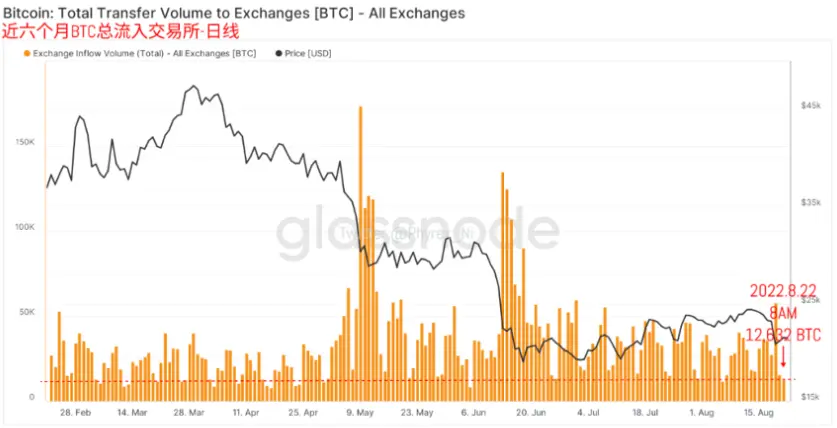
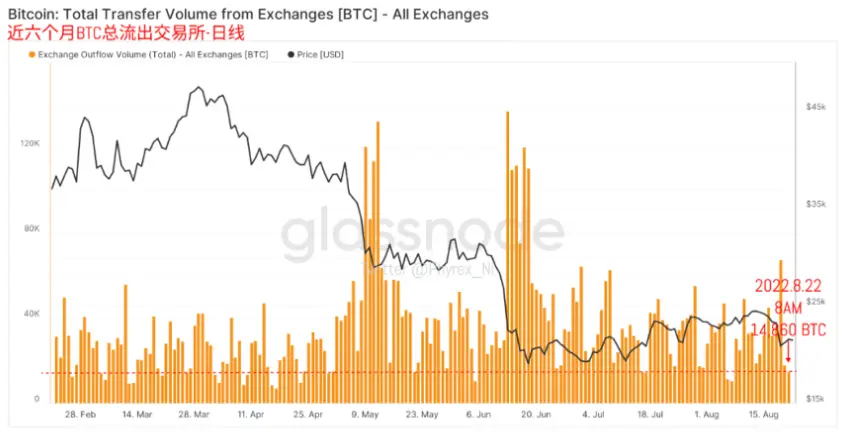
From the selling pressure transferred to the exchange and the withdrawal data from the exchange, the selling pressure up to 8:00 this morning is indeed the lowest level in the last six months, which also confirms the result of the fluctuation analysis of the front address, and fewer users are willing to participate in the selling of chips. And from the withdrawal value of the exchange at the same time, although the amount of withdrawal is also low, but when all the selling pressure is covered, the buying mood is high.
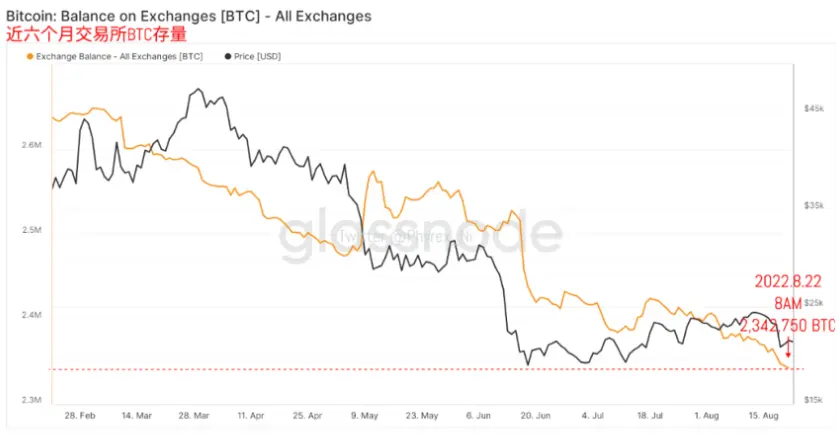
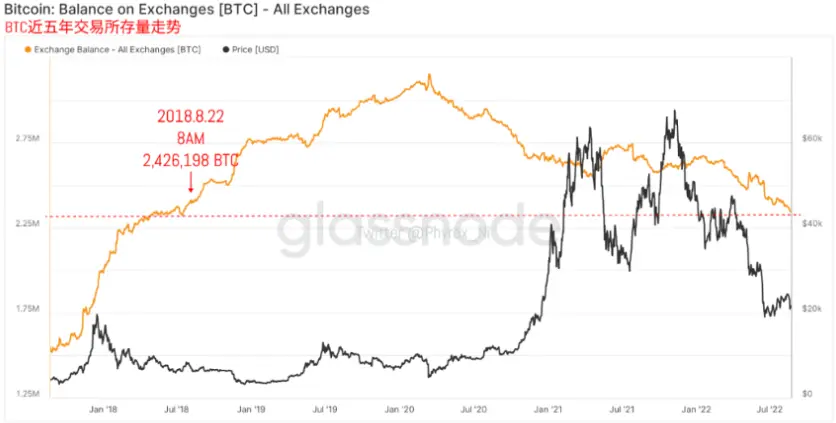
According to the exchange's BTC inventory data, the falling stock once again breaks through the lowest inventory value in nearly four years. Although the falling stock in the exchange is not the same as the rising price, it is still the manifestation of buying sentiment. In particular, the incessant impact on new inventory shows that as prices fall, more and more investors are choosing to hold on to the BTC rather than sell it. So there are still big opportunities for the future of BTC.
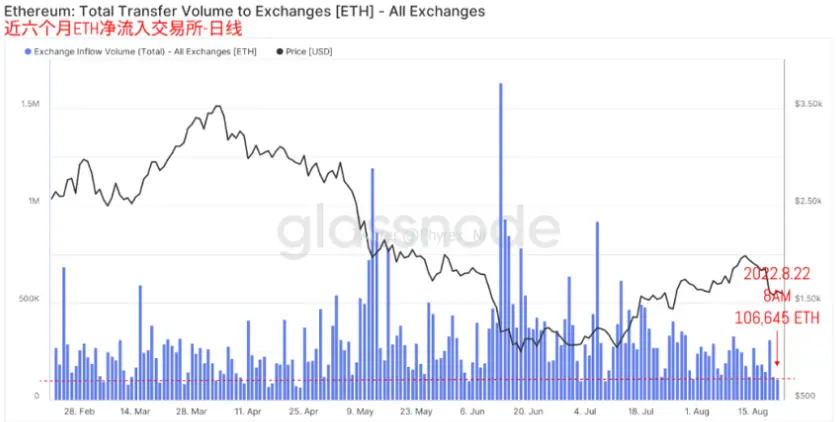
At the end of the weekend, ETH's exchange-related data and BTC returned to almost the same situation, the selling pressure data is also low, the outgoing cash data is also low, but still can cover all the selling pressure, the mood on the purchase is also tepid, just like the normal weekend data, it is not at all obvious that there is a merger-positive stimulus. So the ETH numbers should not change much before US stocks open. Even from the ETH stock data of the exchange, it is not much changed, but compared with the low stock of BTC, the stock of ETH is still at a high position, even higher than the stock when LUNA falls. Therefore, in terms of risk, the stock of ETH is still very unhealthy, although it is stimulated by merger for now, and the possibility of falling is very high if the stock of ETH is still not released. As of 8:00 a.m. this morning, there were no significant changes in the four major stablecoins on Sunday, with a slight improvement in the USDC, which had been in a downward position, by about $28 million, while the BUSD, which had recently been synced with the USDC mirror, was unchanged. The other is that DAI's market value remains in decline, with a high probability that ETH's spot leverage is falling. Europe and Asia is completely opposite to the United States, although the European data still shows that the majority of selling, but compared with the previous year's data, sales volume and significantly reduced, especially in Asia the main time the position showed a significant increase, but cross comparison can be found, although a lot of increase in Asia time, but the main time in Asia and the United States is selling down, while the majority of selling in Asia and Europe. And the main cross-trade time zone between Europe and the United States is also dominated by selling, so it can be almost inferred that the main buying power at present is from 8 a.m. to 20 p.m. Beijing time, and according to our continuous statistics on the volume of money changes, we can draw the conclusion that Europe from the BTC into the bear market was the main buying power, until now.
Therefore, judging from the current overall data situation, the buying volume in Asia's main trading time zone is higher than the selling volume, so the possibility of price decline is relatively low, and Europeans wake up to bring a wave of buying power, so the main price increase is still based on the European plan, and when the U.S. stock market opens, it is basically a European-American game, and when the U.S. stock market closes, it is basically only selling pressure, less buying. Applying to our current situation, we can draw a conclusion that before 15:00 this afternoon, both BTC and ETH prices will fluctuate, and if there is a big buying trend after 15:00, it is not impossible to increase prices. If purchasing power does not increase, it depends on whether Americans will continue to sell. However, judging from the current pre-market index futures, it is in a downward trend. If the decline continues, the evening index is at least also low. The BTC and ETH estimates that are highly correlated with the nanofinger are not too smooth.





