
Freelancers pay no payroll taxes (yes, of course), but hidden fees eat into your income. Find out how to beat them with smart tools.
Want to know how to avoid it? With a little intelligence.
If you’re a freelancer, digital nomad, or remote worker, you already know the everyday pain: getting paid internationally is expensive, slow, and sometimes humiliating. PayPal takes a huge bite. Banks hit you with hidden exchange rates and ridiculous fees. Not to mention that you are forced to wait 3–5 business days to actually see your money in your bank account.
I’ve lost count of how many times freelancers complain about sending or receiving $100… only to end up with $80 in their pocket. That’s not a fee. That’s a silent tax on your work.
Not to worry, my friend. Crypto, stablecoins, and virtual cards are quietly blowing up this insufferable system and giving freelancers the financial freedom they’ve always boasted about having.
The Traditional Finance World: Banks, Fees, and Stress
You just wrapped up a $1,000 fintech project for a U.S. client. They’re happy, they even drop you a “Great job, buddy” before sending the payment through PayPal.
A few days later, you check your bank app, excited to see that the money landed. But instead of the $1,000 you worked so hard for, the number staring back at you is… smaller. Way smaller.
Somewhere between PayPal, your bank, and the exchange rate roulette, a big slice has disappeared. You blink, double-check, and mutter the classic line: “Seriously? Where the hell did the rest go?”
That’s the everyday freelancer reality. Every payment feels like it wanders through a maze of middlemen—each one grabbing a bite of your cash before it reaches you.
As one designer put it perfectly:
“I used to lose a week’s worth of groceries every time I got paid from overseas.”
And that’s the painful truth. Traditional rails are slow, expensive, and never built with freelancers in mind.
The Never-Ending Comedy of PayPal Fees 🎭
We took a little stroll through Twitter, and oh boy—what a circus. Turns out, plenty of freelancers have already been clowned by PayPal’s “voluntary” donations (aka fees). Some laughed, some cried… most just screamed into the void.
Act I: The FX Circus
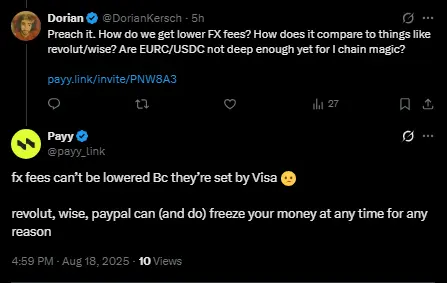
“FX fees can’t be lowered, Visa decides that 😐.”
Oh, brilliant. So when freelancers lose a chunk of their hard-earned money, it’s not a scam—it’s just “policy.” Nothing to see here, just Visa and PayPal passing the hot potato of blame while we foot the bill.
Meanwhile, your $1,000 project magically transforms into $930. Applause for the house trick.
Act II: Frozen… but Not the Disney Kind ❄️
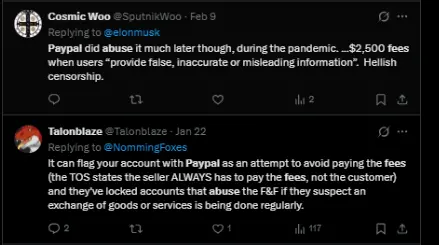
“Provide false, inaccurate, or misleading information”? Boom—$2,500 fine. No trial, no jury. Just PayPal playing sheriff, judge, and tax collector all at once.
And if that wasn’t enough, they’ll happily lock your account for the crime of… trying to dodge their precious fees. Imagine working for months, sending invoices, and then waking up to find your money handcuffed because the almighty algorithm said “suspicious.”
It’s not security. It’s financial cosplay—except the costumes are boring and the only people robbed are freelancers.
Act III: The Vanishing Act 🎩✨💸
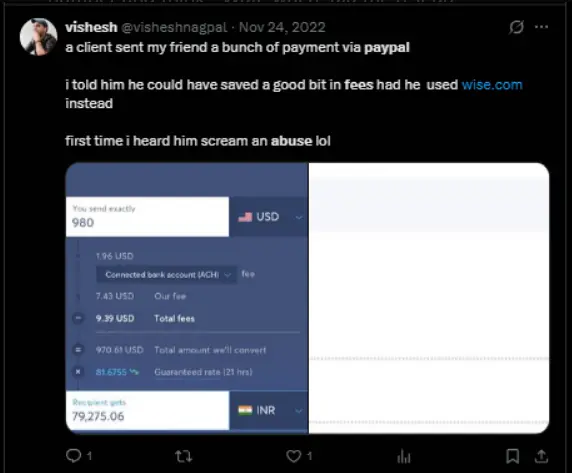
Send $980, receive… $970. Bravo! PayPal just performed a magic trick nobody asked for. Forget rabbits in hats—this is the “disappearing freelancer salary” show.
As one poor soul wrote: “First time I heard my friend scream an abuse.”
Yeah, nothing like getting robbed in broad daylight to test the strength of your vocal cords.
Meanwhile, services like Wise quietly sit in the corner, smirking, as PayPal turns hard-earned cash into smoke.
Act IV: The Hypocrisy Olympics 🏆🤡
PayPal loves to play tough guy with freelancers—fees, freezes, fines. But when it comes to real power players gaming the system? Suddenly it’s all shrugs and blind eyes.
As one furious user nailed it: “I’d like to know if PayPal would be as lenient on collecting fees through friends & family abuse as much as it lets the big guys game the system on taxes.”
Translation: if you’re a small freelancer, you’re a “policy violation.” If you’re a whale, you’re a “valued customer.” Welcome to the Hunger Games of finance—may the odds be never in your favor.

Act V: The Customer Abuse Finale 🎭💀
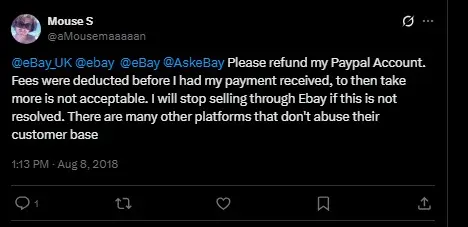
Imagine paying fees before you even get your money—yes, PayPal literally takes a bite out of your wallet before the cash hits your hands. Then, just for fun, they might take another nibble.
As one seller snapped: “Fees were deducted before I had my payment received, to then take more is not acceptable. I will stop selling through eBay if this is not resolved.”
This isn’t finance. This is daylight mugging with extra paperwork. And the punchline? There are plenty of other platforms that don’t treat their customers like ATMs with legs.
Stablecoins: The Plot Twist Nobody Saw Coming 🤯
Just when the audience thought the show was over...cue the dramatic entrance. Stablecoins like USDT and USDC aren’t glamorous, but they crash the stage like the sidekick who secretly saves the movie.
Forget waiting three days. Forget bank middlemen shaving dollars off your sweat. With stablecoins, you get paid in digital dollars, instantly. No FX magic tricks, no “oops, the fees ate your lunch” excuses. Just your damn money delivered like a cold beer on a scorching day.
For freelancers living in places where pesos or naira melt faster than ice cream in the Sahara, this isn’t just convenient, it’s survival. Getting paid in stablecoins feels like taking off a heavy backpack you didn’t know you were carrying.
Maria, a developer in Lagos, put it best:
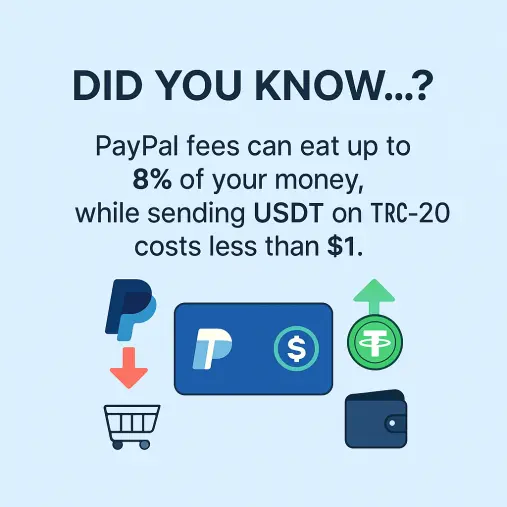
“I used to beg clients to pay me in Payoneer or PayPal. Now I just say, ‘Send USDT, TRC20.’ Hahaha ...It arrives in minutes and I don’t lose 20% to fees. It’s f*cking life-changing.”
Enough Comedy, Here’s the Fix
Alright, enough clown show. Let’s talk solutions.
Here’s the catch: you can’t exactly walk into Starbucks and say, “One cappuccino, payable in USDT, please.” (Not yet, at least.) Crypto might be powerful, but in daily life, it often feels like having a Ferrari…with no keys.
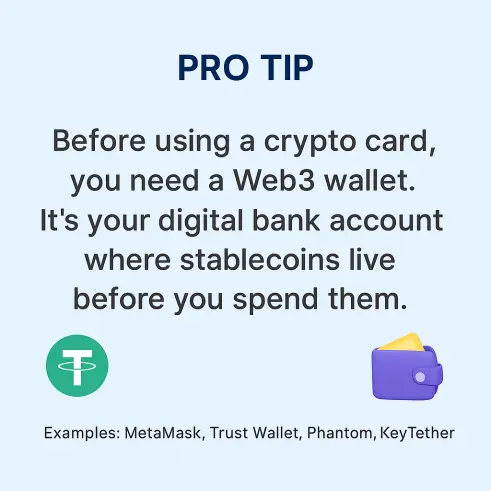
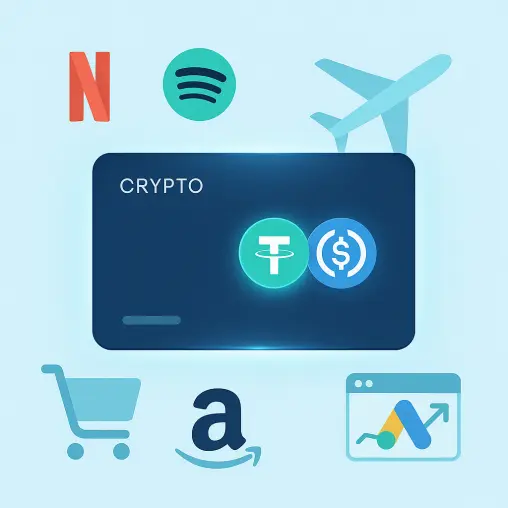
That’s where virtual crypto cards come in. They’re the bridge between the Web3 world and the checkout counter. Load them with stablecoins, and suddenly your digital dollars work anywhere Visa or Mastercard does.
✅ Groceries?
✅ Netflix?
✅ Airbnb?
✅ Plane tickets?
Hell yes.
In plain English: stablecoins give you the money, virtual cards give you the key to actually spend it. No more conversions, no more excuses—just your money, usable in the real world.
Why Freelancers Love Virtual Web3 Cards
-
Instant Access: Issue a card in minutes, very, very simple. No paperwork, no endless Know Your Customer forms, no waiting weeks for approval. As simple as sending an email.
-
Low Fees: Instead of losing $20 per transfer, you’re paying pennies, literally. And if you choose TRC-20, it will be even lower.
-
Privacy & Control: You do not have to provide any personal data, which means no banks snooping into your spending habits. Best part? No middlemen storing your email, passport, utility bill, or national ID in some database waiting to be hacked. You keep control, not them.
-
Global Reach: Works anywhere a Mastercard or Visa is accepted. Just imagine connecting your crypto card to Google Pay or Apple Pay. You can go literally everywhere and pay with your phone.
Let´s meet Alex, a Web Dev from Ukraine.
“I was exhausted. Every single month, PayPal chewed away almost $80 of my total monthly income in fees. $10 here, $15 there...gone. And the waiting… three, sometimes four days before the money even showed up in my bank. It felt like punishment for simply working with international clients. I was angry, frustrated, and honestly burned out by the whole system.
I kept ignoring crypto because it sounded messy and extremely risky. But a friend wouldn’t shut up about KeyTether—‘It’s a wallet and a card, you’ll thank me later,’ he said. Out of desperation, I gave it a try.
Game. Changer. Now my clients send USDT straight to my KeyTether wallet, I load it onto my virtual card, and I’m spending instantly. Last week I ordered LED lights I saw on TikTok and paid with Apple Pay, so smooth as butter.
Today, instead of dreading payments, I actually feel grateful. Grateful that my money is my money. And honestly, I feel a little pity watching other freelancers still bleed cash to PayPal.
If only they knew freedom is this easy.”
Everyday Life With Crypto Cards: More Than Just Payments
In the end, money should feel simple, not like a maze built to drain your energy and your wallet. For freelancers and creators, every dollar earned matters, and watching it vanish into fees or delays is nothing short of theft dressed up as policy.
Stablecoins and crypto cards don’t promise perfection, but they give you something the old rails never cared to offer: control, speed, and dignity.
Whether you’re buying groceries, funding ads, or booking your next trip, it finally feels like your work translates into real freedom, not just numbers held hostage by banks.
Freelancers, you’ve already worked hard enough. You don’t need to tip PayPal every time you get paid. That’s exactly why crypto tools like KeyTether crypto card and wallet exist.
Want more practical crypto insights like this? Follow me, cryptobuddy! I make Web3 simple and fresh...like Peruvian Ceviche.
✍️ Written by El Salvador CopyBiker — Crypto Content Specialist.
Helping your audience actually understand your Web3 product (no PhD required).
💬 DM me on Telegram
💬 Message me on Whatsapp
🌐 Visit my site





