
There are many types of scams in the world of cryptocurrency. Some of the most famous and most used are:
- blackmail;
- the false exchanges;
- false gifts;
- phishing attacks on social media and email;
- Ponzi schemes and pyramids
- ransomware.
Unfortunately, new technologies such as Bitcoin offer fraudsters a great opportunity as it is a crypto currency, a digital currency, without limits.
So, in order to protect our precious coins, we need to learn how to recognize the scams that will come to us all the time (as they say: "If something seems too good to be true, it probably isn't").
Blackmail
Blackmail is one of the most common methods in the world of fraudsters. This consists of threatening people, or groups of people, to divulge sensitive information, unless they are paid in some way, usually in crypto currency, particularly in BTC.
One way to avoid this type of scam is to be careful which sites you visit and who you are giving your information to.
False Exchange
False exchanges are fraudulent copies, which may seem legitimate at first sight, of real and legitimate exchanges. Usually this type of scam is presented in the form of a mobile application, however, there are numerous desktop versions. Victims are usually attracted by offering free cryptocurrency, low (if any) commissions and gifts.
One way not to fall for this scam, as far as the desktop version is concerned, is to add a bookmark to the URL of the real one and always check it before logging in, while for mobile applications, we must always check the developer's information, reviews and comments.
False giveaways
False gifts are another type of scam that is widely used. This consists of offering you something in return (such as tokens) in exchange for a minimum deposit. Usually, you will be asked to send BTC to a bitcoin address, with the promise to receive double (or triple or more), for example: "Deposit 1 BTC to receive 2 BTC" or "Deposit at least 0.1 BTC and you will receive 500 tokens". In some cases they might even ask you for your private keys (which you don't have to provide to anyone at all! Little tip: always keep them saved on a physical medium, such as paper).
Victims are mainly solicited on social media such as Twitter, Instagram and Facebook.
One way to distinguish fake gifts from real ones is that the real ones will never ask you for funds.
Phishing attacks
Phishing attacks are perhaps one of the most common types used by fraudsters. These can be found most commonly on social media and email. Scammers create a copy account of a major crypto company, such as Coinbase or Binance, (impersonation) and then offer freebies and gifts after subscribing, through tweets, direct messages or sharing your content on Facebook.
One way to avoid such a scam is to check that that profile actually matches the entity it says it is (e.g. through blue checkmarks).
Another type of phishing attack is via email, where they try to trick the victim by impersonating an important entity in the crypto world, getting them to download infected files, or leading them to seemingly legitimate malicious websites.
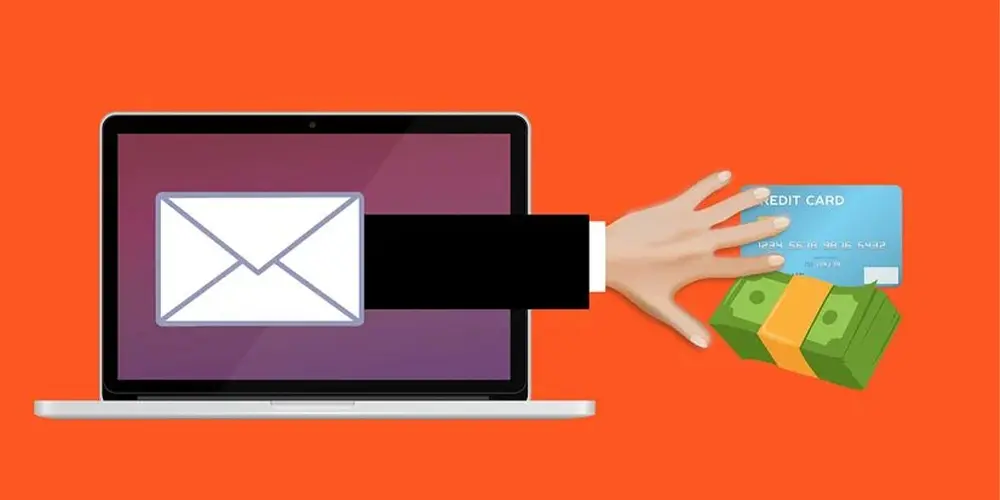
Usually the emails the victim receives contain urgent messages, for example: "log in to your account now, there were security issues, for more security, reset your password in the following link". The ultimate goal is to steal your data and then drain your accounts.
One way to avoid being scammed in this way is to check if the email comes from the real source, try to contact the company directly or access your account by other means, such as typing the URL manually.
Avoid clicking on links!
Malware copy and paste
This is a very clever type of scam and very used by scammers. The malware will hijack your clipboard data and, if you do not check it, you will send the cryptos directly to the scammers.
Let's take an example: suppose A wants to send BTC to B; B sends its address to A, who will copy the address and paste it into his wallet; if your device has malware copy and paste, the fraudster's address will automatically replace B's address when you paste it.
To avoid such a scam, you need to be very careful about the security of your PC and your phone and above all, after you have pasted the address of the person you want to send your money to, check again if it really corresponds to him.
Ponzi schemes and Pyramids
It is useless to give too many presentations to one of the most famous and ancient types of scams that exist. As we well know, this strategy pays the returns to older investors with the money of new investors. When the flow of new investors is no longer sufficient, the money stops flowing.
An example in the crypto world was OneCoin.
The only way not to fall into a Ponzi scheme is to always research the cryptos you are buying. If the value of a crypto fund depends solely on new investors joining, it is very likely that you have fallen into a Ponzi scheme.

Ransomware
Ransomware is a very dangerous type of malware that blocks victims' mobile or computer devices, preventing them from accessing valuable data, unless a ransom is paid, usually in bitcoin. Often important types of information (such as bank files) are blocked and threatened with deletion if a payment is not made within a certain deadline. Unfortunately, even if you make all the required payments, there is no guarantee that the attackers will keep their promise.
There are some things we can do to protect ourselves from ransomware attacks:
- install an antivirus and keep your operating system up-to-date;
- avoid clicking in suspicious ads and links;
- be wary of email attachments (especially be careful with .exe, .vbs or .scr files);
- back up your files regularly so that you can restore them in case of infection.
For more information you can visit NoMoreRansom.org.
What about you? Have you ever fallen into one of these scams?
Let me know in the comments!
If you like my content, don't forget to leave me a thumbs up ;)





