
DeFi redefined the concept of traditional mining by introducing new ways to earn crypto through various methods of incentives.
DeFi gave birth to a new type of mining and it all started with Synthetix (SNX) – the godfather of “liquidity mining”. Synthetix started this movement by rewarding liquidity providers in the sETH/ETH pool on Uniswap with SNX.
What is DeFi Mining Today?
Most of the DeFi mining is facilitated via liquidity provision like on Uniswap to earn $UNI, SushiSwap to earn $SUSHI, AMPL’s geyser to earn $AMPL, Curve to earn $CRV, Compound to earn $COMP, etc.
However few know that today, DeFi mining is beyond just liquidity provision itself.
To be honest, the cryptopunks just took the word “incentive” and replaced it with the well-known “mining” buzzword that we know from Bitcoin, and used it across their promotion campaigns.
Now, we have a lot to unpack here. So let's get to it and explore the various shades of DeFi mining.
Developer Mining - UMA
UMA website homepage
UMA – short for Universal Market Access – was founded by Hart Lambur and Allison Lu in December 2018. UMA is a decentralized protocol and financial contracts platform that enables globally accessible financial markets on Ethereum.
It does this by providing DeFi developers with a framework for developing synthetic assets and self-enforcing financial smart contracts with economic guarantees.
UMA’s Developer Mining
Developer mining, as coined by UMA, is designed to incentivize idea creation and ‘buidling’ on UMA, by rewarding devs with UMA tokens.
It’s a way to allow devs to earn ownership in the network they help create and incentivizes them to build on UMA rather than another protocol.
The initiative was launched on November 10, 2020, where every week, devs who build on and deploy synthetic assets using UMA receive a share of 50,000 $UMA tokens weighted by the value locked in the financial contracts they design: the more popular a synth is, the greater share of the weekly rewards that the developer will receive.
UMA’s developer mining program could potentially be a multi-year program as UMA is allocating 35% of their token supply (currently valued over $250K) to developer rewards.
Withdrawal Mining - Loopring
(Source)
Loopring (LRC) – a zkRollup-powered decentralized exchange (DEX) and payment protocol – is one of the most innovative projects in DeFi.
Loopring enables developers to build high-throughput, non-custodial, orderbook-based exchanges on Ethereum and the Loopring team built an industry-first layer 2 AMM that brings the ability to do gas-free, instant swaps, and gas-free, instant adding/removing liquidity as a liquidity provider.
Loopring’s Withdrawal Mining - Incentivizing an Exit from Centralized Exchanges
On November 27, 2020, Loopring introduced a new type of DeFi mining which incentivizes crypto users to withdraw their cryptoassets from centralized platforms to Loopring’s non-custodial wallet.
The Withdrawal Mining program will run until December 26 and includes a total of 1,000,000 LRC rewards with 33,333 LRC paid out to participants each day. To join the mining program, you can withdraw LRC, ETH, WBTC, USDT, USDC, and DAI from custodial platforms to the Loopring Wallet.
Rewards are based on your daily balances and wallets must contain a minimum of $100 USD value to be eligible for rewards.
Users are eligible for double the rewards for the following circumstances:
- If you withdraw LRC
- If you created a Loopring wallet before November 27
- If you bought a short ENS or 'special' address
- If withdrawn assets are on Loopring 3.6's layer-2 account
- If your wallet has three or more guardians
Mining in Epochs - Barn Bridge & Saffron.Finance
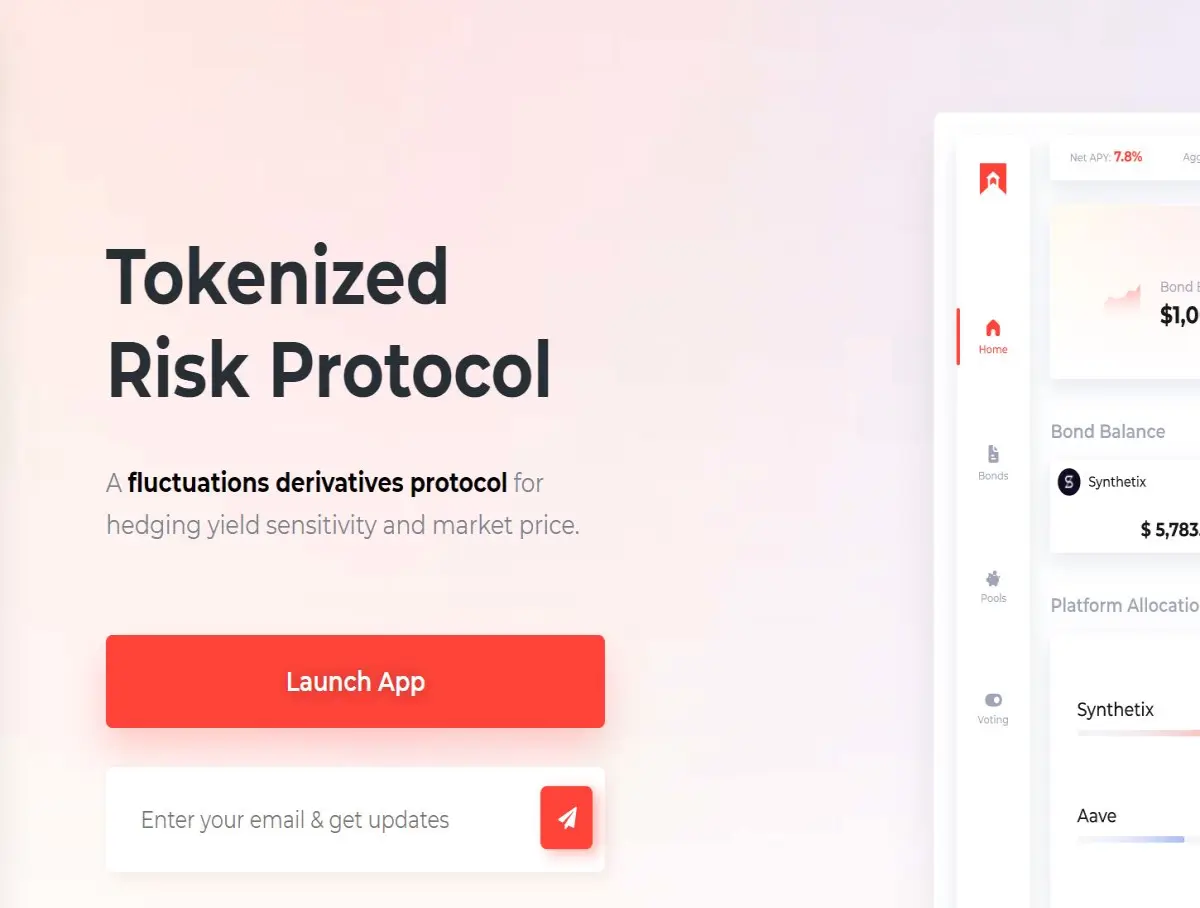
BarnBridge website homepage
BarnBridge (BOND) is a tokenized risk protocol that reduces the risk of digital assets & digital asset yield sensitivity by breaking them into tranches and enabling developers to build derivatives off these tranches.
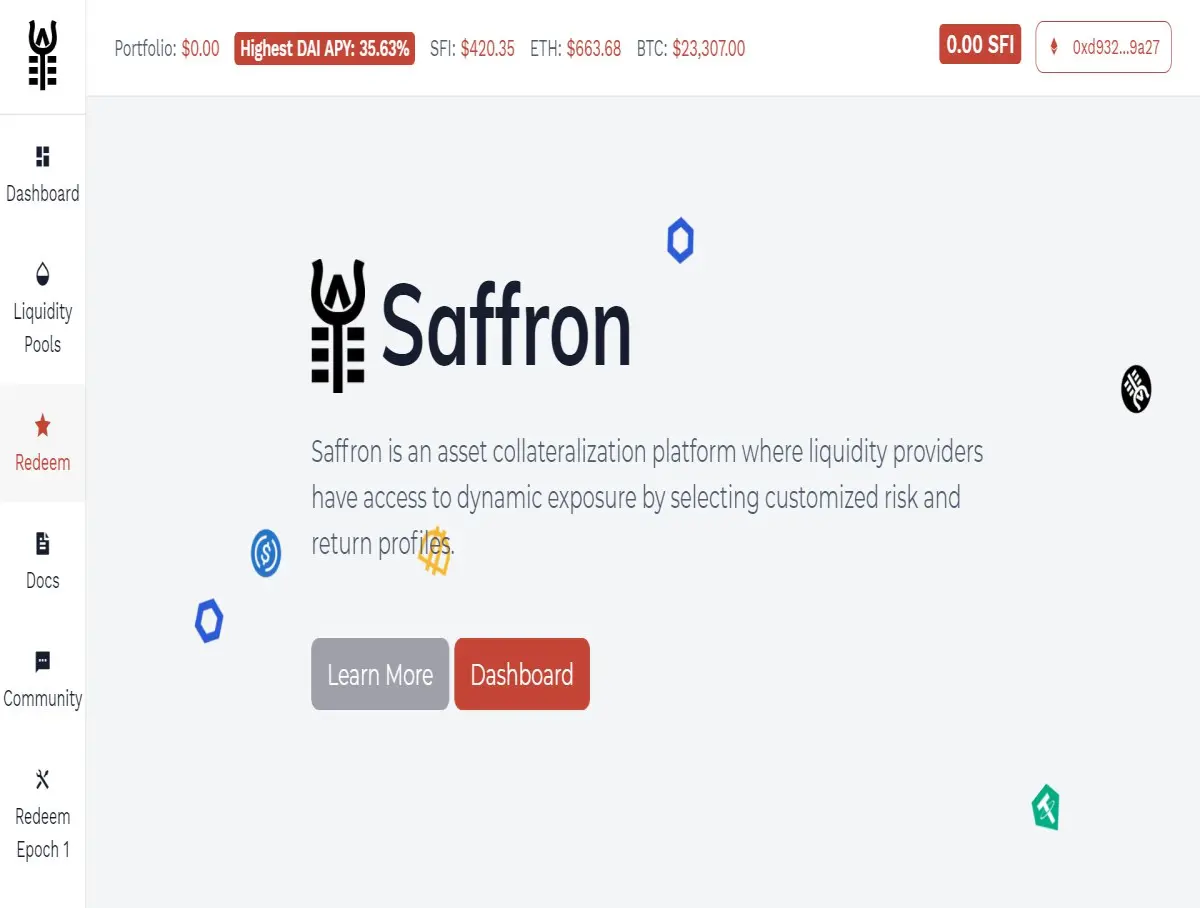
Saffron.Finance website homepage
Saffron.Finance (SFI) is a liquidity mining/yield farming protocol that has customized risk and return profiles via tranches which are split through the future earning stream and the net present value of utilized principle.
Both BarnBridge and Saffron.Finance are innovative new DeFi protocols that offer risk-averse liquidity mining strategies.
Mining in Epochs - Time Weighted Rewards
The aforementioned protocols have implemented a new type of DeFi mining where their corresponding protocol tokens are distributed to liquidity providers at the end of an epoch (a specific period of time).
LPs in these systems can only remove their provided liquidity alongside their mined $SFI in Saffron.Finance or $BOND in BarnBridge and any interest earned after the epoch has ended.
BarnBridge’s epoch mining program will last 100 weeks and includes rewards equal to 20% of the total supply (2,000,000 $BOND tokens) with each epoch rewarding 20,000 $BOND tokens. Each epoch in BarnBridge lasts 1 week.
Saffron.Finance’s epoch mining program started off with a payout of 40,000 $SFI tokens in the first epoch and is halved every subsequent epoch, up to and including epoch 7. Beginning on epoch 8, $SFI tokens are steadily released at a rate of 200 tokens per epoch, until reaching the 100,000 cap. Each epoch in Saffron.Finance lasts 2 weeks.
Summary
So there you have it. DeFi mining has come a long way from the advent of Synthetix’s liquidity mining. New DeFi protocols are constantly innovating new ways to incentivize users to participate and grow their ecosystems and the best form of mining/incentives are still being figured out.
What DeFi farming method do you find most attractive? Let me know in the comment section below.






