
Introduction to Bitcoin:
Bitcoin is a decentralized digital currency that was invented in 2008 by an unknown person or group of people using the name Satoshi Nakamoto.
It was created as a response to the financial crisis, aiming to provide an alternative to traditional centralized banking systems.
Bitcoin operates on a technology called blockchain, which is a distributed ledger that records all transactions across a network of computers.
How Bitcoin Works:
Bitcoin transactions are verified by network nodes through cryptography and recorded on the blockchain.
Users can send and receive Bitcoin through their digital wallets, which are secured with private keys.
The total supply of Bitcoin is limited to 21 million coins, making it a deflationary currency.
Benefits of Bitcoin:
Decentralization: Bitcoin is not controlled by any central authority, such as a government or bank, providing users with financial sovereignty.
Security: The blockchain technology behind Bitcoin ensures the security and immutability of transactions, making it difficult to hack or manipulate.
Fast and Low-Cost Transactions: Bitcoin transactions can be sent globally within minutes with lower fees compared to traditional banking methods.
Potential Applications:
Peer-to-peer payments: Bitcoin can be used to send money directly to another person without the need for intermediaries.
International remittances: Bitcoin enables cheaper and faster cross-border transactions, especially for individuals who don't have access to traditional banking services.
Store of value: Some people view Bitcoin as a digital gold and a hedge against inflation.
Challenges and Risks:
Volatility: Bitcoin's price can be highly volatile, which can make it risky for some investors.
Regulatory Uncertainty: Governments around the world are still figuring out how to regulate cryptocurrencies, which can create uncertainty for businesses and users.
Security Concerns: While the blockchain is secure, individual wallets and exchanges can be vulnerable to hacks if proper security measures are not taken.
BITCOIN TRADING
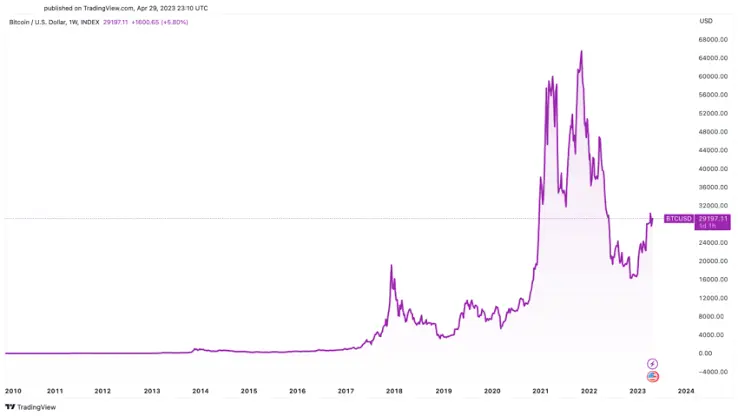
Title: A Beginner's Guide to Bitcoin Trading: All You Need to Know
Introduction: Bitcoin, the world's first cryptocurrency, has gained immense popularity over the years. It has not only revolutionized the financial industry but also opened up new avenues for investment and trading. If you're interested in exploring the world of Bitcoin trading, this blog post is for you. We will cover the basics, key concepts, and strategies to help you get started.
Understanding Bitcoin:
What is Bitcoin and how does it work?
The decentralized nature of Bitcoin and its advantages.
How Bitcoin differs from traditional fiat currencies.
The role of blockchain technology in securing Bitcoin transactions.
Getting Started with Bitcoin Trading:
Creating a Bitcoin wallet to store your digital assets.
Choosing a reliable cryptocurrency exchange to trade Bitcoin.
Verifying your identity and securing your account.
Understanding the different types of orders (market, limit, stop-loss) and their significance.
Fundamental Analysis:
Exploring factors that influence Bitcoin's price movements.
Understanding market trends, news, and events affecting Bitcoin's value.
Evaluating Bitcoin's adoption rates, regulatory developments, and public sentiment.
Analyzing the impact of macroeconomic factors on the cryptocurrency market.
Technical Analysis:
Introduction to technical analysis and its relevance in Bitcoin trading.
Learning key indicators: moving averages, RSI, MACD, Bollinger Bands, etc.
Recognizing chart patterns and using them to predict price movements.
Using support and resistance levels to identify potential entry and exit points.
Risk Management and Strategies:
Setting realistic goals and managing your risk tolerance.
Implementing proper risk management techniques, such as position sizing and stop-loss orders.
Exploring popular trading strategies: day trading, swing trading, and long-term investing.
Diversifying your portfolio to mitigate risk and maximize returns.
Tools and Resources for Bitcoin Trading:
Exploring trading platforms and charting tools for technical analysis.
Utilizing cryptocurrency news aggregators and social media platforms for market insights.
Joining online communities and forums to learn from experienced traders.
Staying updated with Bitcoin-related news, regulatory changes, and technological advancements.
Conclusion:
Bitcoin trading can be an exciting and potentially profitable venture, but it requires knowledge, practice, and discipline. By understanding the fundamentals, employing sound trading strategies, and staying updated with market trends, you can navigate the world of Bitcoin trading more effectively. Remember, it's essential to start small, invest only what you can afford to lose, and continuously educate yourself to enhance your trading skills.
Disclaimer: Trading cryptocurrencies, including Bitcoin, involves risks, and it's important to conduct thorough research and seek professional advice before making any investment decisions.
Note: The purpose of this blog post is to provide general insights into Bitcoin trading and does not constitute financial advice. Always do your own research and consult with a financial professional before making investment decisions.
BITCOIN MINING
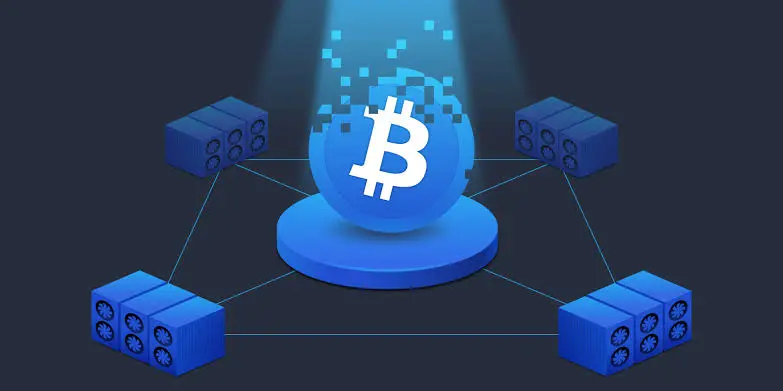
Bitcoin mining is the process by which new Bitcoins are created and transactions are verified and added to the blockchain, which is the public ledger of all Bitcoin transactions. It involves using powerful computers to solve complex mathematical problems that validate and secure transactions on the network.
Here's a breakdown of the Bitcoin mining process:
Transaction Verification: Miners collect and verify pending transactions by checking their validity, ensuring that the sender has enough funds, and confirming that the transaction adheres to the network's rules.
Creating a Block: Verified transactions are grouped into a "block" along with a special transaction called the "coinbase transaction." This transaction contains the miner's reward, which is currently 6.25 Bitcoins per block (subject to halving events).
Solving the Proof-of-Work: Miners compete to solve a cryptographic puzzle, known as the proof-of-work (PoW), by repeatedly guessing a random number until they find the correct answer. This process requires substantial computational power and is designed to be difficult and time-consuming.
Validating and Adding the Block: Once a miner discovers the solution to the PoW, they broadcast the new block to the network. Other miners then validate the block by independently verifying the PoW solution and checking the included transactions. If the block is valid, it is added to the blockchain.
Reward and Fees: The miner who successfully mines a block receives the block reward, which consists of newly minted Bitcoins. Additionally, they may collect transaction fees that users include when sending Bitcoin. Miners are incentivized to include as many high-fee transactions as possible to maximize their earnings.
Mining Difficulty: Bitcoin's protocol adjusts the mining difficulty every 2016 blocks (approximately every two weeks) to maintain a consistent block creation rate of around 10 minutes. This difficulty adjustment ensures that the mining process remains challenging and the network remains secure.
It's worth noting that Bitcoin mining has become highly competitive, with specialized hardware and large-scale mining operations dominating the scene. Mining profitability depends on factors such as electricity costs, hardware efficiency, and the current Bitcoin price.
Overall, Bitcoin mining plays a crucial role in maintaining the integrity and security of the Bitcoin network while providing a mechanism for new Bitcoins to enter circulation.
You can STORE/TRADE /MINE Bitcoin with BINANCE
#Bitcoin #btc #crypto #cryptocurrency #cryptocurrencynews #trading #mining #Bitcointrading #Bitcoinmining #wallet #BINANCE #Earn






