Britain is not debating whether digital money will arrive.
It already has.
The debate now is about something far more direct.
Who controls it.
The UK’s central bank digital currency project, often referred to as Britcoin, has moved from policy discussion into active political conflict.
Nigel Farage has publicly opposed the idea of a state controlled digital currency system, framing it as a question of financial freedom and government reach. What was once a technical financial topic is now part of a much larger argument about control over money itself.
But the political debate is only one layer.
At the same time, the wider digital payments landscape is already shifting.
Stablecoin networks operate globally, outside traditional banking systems, while regulators continue to explore how state issued digital currencies would fit into this structure.
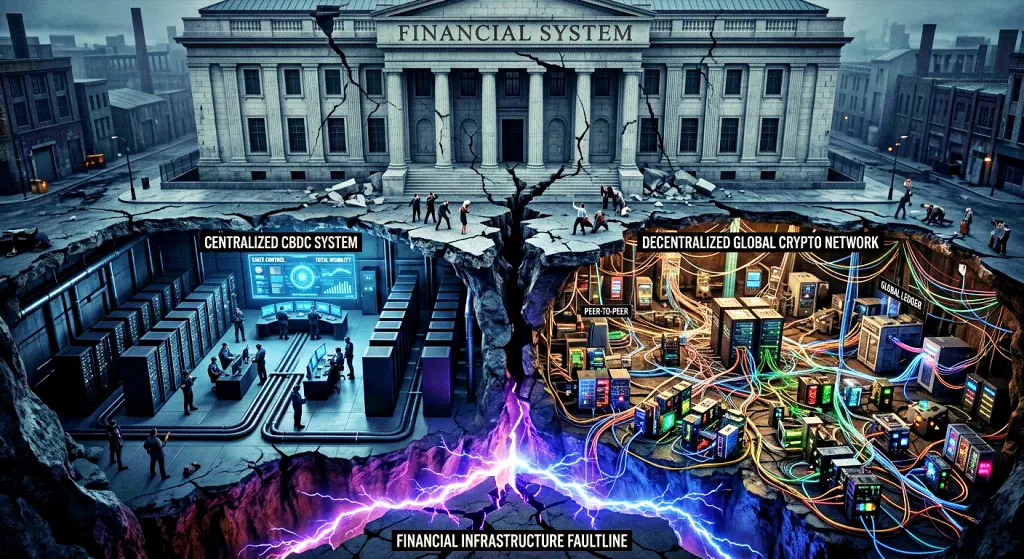
This creates a clear tension between two models.
One model is state issued digital money, fully integrated into national monetary systems and subject to centralized oversight.
The other is a decentralized global payment layer that already exists and moves across borders in real time.
Britcoin sits directly between these two directions.
And that is what makes the discussion larger than the UK.
Because this is no longer about whether digital currency should exist.
It is about which system becomes the default infrastructure for money.
And once that decision is made, it will not only change how payments work.
It will change who has control over them!