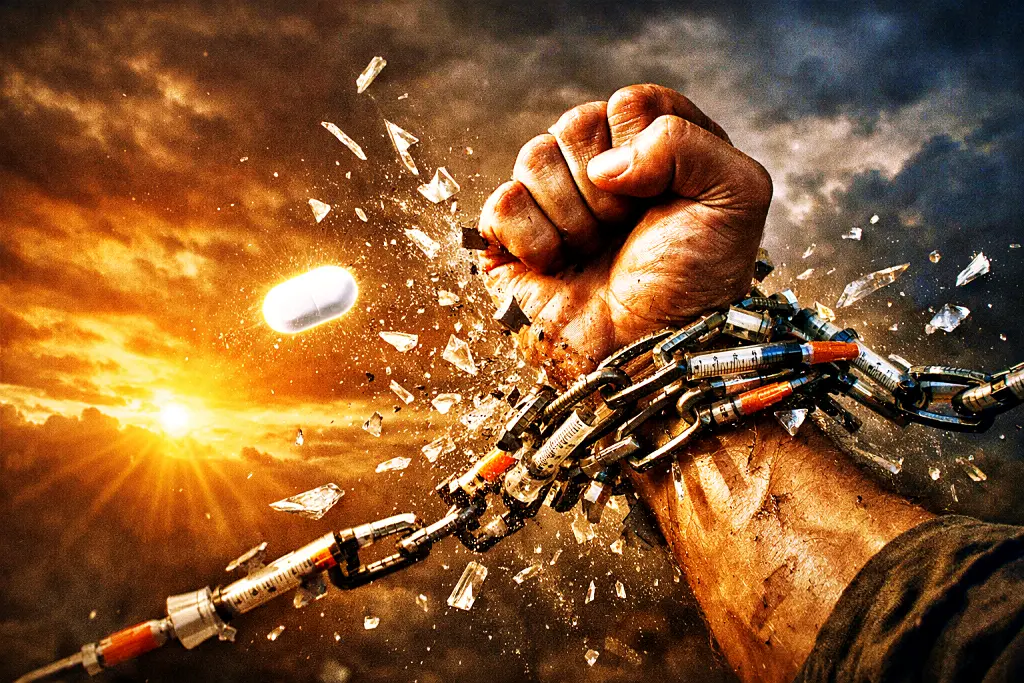
Every day, millions of people push a needle into their skin just to stay alive.
Not once but again and again, for years.
It becomes routine, something you learn to live with but it never truly feels normal.
It’s a constant reminder that your body depends on something it can no longer do on its own.
Now imagine waking up one day and not needing that needle anymore.
No preparation, no hesitation, no quiet moment where you brace yourself.
Just a simple pill, taken like any other medication.
It sounds small, almost trivial but for someone living with diabetes, it would change everything!
For many people, it’s not even the pain, it’s the repetition.
The fact that it never really stops, at least not today!
For decades, this idea has felt out of reach.
Insulin is not like most medicines.
It’s a fragile protein and the human body is very good at breaking proteins down.
When swallowed, insulin doesn’t survive the journey through the stomach.
It gets destroyed before it ever has a chance to help.
That’s why injections have always been necessary.
But that may be starting to change.
Scientists are now developing new ways to protect insulin as it passes through the digestive system and help it reach the bloodstream.
Early research shows promising results.
It’s not ready yet and it won’t replace injections overnight but for the first time, this idea is starting to feel real!
And if it works, the impact won’t just be medical.
It will be personal.
Because living with diabetes is not only about numbers and measurements.
It’s about habits, limitations and constant awareness.
It’s about always carrying something with you, always planning ahead, always being careful.
Removing the need for injections wouldn’t cure the disease but it would remove one of its most visible and difficult burdens.
Progress in medicine is often measured in data, percentages and outcomes.
But sometimes, the real progress is simpler than that.
It’s about making life easier.
Less painful.
More normal.
If insulin pills become part of everyday treatment in the future, we might look back at injections the same way we look at outdated medical tools today.
Something that once felt unavoidable but eventually became unnecessary.
And for millions of people, that would not be a small change.
It would be a completely different way of living!