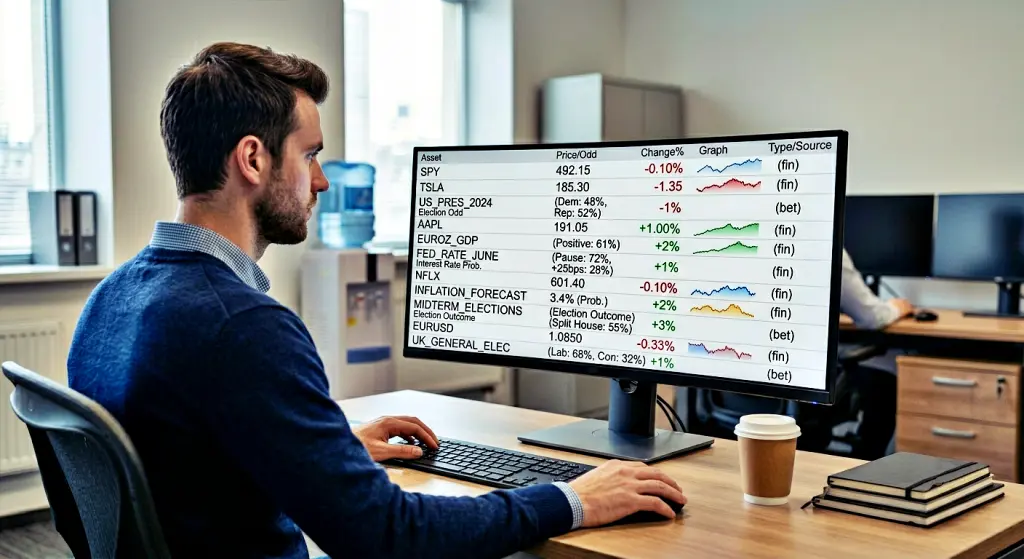
Trading used to be simple.
Charts, risk, positions. That was the language.
Betting was something else.
Games, sports, chance.
Two separate worlds.
That separation doesn’t feel as clear anymore.
Prediction markets started small, almost like an experiment.
A way to price uncertainty instead of assets.
Now they’re becoming something more serious.
People aren’t just trading coins anymore.
They’re trading outcomes.
Elections, rates, inflation data...
Things that used to live in reports now have prices attached to them.
Crypto didn’t exactly keep the boundaries clean either.
Perpetual futures already pushed things closer to betting.
Leverage, direction, constant exposure.
If you strip it down, the difference starts to feel smaller than it used to.
Prediction markets just extend that logic further.
One example is TurboFlow, an onchain platform built around prediction markets and perpetual futures.
They raised $6 million in a seed round led by Pantera Capital with Susquehanna Crypto and Digital Currency Group participating.
They describe what they are building as “high-velocity event trading”.
Small positions on real-world outcomes, even down to $2 entries.
They also say they’ve processed more than $19 billion in trading volume during beta with over 15,000 users.
Those numbers matter but the direction matters more.
This is no longer a side experiment.
It is starting to look like a category forming.
Even the language has shifted.
Not betting on events anymore.
More like trading probability.
That sounds small but it changes the framing.
Because once outcomes become tradable like assets, the line between trading and gambling becomes harder to see.
Regulators are still trying to define it.
Finance or gambling.
There is still no clean answer.
And the market doesn’t seem to be waiting for one!