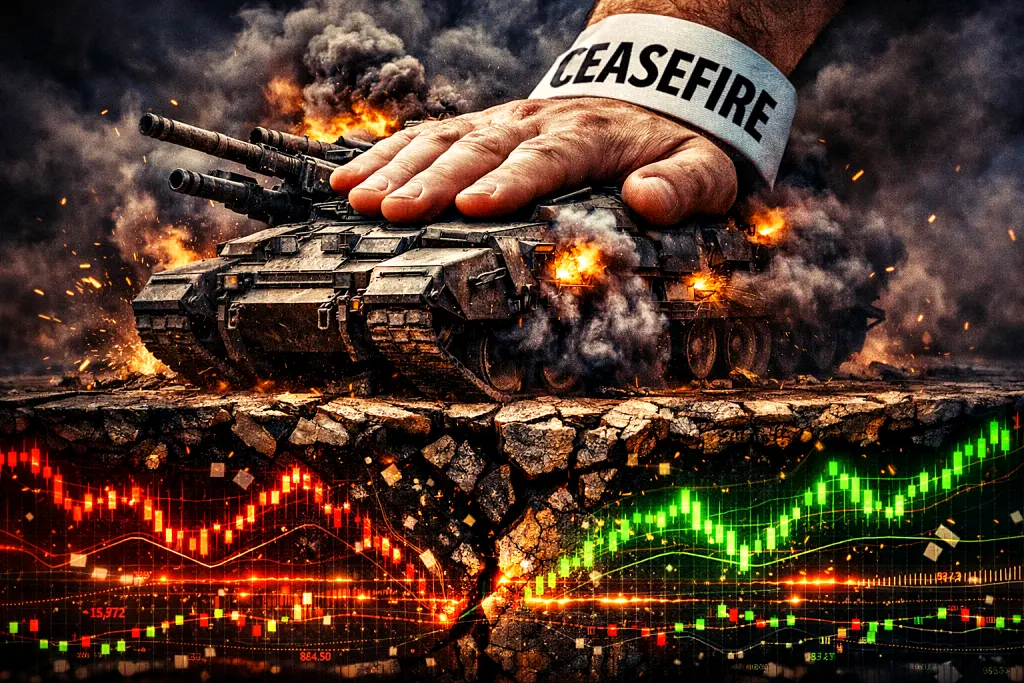
A ceasefire was announced.
Normally, that kind of headline brings relief.
Markets calm down, investors step back in and there’s this quiet sense that maybe things are finally stabilizing.
But this time… something felt off.
Markets didn’t really react the way you’d expect.
No strong relief rally.
No clear shift in sentiment.
Just hesitation.
And that hesitation matters more than the headline itself.
Because in finance, price action often tells a more honest story than the news ever will.
If the situation was truly “resolved”, you’d expect confidence to return quickly.
But instead, investors are holding back. Watching. Waiting!
Why?
Because a ceasefire doesn’t always mean the risk is gone.
Sometimes, it just means the situation is… paused.
History has shown this again and again.
Temporary calm doesn’t equal stability.
And markets know that.
There are still too many unanswered questions.
Too many moving parts behind the scenes.
Key trade routes, energy flows and geopolitical tensions don’t disappear overnight..
And when those risks remain, so does uncertainty.
And markets hate uncertainty more than anything.
That’s why “good news” doesn’t always lead to buying.
Sometimes, it does the opposite!
In fact, some of the biggest moves happen right after moments when everyone else starts to relax.
Because that’s when positioning shifts quietly, without attention.
So maybe the real question isn’t:
“Is the conflict over?”
Maybe it’s:
“Do the people with the most money believe it’s over?”
Right now, the answer doesn’t seem very convincing.
There’s a visible calm on the surface.
But underneath, the tension hasn’t fully disappeared.
And markets are pricing that in.
At the end of the day, this isn’t just about geopolitics.
It’s about trust.
And trust doesn’t come back with a single announcement.
It builds slowly… and breaks quickly.
So if markets aren’t buying the ceasefire,
maybe it’s worth asking why.
Because sometimes, the biggest risk isn’t bad news.
It’s believing that everything is fine when it isn’t!