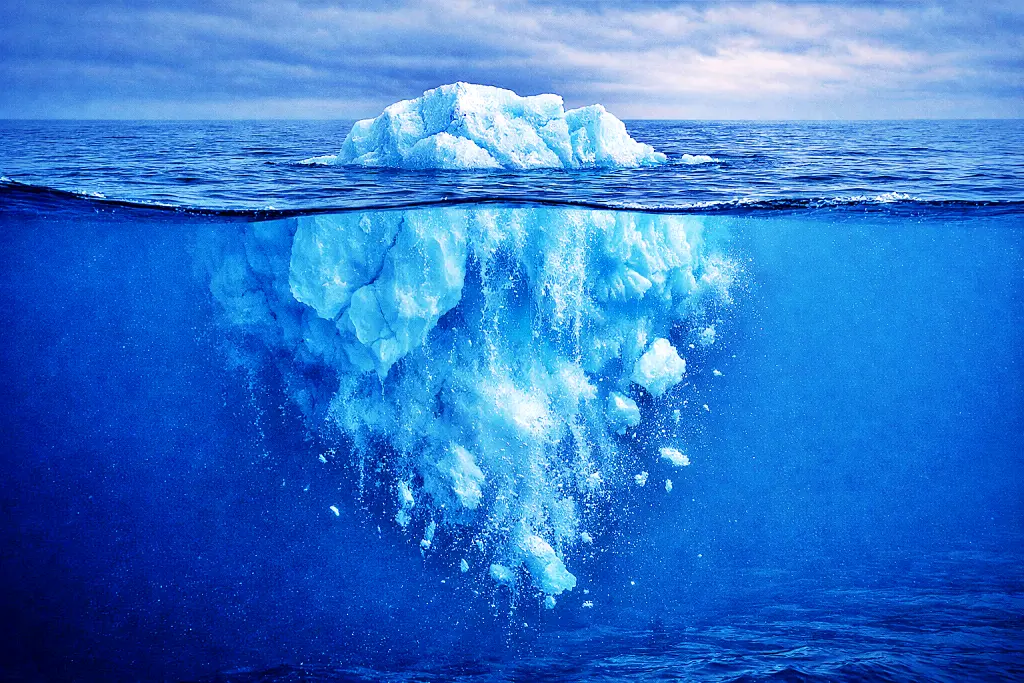
For almost 40 years, a massive piece of ice drifted across the ocean.
No one really paid attention to it most of the time.
It just moved slowly, carried by currents, surviving year after year.
That iceberg was A-23A.
When it first broke away from Antarctica in the mid-1980s, it was one of the largest in the world.
For decades, it stayed mostly intact even as everything around it kept changing.
And now, it’s gone!
Not all at once.
Not in some dramatic moment.
It slowly broke apart, piece by piece, until there was nothing left of what it used to be.
There’s something about that which feels familiar.
We usually think that if something is big enough, it will last.
That size means stability.
That time means strength.
But this iceberg shows that even the biggest things don’t stay the same forever.
It didn’t suddenly fail.
It didn’t collapse overnight.
The process had already started the moment it separated from the continent.
In a way, its ending was built into its beginning.
And maybe that’s the hard truth.
We don’t notice change until it’s already done.
We expect things to end in clear, obvious ways.
But most of the time, they don’t.
Things just shift, little by little, until one day, they’re no longer what they used to be!
The ocean didn’t destroy the iceberg instantly.
It changed it over time.
And that’s how most things in life actually work.
The story of A-23A isn’t just about ice.
It’s about how change really happens.
Quietly.