
Lenfi is a decentralized lending and borrowing protocol that emerged amidst the smart contract craze on Cardano in 2021. The project began under Aada Finance and deployed the first lending dApp on the blockchain in late 2022. Aada Finance rebranded to Lenfi in mid-2023 as part of its V2 launch campaign. The V2 dApp launched in February 2024, cementing the project's status as the go-to hub for decentralized lending and borrowing of Cardano native tokens.
Core DeFi Features
Lenfi's architecture is built on several innovative features that differentiate it within the Cardano crypto DeFi space:
Peer-to-Peer Loans
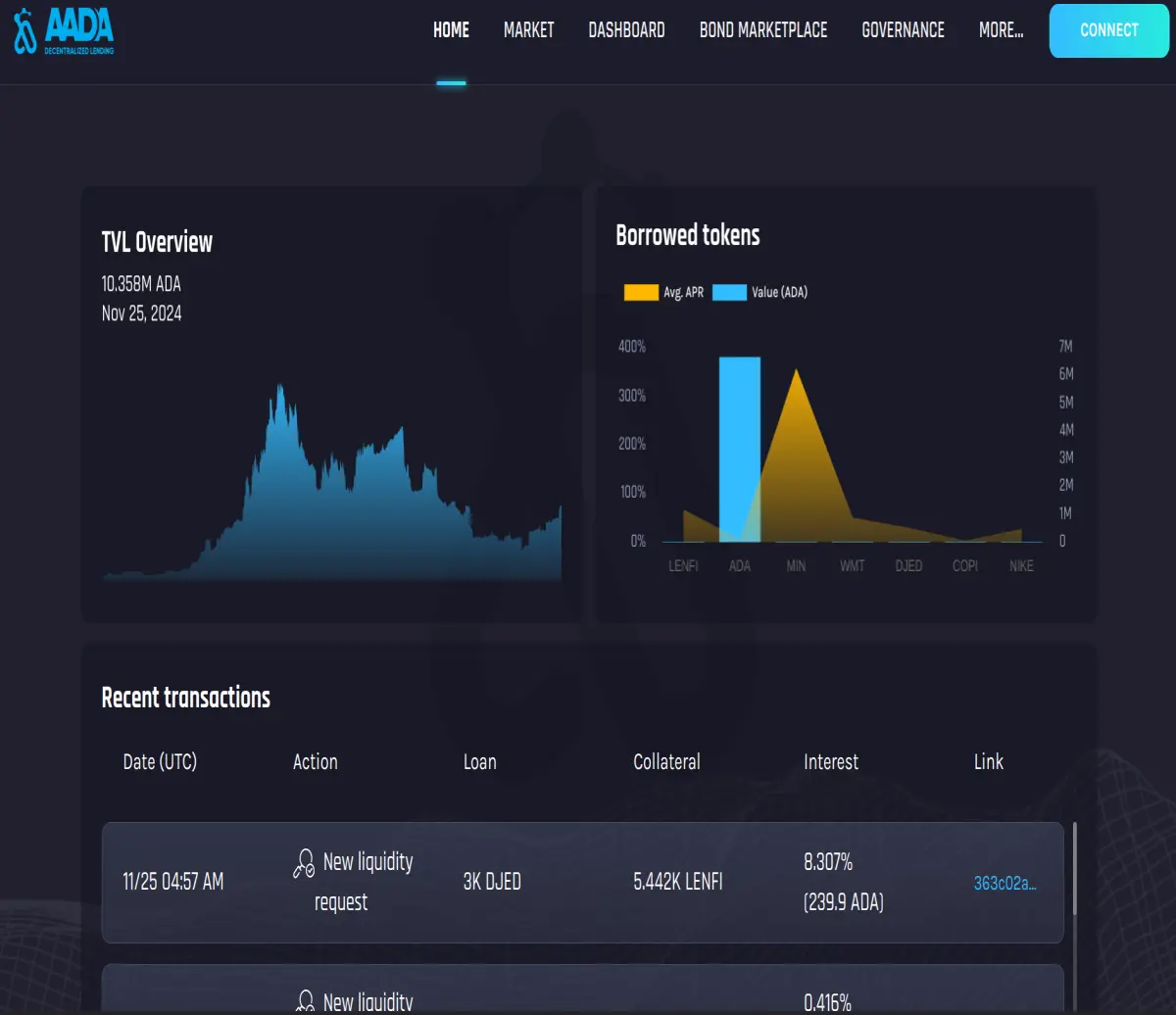
The peer-to-peer dApp (app.aada.finance) launched on Cardano right around the Vasil hardfork in September 2022. It utilizes overcollateralized, fixed-term, and fixed-rate loans where the borrower must repay on time or before the Health Factor parameter drops below. On the other hand, the lender is guaranteed yield in the form of interest or commission when liquidating the loan. The dApp features two types of loans - borrower requests and liquidity deposits:
- Borrower requests - The borrower submits a loan request with pre-set parameters, including collateral token, loan token, APR, and duration.
- Liquidity deposits - The lender deposits an offer with pre-set parameters and the tokens they wish to lend.
Isolated Pool Markets
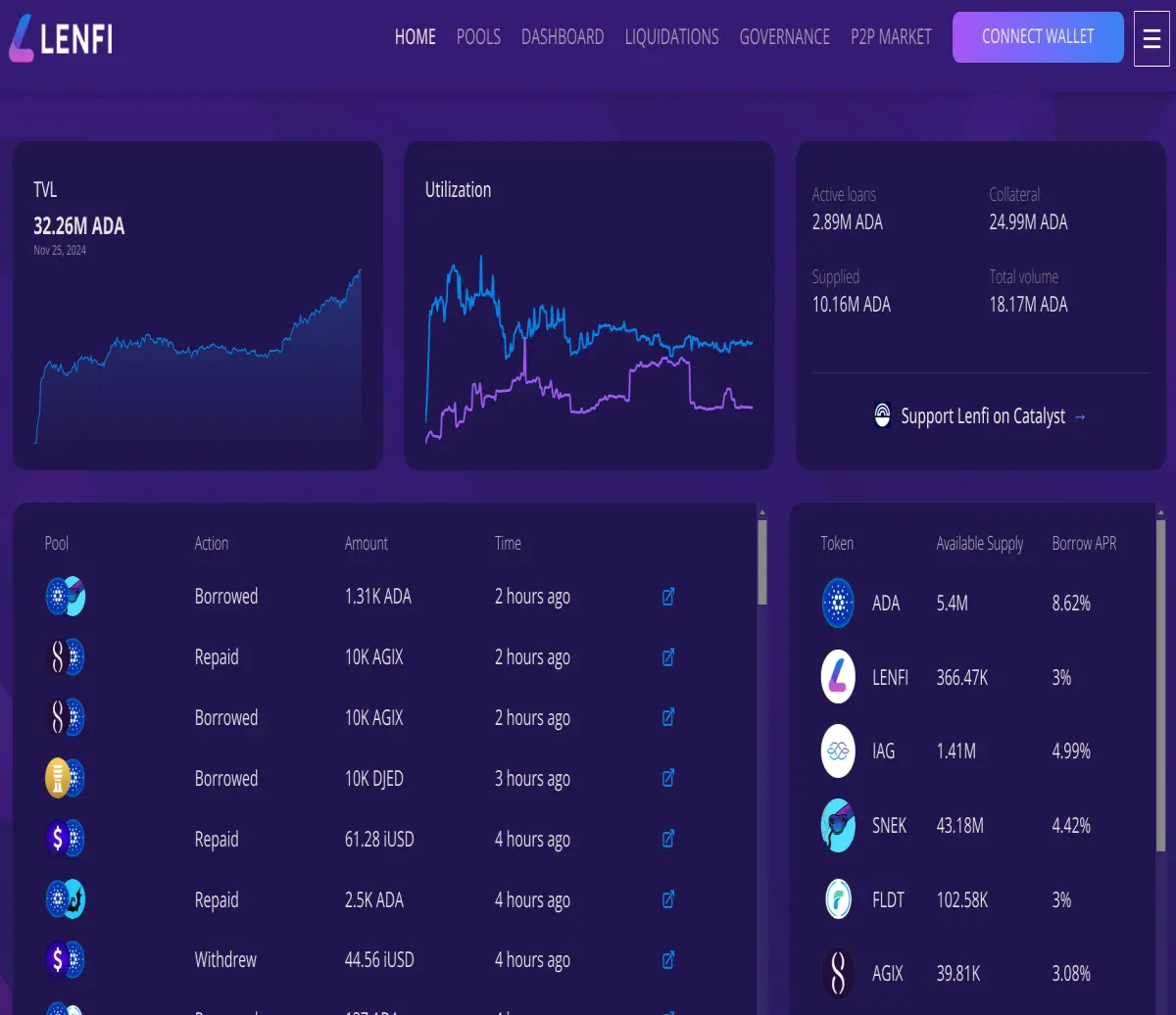
The second Lenfi dApp (app.lenfi.io) launched in February 2024 and introduced isolated pool markets to Cardano. The protocol enables permissionless pool creation of native token pairs, including ADA and stablecoins. Some of the most notable features of the Lenfi V2 app include:
- Pool Ownership - Each pool has a pool owner who can delegate the deposited ADA (if the pool pair includes it) to a Stake Pool and dRep (Cardano governance representative). The staking rewards are distributed among the suppliers and act as additional incentives for depositing funds in ADA pools.
- Fixed-term Loans - Borrow APRs are fixed, making rates on Lenfi more attractive compared to Ethereum-based lending protocols.
NFT Bonds
The so-called NFT bonds are a unique proposition by Lenfi that leverages Cardano’s UTXO capabilities. In simple terms, every loan position on both dApps is tokenized, making debt transferable and tradeable commodity. While the feature is yet to attract more significant attention from the market, it enables the introduction of liquidations as a form of managing bad debt and an alternative to defaulting.
Decentralized Governance
Decentralized governance is another key point of Lenfi’s concept of permissionless, community-owned protocol. With the LENFI token as its essential driving force, the community can effectively propose to whitelist or remove native assets and adjust and improve protocol parameters.
So far, the community has approved 27 collateral and 51 borrowable assets and many improvement proposals, including increasing the starting vesting interest threshold for p2p loans to 20% and protocol fee switch.
Upcoming Updates
While Lenfi is already a distinctive player in Cardano DeFi, the innovation does not stop. Some of the most notable features in the works include:
P2P Upgrade
Shortly after the release of the V2 dApp, the Lenfi team announced plans to upgrade the V1. The first protocol is still frequent, and the updated version, dubbed V3, aims to become the new fan favorite. Some of its performance and UI improvements include:
- Multi-collateral Loans
- Collateral Top-ups
- Action Composability
dRep Delegations
The recent Chang hardfork ushered Cardano into a new era of on-chain governance thanks to the CIP-1694 improvement proposal. It effectively makes ADA a governance token, allowing users to delegate their voting power to dReps. The problem is that the feature is currently incompatible with ADA-locked smart contracts. Lenfi aims to tackle this challenge by becoming the first Cardano DeFi app to unlock the possibility of utilizing deposited ADA in the new form of on-chain decision-making. Moreover, this upcoming update will add yet another use case for pool owners, making the proposition of owning a lending pool on Lenfi much more attractive.
Xlend
Xlend is another Catalyst proposal that the Lenfi team has submitted for the 13th round of funding. The concept is simple - create a decentralized crypto app for leveraged trading using the Lenfi V2 pools. Such a protocol will bridge the gap between DeFi and CeFi, allowing users to multiply their positions without needing to go to centralized exchanges. Of course, everything will be audited and open-sourced so the community can contribute and build on top of the end product.
Tokenomics & Market Position
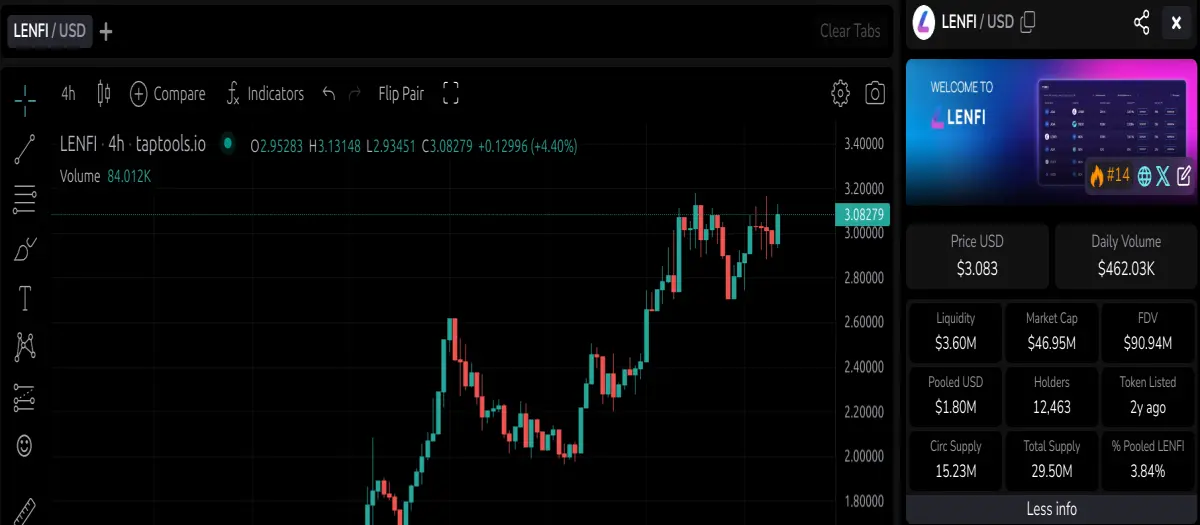
The primary utility of the LENFI tokens is governance, but staking and fee sharing are additional incentives planned for the future. The token has a total supply of 29.5m, out of which 15.23m are in circulation while the rest are held in the DAO wallet.
The vesting ended long ago, creating a healthy market environment for new holders willing to improve the protocol through decentralized on-chain voting. What makes LENFI attractive is its relatively low market cap paired with an all-in-one platform for peer-to-peer and perpetual loans, which generate fees that the DAO can later redirect to the holders.
Total Supply: 29,500,000 LENFI
Circulating Supply: 15,230,000 LENFI (the rest is held in the DAO wallet)
Holders: 12,400
Token Utility:
- Governance,
- Staking (TBA)
- Fee sharing (TBA)
Token Availability: Cardano DEXs
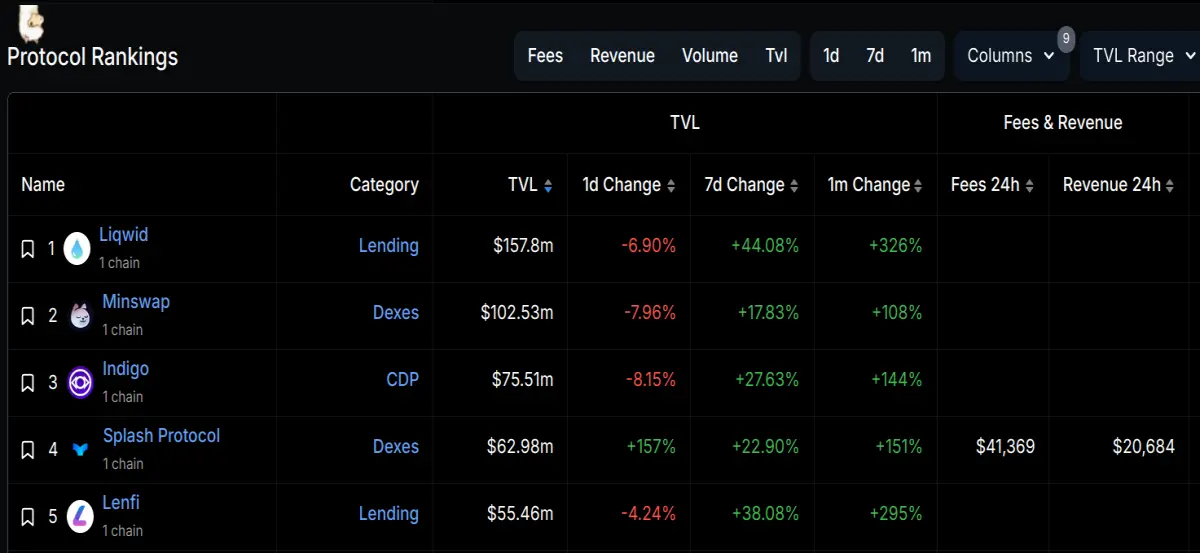
Lenfi is in the top half of the Cardano DeFi ecosystem, sitting at 5th place with $55,500,000 Total Value Locked. Its peer-to-peer and isolated pool market designs make it resistant to the traditional native token exploits prevalent in EVM-based protocols. This feature makes Lenfi a central hub for borrowing ADA and stablecoins against Cardano native tokens like SNEK (Snek), IAG (Iagon), LENFI (Lenfi), BTN (Butane), and others.
Project Market Cap: $45,000,000
Protocol TVL: $55,500,000
Final Verdict
In conclusion, Lenfi certainly presents a solid foundation within Cardano’s DeFi sector with its strong governance and continuous innovation. While the project faces some challenges regarding adoption, the need for feature expansion is already being addressed. The team has submitted a new batch of Catalyst Fund proposals, which, if approved, will help propel the project to the next level.
Lenfi has already earned its spot as an innovator and an avid open-source contributor in the space. The low circulating supply of LENFI and the significant discrepancy between the market cap and TVL show that the project is still highly undervalued. Undoubtedly, and is evidently going to lead the ecosystem in the coming year.





