
There was a phase where privacy coins were the latest craze in crypto and are always something of interest with any cryptocurrency. Zcash (ZEC) came to the crypto scene back in 2016 but was actually around earlier than that under a different name to the project.
How it Started
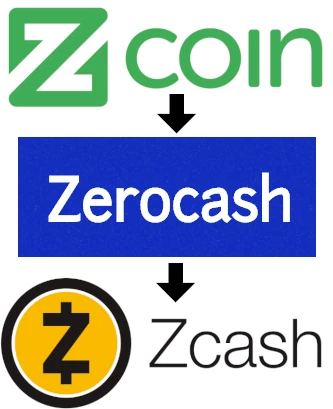
Originally named Zerocoin, the project began back in 2013 by a team of researchers from The Johns Hopkins University Department of Computer Science, Baltimore, USA. Like many other coins on the market today, Zerocoin wanted to solve the privacy issues Bitcoin has and had its own implementation of allowing anonymous transactions.
The Zerocoin team eventually collaborated with teams from MIT and other universities to improve on Zerocoin's privacy and efficiency that lead to the project changing to Zerocash.
After some time, the Zerocash team began to work with Zooko Wilcox and his team at Least Authority and began to transition Zerocash to Zcash between 2014-2015. Eventually, the team launched the Zcash mainnet on October 28, 2016.
Privacy
When privacy coins were the latest craze, it was the right timing for the change to Zcash as it gained a lot of attention for having privacy features. While Zcash isn't the first privacy coin to advertise the feature of private transactions that are "untraceable", they had one of the most advanced implementations at the time when it was released.
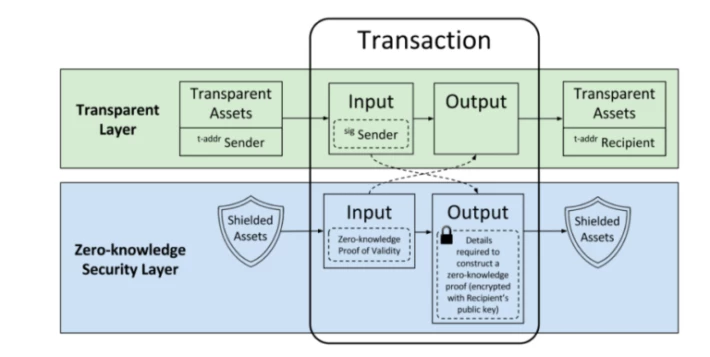
Zcash uses Zero-Knowledge Succinct Non-Interactive Argument of Knowledge (ZK-SNARK), a more modern form of zero-knowledge proof cryptography. There are two kinds of transactions that can be chosen in Zcash: Transparent and Shielded Private Transaction.
Read the original Zerocash Whitepaper for full technical details.
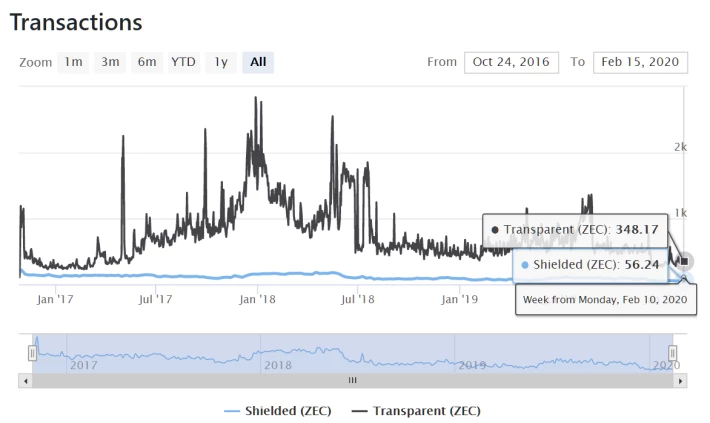
Zcash has some of the strongest cryptography but despite having that, the usage of shielded transactions is low compared to transparent transactions. Researchers say Zcash is not accepted by the majority of the top darknet markets.
Mining
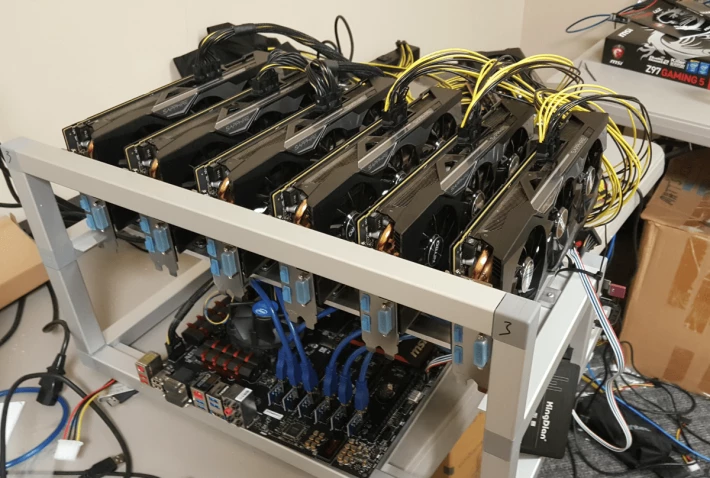
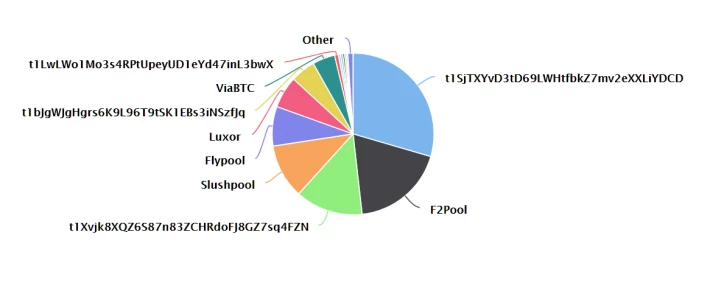
Zcash uses the Equihash Proof-of-Work (PoW) mining algorithm that is known to be Application-Specific Integrated Circuit (ASIC) resistant to allow for a more decentralized network consensus. However, according to the chart from the Zchain block explorer, there seems to be a bit of centralization going on with the mining distribution.
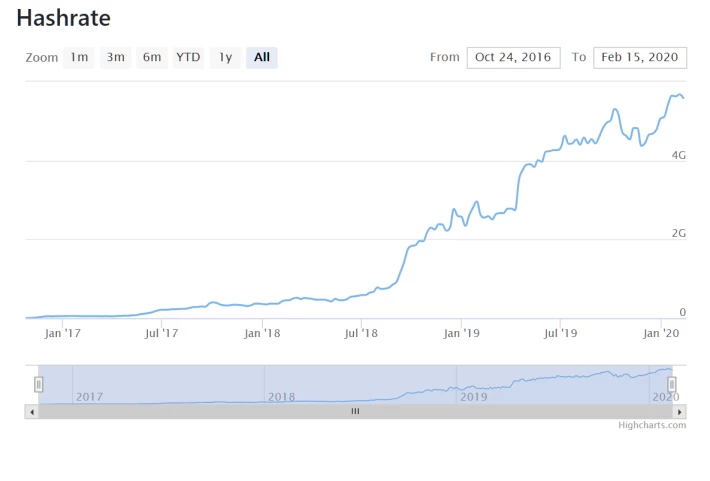
If you were around when Zcash mining launched, the craze pushed the hashrate up rather quickly and has been growing ever since. According to Zchain, its hashrate is currently seeing its all-time high.
Growth
To continue its push for privacy, Zcash is still seeing growth in 2020 as resources were released in January for mobile shielded Zcash wallets.
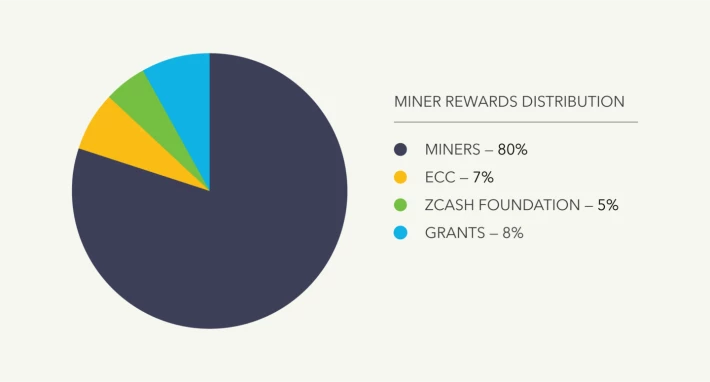
Zcash has joined the many blockchains that are creating development funds and recently finished a poll that decided that a new development fund for Zcash will be created and be implemented in November 2020 to happen during the first block reward halving. 20 percent of the mining rewards will be allocated to the new development fund. 7 percent of that will go to the Electric Coin Co. (ECC), the company that originally started Zcash.
Despite regulations, Zcash is still supported by some of the top exchanges. Even Coinbase recently announced supporting Zcash trading for New York residents where they are one of the most strictly regulated U.S. states with their BitLicense.
The Zcash Foundation has a $50,000 grant proposal that will be awarded to the developers of The Onion Router (TOR) to scale the network. Only after completing the upgrade to the TOR network, the TOR developers will receive the grant.
Zcash has some catching up to do with its competing privacy coins such as Monero (XMR) or Dash (DASH) being the #27 coin by market cap at the time of writing this. Can Zcash regain the popularity it once had? With all the recent news the growth seems to be gaining some traction and we will have to see how it performs in the coming years.






