
Busting the "No TVL" Myth About XDC
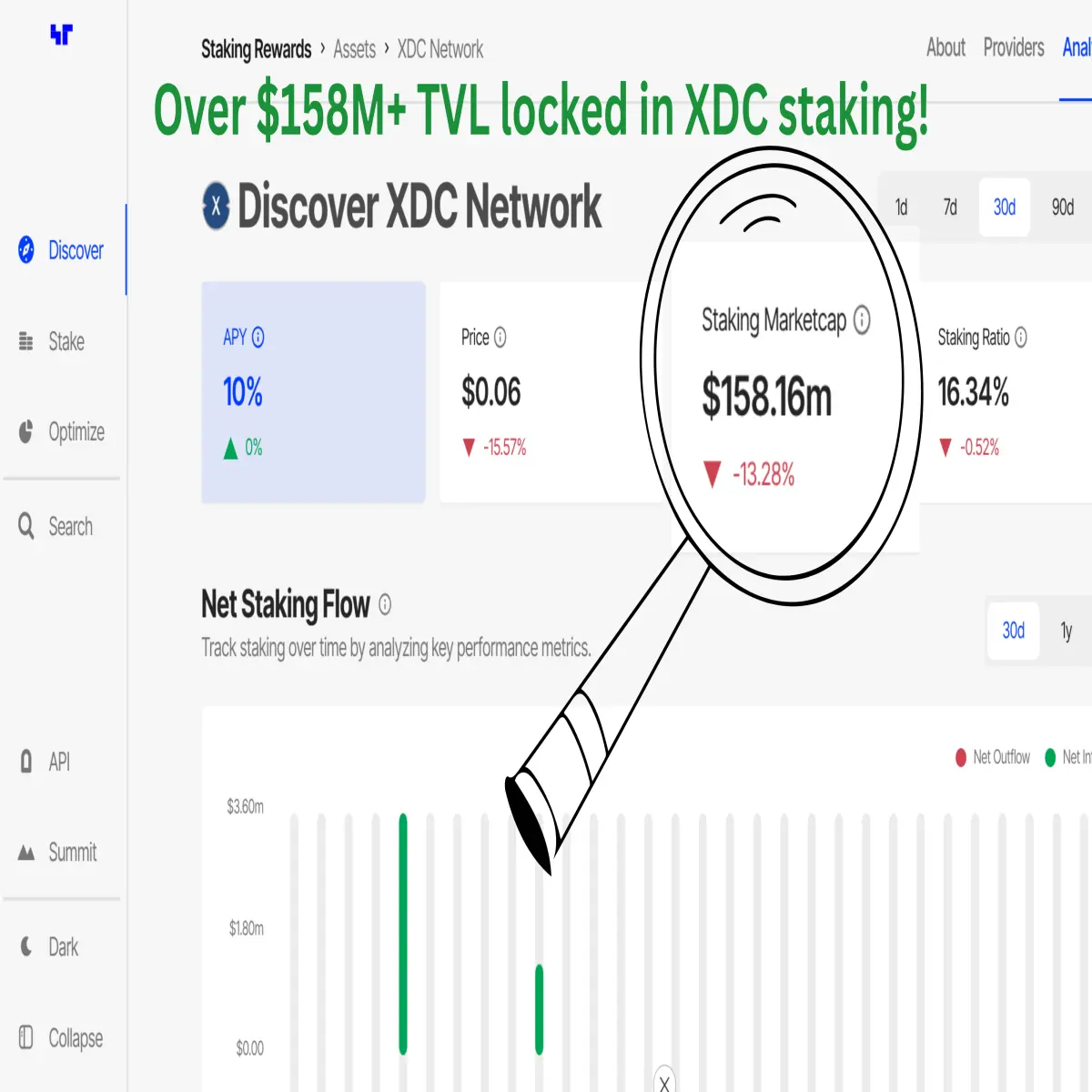
There’s a long-standing misconception in the blockchain space that the XDC Network lacks Total Value Locked (TVL). However, recent staking analytics tell a very different story.
According to StakingRewards, XDC now secures over $158 million in staked assets, with hundreds of validator nodes actively supporting the network. This isn’t hypothetical TVL from borrowed tokens or inflated DeFi — this is real economic security locked into the protocol via staking.
What is an XDC Validator Node?
An XDC validator node is a core participant in the XDPoS 2.0 consensus system, responsible for:
- Validating transactions
- Producing and finalizing blocks
- Maintaining network security
- Receiving staking rewards for active participation
Validators operate with staked XDC, either self-owned or delegated by other token holders. In return, they earn rewards based on performance and stake weight.
By setting up a validator node, you directly contribute to the $158M+ Total Value Locked (TVL) securing the XDC Network.
Current Staking and Validator Stats (As of June 2025)
Source: StakingRewards.com – XDC Analytics
- Estimated Annual Return: ~7.96% APR
- Total Value Staked: ~$227M
- Staked Supply: ~46.6% of circulating XDC
- Active Validator Nodes: 262
- Reward Frequency: Every few seconds
These figures may fluctuate based on network conditions, inflation rate, and number of active validators.
How to Set Up an XDC Validator Node
Running a validator on XDC requires technical knowledge and reliable infrastructure. Here’s a high-level overview:
Official Guide: https://xinfin.org/setup-masternode
Requirements:
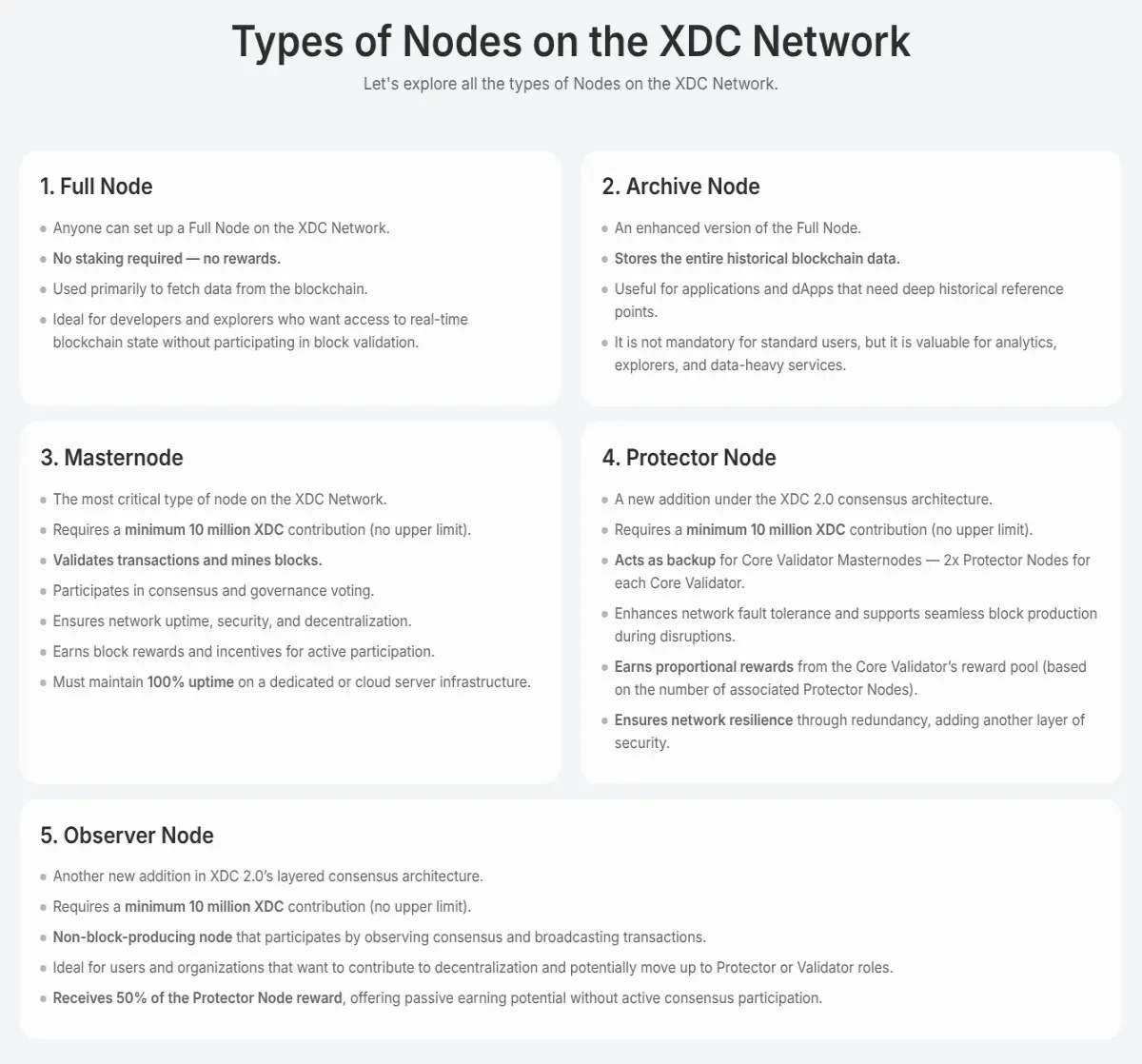
- XDC Holdings: A minimum of 10 million XDC to register a masternode
- Server Specs (recommended):
- 8vCPU, 32 GB RAM, 1TB SSD
- Static IP address
- Ubuntu 20.04 LTS or higher
- Technical Skills:
- Familiarity with Docker
- Linux/CLI experience
- Understanding of blockchain synchronization and node maintenance
Installation Guide:
Follow the official documentation to deploy your node step-by-step:
XDC Network Masternodes | XDC Masternode Setup Documentation
It includes:
- Node registration
- Syncing with the XDCChain
- Monitoring uptime and logs
- Security best practices
Validator Earnings and Rewards
With an estimated reward of ~7.96% APR, running an XDC validator is both impactful and rewarding. Validators also:
- Earn transaction fees
- Receive block production incentives
- Get rewarded for delegations (if they attract other stakers)
Example:
If you stake 10M XDC and earn ~8% APR, that’s approximately 800,000 XDC annually, before infrastructure and sharing costs.
These earnings also reflect locked value, reinforcing XDC’s TVL and validator-based decentralization.
Important Disclaimers
Before becoming a validator, consider these risks and responsibilities:
- Uptime Commitment: Validators must maintain high availability. Downtime may affect earnings.
- Penalties: Misbehavior (e.g., double-signing or inactivity) may result in slashing or node removal.
- Technical Maintenance: Regular updates, monitoring, and security checks are mandatory.
- Not Financial Advice: Rewards are estimated and not guaranteed. Market volatility can impact returns.
- Token Lock-in: Operating a validator requires locking a large amount of XDC; consider liquidity needs.
Essential References
- Node Setup Guide: XDC Network Masternodes | XDC Masternode Doc
- XDC Network Analytics – Staking Rewards
- XDC Network Official Site
- XDC Developer Portal & Forum
- XDC 2.0
- Technical White Paper
- Business White Paper
Final Thoughts
With over $158 million TVL, active validator participation, and real use cases across tokenization and trade finance, the XDC Network is among the most underestimated Proof-of-Stake ecosystems.
Running a validator node not only earns you passive income but also strengthens the decentralization of a next-gen blockchain with global utility.
If you're ready to support the mission — and grow your stake — now is the time to #BuildOnXDC.






