
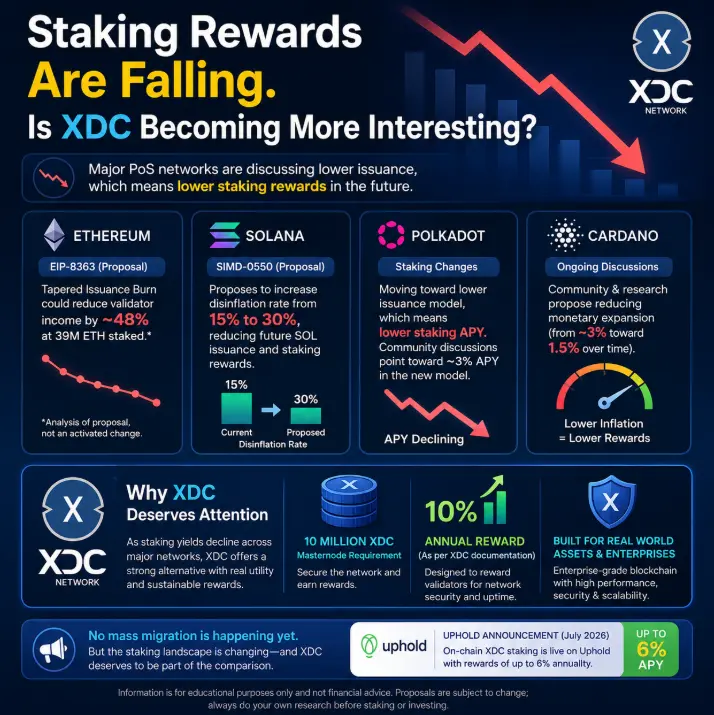
Ethereum is debating a major change to staking economics.
EIP-8363 proposes a tapered issuance-and-burn model. One analysis of the proposal estimates that validator income could fall by about 48% at 39M ETH staked — but this is a proposal, not a live Ethereum rule.
Solana is also considering faster disinflation, with SIMD-0550 proposing to increase its disinflation rate from 15% to 30%.
Polkadot is moving toward lower issuance and lower staking APY as well.
That creates an interesting question:
If major PoS networks reduce inflationary staking rewards, could alternative networks attract more staking capital?
XDC currently documents a 10M XDC masternode requirement and a 10% annual reward model, while Uphold offers XDC on-chain staking of up to 6%.
No mass migration is happening yet.
But the staking landscape is changing — and XDC deserves to be part of the comparison.
Disclaimer:
Information is for educational purposes only and not financial advice. Proposals and rewards may change. DYOR.





