
The German government has been selling bitcoin (BTC) for seven consecutive days, further intensifying this strategy that began three weeks ago.
Over the past three weeks, Germany has sold over 11,000 BTC, which is currently equivalent to $650 million (USD). 70% of this occurred in the last week, with approximately 1,000 BTC sold per day.
According to on-chain data collected by the Arkham explorer, the sales were made through various exchanges, such as Bitstamp, Kraken, and Coinbase, based on transfers detected to these platforms.
With this initiative, the holdings of the German government's digital currency increased from 50,000 BTC to 38,621 BTC in this period. This can be seen in the following graph.
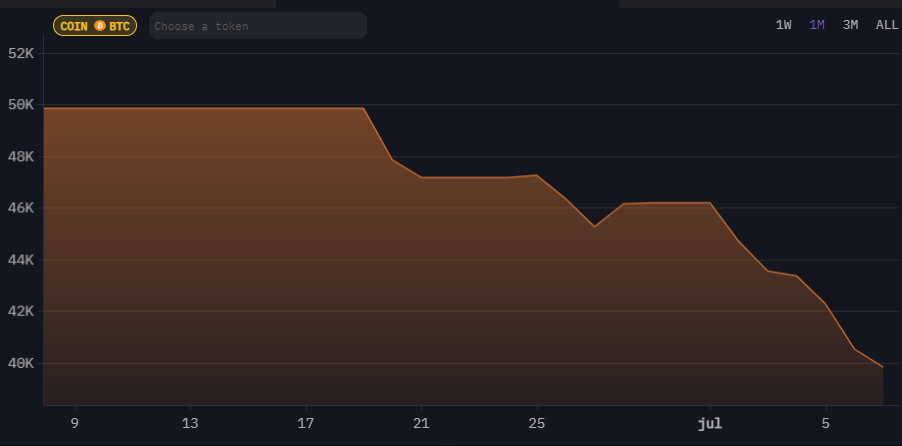
Germany's Bitcoin holdings per day. Source: Arkham.
Still, it is worth noting that Germany's holdings of bitcoin remain among the largest in the world at the government level. It is the fifth country with the largest holdings of the digital currency after the United States, China, the United Kingdom and Ukraine, as the table below shows.
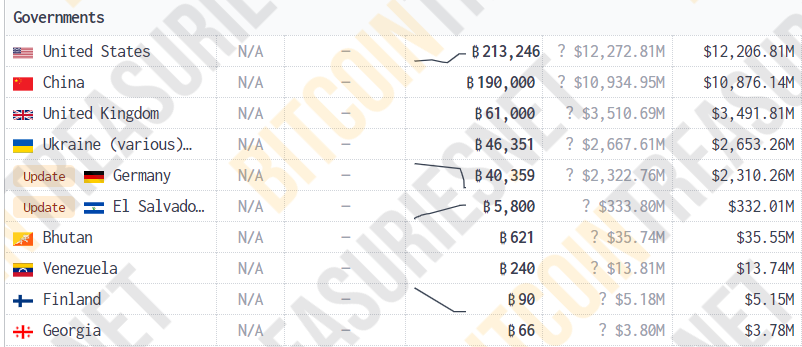
Countries with the most bitcoin. Source: BitcoinTreasuries.
Germany's selling added to a wave of supply that sent bitcoin's price plummeting below $54,000 last week. Bitcoin briefly fell below $56,000, a level that has acted as support for the currency during the period of lateralization that it has been experiencing for three months.
Germany continues to sell bitcoin despite criticism
Germany's decision to sell has received criticism in the country. “Instead of keeping bitcoin as a strategic reserve currency, as is already being discussed in the United States, our government is selling on a large scale,” said deputy Joana Cotar.
However, the German government turned a deaf ear to the criticism, maintaining its strategy of daily bitcoin sales, something that seems set to continue today according to transfers detected that it sent to exchanges this morning.

Latest transfers made by the German government. Source: Arkham.
If Germany continues to pursue this strategy, it will continue to put downward pressure on the price. However, since the current trading area has acted as support, it could serve as liquidity for buyers if this area acts as an incentive for increased demand agai






