
On July 1, during a conference in Paris, France, Ethereum ecosystem participants introduced a new organization for the smart contract network: the Ethereum Community Foundation (ECF). This initiative seeks to reorient Ethereum's focus toward the value of its native cryptocurrency, ether (ETH).
The ECF was founded on the premise that "the price of ETH has been ignored for too long. The ECF is here to change that," according to its official website.
Along the same lines, Zak Cole, a developer and one of the driving forces behind the new project, emphasized that "the Ethereum Foundation (EF) won't say it. So we did it. Getting ETH to $10,000 is a requirement. Not a meme."
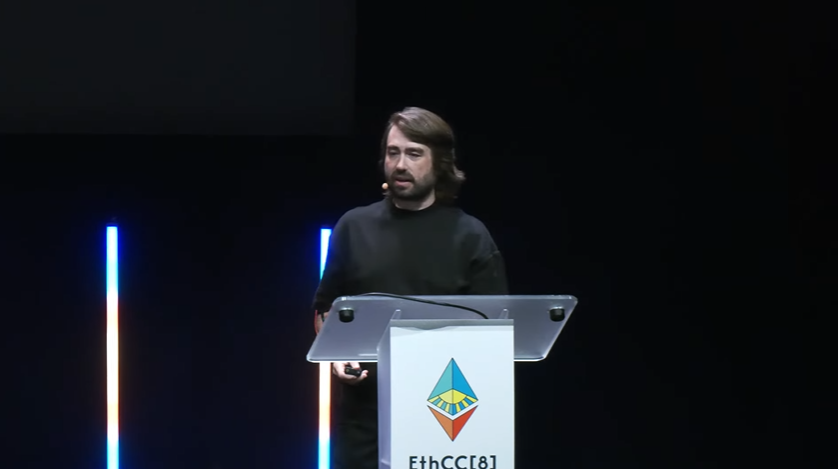 They launched a parallel organization to the Ethereum Foundation. Source: YouTube.
Cole, who also introduced the ECF, outlined the strategic priorities of this new entity. Among them, it plans to fund projects that burn ETH, a process that reduces the total supply of the cryptocurrency in circulation, which could theoretically increase its value by making it more scarce.
It also seeks to reinforce Ethereum's immutability, ensuring that the chain's rules cannot be arbitrarily altered, a pillar of its technical credibility. Another point is to reject token speculation, focusing on models that avoid the creation of artificially inflated digital assets, and actively represent the interests of those who hold ETH, giving holders a voice in network decisions.
The ECF's monetary vision establishes Ethereum as critical infrastructure for digital finance, with the goal of reaching a market capitalization of $1.2 trillion, according to the announcement. Cole pointed to what he sees as a weakness in the Ethereum ecosystem: the lack of a strong regulatory presence, unlike competitors like Solana, which maintain active lobbying in US cities like Washington DC.
To address this, the ECF proposes launching the Ethereum Validator Association (EVA), an entity that will give validators (the nodes that secure the network through staking) greater influence on network development and decisions.
The ECF also questioned the Ethereum Foundation 's funding model, deeming it ineffective. According to Cole, current funding supports vague public goods and allows projects to develop extractive models with tokens, where creators reap disproportionate benefits. This diagnosis suggests that the ECF will seek a more transparent approach aligned with the interests of its holders, although details regarding its financial structure are still lacking. Ether (ETH) remains an inflationary cryptocurrency after the Pectra update.






