
Bonding Curves are financial instruments that act as an algorithmic market making tool that empower cryptoeconomic ecosystems.While the concept was conceived by Economist Simon de la Rouviere, he credits Zap Protocol with coining the term “Bonding Curve.” Bonding curves are without a doubt one of the most exciting current developments in the world of Defi and decentralized applications. There are a plethora of use cases and functions of Bonding Curves currently in place and being discovered through some of the industries top innovators and researchers.
Bonding curves are analogous to algorithmically set supply curves that allow for a deterministic pricing function and continuous access to liquidity locked into these curves. Bonding Curves are unique in that they represent a fully liquid DEX. Instead of relying on buy and sell book orders on exchanges, Bonding curves allow for a mechanism that provides continuous and instant liquidity on peer-to-peer networks. The destiny of decentralized autonomous organizations and how they are funded seems to be entwined with this market making technology. Bonding curves are without a doubt one of the most exciting current developments in the world of Defi and decentralized applications. To get more context about the state of bonding curse check out this previous Zap article on origins and mechanics of bonding curves, here.
Zap Bonding Curves
At a high level, the Zap Platform enables providers of tokenized services the ability to monetize their products through Zap Bonding Curves. Providers can utilize these curves to monetize an array of different tokenization services, including oracles. When users “bond”/buy onto a bonding curve, this triggers the generation and issuance of sub-tokens called Dots. According to the specific Bonding Curve the sub-tokens are associated with on the Zap Ecosystem, these sub tokens represent rights to an array of redeemable products or services such as data feeds,subscription based services that are calculated through blocktime, and more. To use the services associated with the DOT sub tokens, a user must first bond Zap tokens to the provider’s bonding curve, which will grant you access to a secondary token.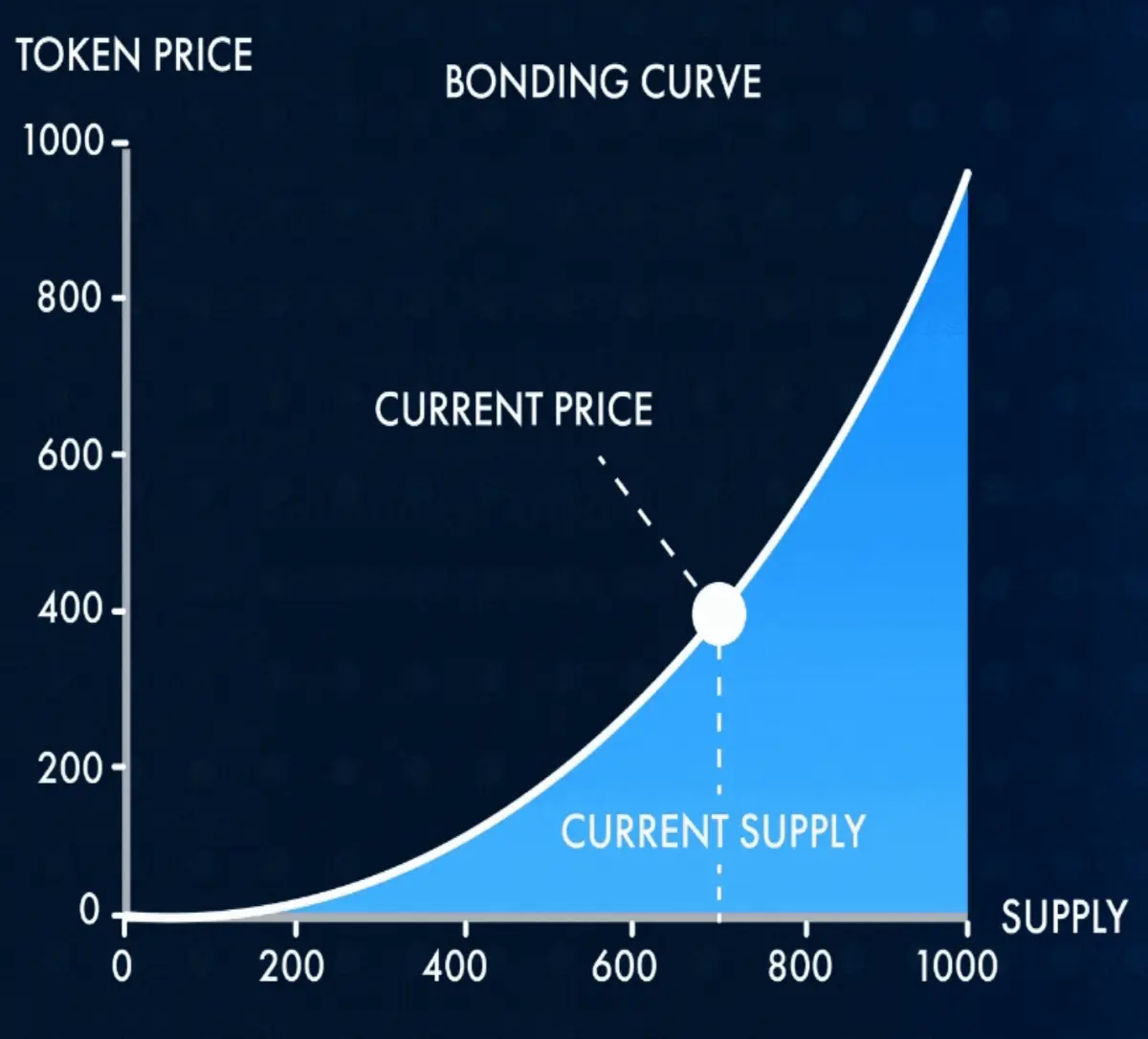
The price in Zap of the sub-token token is reflected along this curve on the Y-axis. The Y-axis. The price of the secondary-token moves along the curve in tandem with the amount of ZAP bonded to the Bonding Curve. As a general rule of thumb, bond/buy pushes the current price to the right, unbond/sell pushes the current price to the left. The total amount of Zap bonded to the bonding curve represents the total liquidity currently available on the curve. In the case of the image above, if a user decided to bond onto the curve, the current price of the token (700th in supply) would be around 400 Zap Token. Visa versa, if a user decided to unbond/sell their DOT, they would receive around 400 Zap Token.
What Makes Zap Bonding Curves Standout?
Multiple blockchain projects have utilized Bonding Curves in various capacities. However, Zap Bonding Curves are unique in that the platform allows individualized data and crypto service providers to fully customize their own bonding curves to allow for a customized deterministic price trajectory before deploying their services on our DEX. Providers have the option to set their curves pricing function in various forms such as a positive, static, or inverse sloped pricing index. Refer to a previous article that discusses why data or other tokenized service providers might want to adopt different sloping bonding curve, here.This opens up a whole new domain for crypto-tokenomics to build upon the traditional financing and liquidity mechanisms currently in place. Through the ability to customize the trajectory of the bonding curves currently in place and being discovered through some of the industries top innovators and researchers.
Above are some clips demonstrating the customization available on the upcoming 2.0 launch.
Zap.org already has a functioning platform portal, however in Q1 of 2021, Zap Protocol intends to release a 2.0 launch of the platform with an updated UI and additional services throughout the upcoming quarter. Stay tuned on the Zap Protocol socials on all upcoming feature releases and community updates.





