 Bitcoin SV (BSV) - what do you need to know about it?
Bitcoin Satoshi Vision (BSV or BCHSV on some exchanges) is an open-source payment platform based on blockchain technology, using the Proof of Work consensus algorithm. The Bitcoin SV network split off from the Bitcoin Cash (BCH) chain during a hard fork (network update) on November 15, 2018. The separation of BSV was the result of community disagreement over the further development of the Bitcoin Cash cryptocurrency. BSV, like Bitcoin Cash, is based on a modified bitcoin source code (BTC). It should be remembered that both bitcoin, Bitcoin Cash and Bitcoin SV are independent cryptocurrencies, operating in separate networks.

Bitcoin SV is developed by nChain, belonging to the controversial Craig Wright, claiming to be the creator of bitcoin, Satoshi Nakamoto. One of the main promoters of BSV is also Calvin Ayre, owner of the portal and Coingeek mine. The Bitcoin SV white paper was published on August 16, 2018, and Craig Wright boldly claimed that this is the version of the bitcoin protocol closest to the vision Satoshi Nakamoto created in his white-paper of October 31, 2008. Wright also provocatively calls BSV "the only true bitcoin", drawing the reluctance of many market participants. Currently, by many critics, BSV is considered a completely centralized network, due to the concentration of over 80% of the total computing power of the network (hashrates) in three mining pools belonging to the creators and promoters of the project - Coingeek (belonging to Calvin Ayre), BMG Pool and SVPool (directly related to Craig Wright).
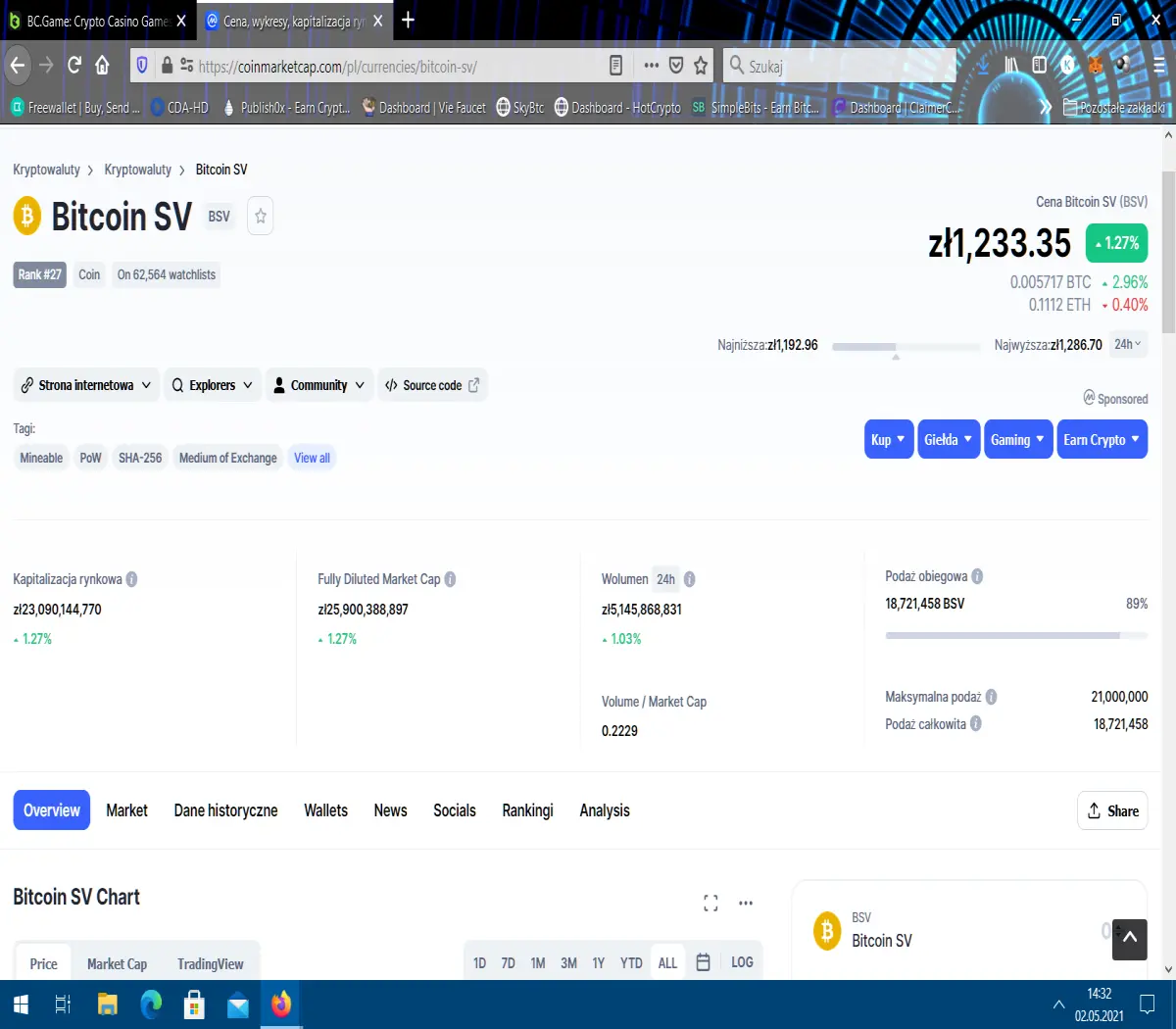
The maximum supply of Bitcoin SV (similar to BTC and BCH) is 21 million units, of which approx. 84% (over 17.7 million) has already been excavated.
Differences between Bitcoin Cash and Bitcoin SV
 Bitcoin Cash and Bitcoin SV significantly differ from each other in many respects, which makes both networks in compatible with each other and, as a result, contributed to the split of chains that took
place on November 15, 2018
First of all, both projects differ in the maximum capacity of the transaction block - in Bitcoin Cash it was initially 8 MB, now it is 32 MB, while Bitcoin SV has a limit of 128 MB for each transaction block, which, according to nChain, is to be increased in the future. up to 512 MB.

With the network update on November 15 last year, Bitcoin Cash introduced canonical transaction ordering, while Bitcoin SV stayed (like BTC) with the existing topological transaction ordering model. This applies to the way transactions are organized in a block - canonical ordering of transactions ultimately provides the possibility of obtaining much higher scalability within a block of the same capacity, as well as, inter alia, it facilitates the identification of transactions in the block by network nodes, however, it has not been implemented in BSV due to the potential reduction of the security level. In the Bitcoin SV source code, four operation codes were restored, which were from the very beginning in bitcoin, but were later removed from it (to be one of the elements of compliance with the "Satoshi Nakamoto vision"). The restored Script operation codes are OP_MUL (Multiple),

OP_INVERT (Reverse), OP_LSHIFT, OP_RSHIFT (Left / Right Shift). According to nChain, this is to restore the necessary functionalities for programmers that have been removed from the BTC code. After the network is split, Bitcoin Cash also has a minimum transaction weight limit, which cannot be lower than 100 bytes, to protect against DDoS attacks. Bitcoin SV does not have such a lower bound. Bitcoin Cash also has the OP_CHECKDATASIG operation code, used to confirm messages from outside the blockchain network, which is ultimately intended to develop functionalities related to, inter alia, with smart contracts. According to nChain, the above operation code is redundant and has not been added to the Bitcoin SV repository. Both projects are against the implementation of SegWit (largely because of which Bitcoin Cash separated from the bitcoin network) and do not allow the use of scaling solutions based on second layer protocols (such as the Lightning Network), focusing on achieving high scalability along the chain blocks. Different visions to ensure future high scalability of the network are one of the main bones of contention among supporters of BTC, BCH and BSV.

Mining Bitcoin SV ?
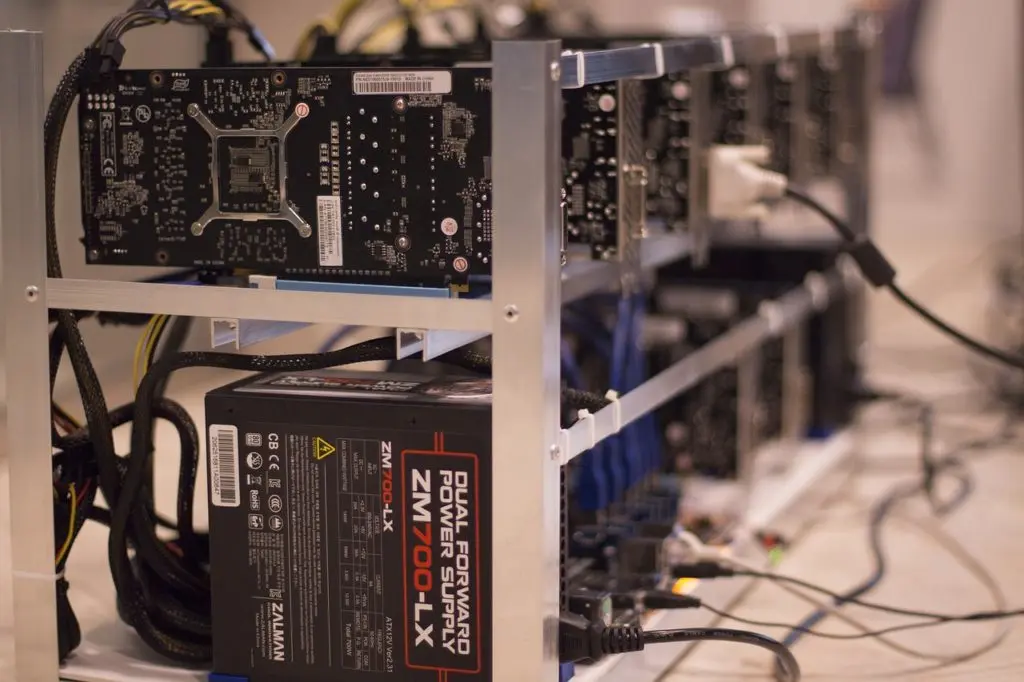
Bitcoin SV is a network based on the Proof of Work consensus algorithm, which means that miners cryptocurrency units. The BSV source code was extracted from the Bitcoin Cash (BCH) repository, and the are responsible for confirming transactions, creating new transaction blocks and extracting new BCH straight line derives from the modified bitcoin code. For this reason, all three networks have many related parameters, often differing only in small details. Bitcoin SV, like BTC and BCH, is based on the SHA256 cryptographic hash function, which means that it can be mined using the same hardware as the two cryptocurrencies mentioned above. Currently, the only viable method of mining SHA256 is to use ASICs. Among the BSV excavators, the Bitmain Antminer S series devices are undoubtedly the most popular (especially the S9, in addition to the S15, or the latest S17). from Innosilicon (eg Terminator T2 / T3) or DragonMint (model T1).
The block reward in BSV is currently the same as in BTC and BCH and amounts to 12.5 cryptocurrency units. It is also subject to the so-called halving every 210 thousand. transaction blocks, i.e. reducing its amount by half. The target block time, i.e. the period between consecutive transaction blocks, is - similar to BTC - 10 minutes, while difficulty adjustment is made every block to effectively strive for achieving the target block time (as opposed to BTC, where the difficulty is adjusted every 2016
blocks, i.e. about 2 weeks) Despite this, BSV block times now average around 11.5 minutes due to network stability issues.
The maximum block capacity in Bitcoin SV is four times greater than in Bitcoin Cash (32 MB) and amounts to 128 MB in order to ensure high transaction throughput without the need to use second-layer protocols (the so-called on-chain scalability, criticized, among others, by supporters BTC). Bitcoin SV, like Bitcoin Cash, allows you to carry out instant transactions in the zero-conf model, i.e. without confirming its finalization in the transaction block. However, this is a not very secure solution, justified only when making microtransactions (for a small amount).
what wallet? or any taps?
Bitcoin SV has a relatively wide selection of wallets for various operating systems and devices. The official desktop wallet for BSV is Bitcoin SV in the current version 0.1.1, available for Windows, MacOS and Linux operating systems. It is a full node wallet, which means that it requires downloading and ongoing synchronization of the entire history of the blockchain network. Popular desktop wallets that support BSV are Exodus and ElectrumSV, available for the most popular operating systems. Both are so-called light wallets, which means that they do not require downloading transaction history from the blockchain network. ElectrumSV is recommended to people who, at the time of the Bitcoin Cash network split (November 15, 2018), had a cryptocurrency on their wallet. It allows you to easily access BSVs located on a separate blockchain, the number of which is identical to the number of BCHs you have. In addition, Exodus is a multiwallet (it supports multiple cryptocurrencies).
BSV is also compatible with many mobile wallets, among which it is worth mentioning, among others, Atomic Wallet, Guarda Wallet, or Coinomi. Each of them supports multiple cryptocurrencies and is available for both Android and iOS devices. Guarda Wallet is also available as a plug-in for Google Chrome.Bitcoin SV is compatible with the most popular hardware wallets such as Ledger (Nano S, Nano X, Blue) via the ElectrumSV wallet or Trezor (One, Model T)
BSV Taps ?
https://faucetcrypto.com/ref/335403