
SEC Lawsuit Has a High Potential to End Ripple Altogether
Commentary by W. Paul Alexander
[JACKSONVILLE, FL 12/30/2020 @ 06:07 AM]
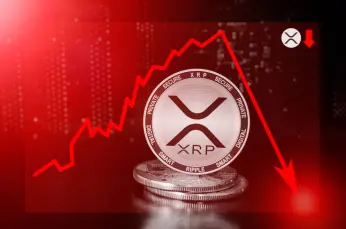
As Ripple's XRP cryptocurrency continues to plummet -- only to give a brief respite and rise a few cents before plummeting even more, I have had to rethink my position as to whether or not XRP is a good position to hold in my portfolio.
Some of you may have read my article from around Christmas, Why Ripple's (XRP) Recent Plunge is Great News for Investors. From the (obvious) title, at the time of writing, I was still of the mindset that the plunge could be great news for those looking to make a long-term profit on XRP, and while I still have not changed my position on whether or not Ripple will survive the lawsuit (it will), the more I learn about the facts of the case combined with what I know from experience about the inner workings of the justice system, the more I think that holders of XRP are in for quite a bit of depressed valuation in the near and short-term, maybe even intermediate-term, future.
Thus, at this point, I have sold all of my XRP holdings and will be focusing my trading around other major projects.
Of course, this should not be taken as advice about what to do with your own portfolio -- it should only be used in the context of surveying how investors are feeling about the projects. We all have different tolerance for risk. I generally consider myself a medium-risk investor, and currently, it is my opinion that XRP presents more than what I consider "medium" risk. It's as simple as that for me.
You may be able to better tolerate risk and volatility. In that case, you may still wish to hold onto your XRP. In the long-term, I'm pretty certain that XRP will survive, but it could be like the pound sterling after Brexit became a certainty -- it crashed to a point it still has not recovered from, yet it still exists as one of the best-known and widely held world reserve currency. With XRP's integration with payment processors and the promise of ultra-cheap transactions at the speed of light, I think that the project will end up "too big to fail."
It's just that there will probably be quite a bit of depressed valuation going on for quite some time as notoriously easy-to-frighten investors steer clear until the resolution of the SEC's suit.
In the end, my prediction is that Ripple will be able to settle the suit for a negotiated fine and penalty -- something that the SEC can hail as a win to the public yet being nowhere near significant enough to cause Ripple to shut it's doors.
Why do I feel this way? Simple. The charges against Ripple's CEO relate to the selling of unregistered securities. The SEC accuses Ripple and two top executives, including said CEO, with misleading Ripple's investors and thus, holders of XRP, the world's third-largest cryptocurrency, by selling more than $1 billion of the virtual tokens without registering with the agency. The SEC hold that Ripple co-founder Christian Larsen and Chief Executive Officer Bradley Garlinghouse personally profited to the tune of around $600 million USD by using information that only they were privy to, keeping investors in the dark.
Garlinghouse, for his part, denies the allegations and the SEC's assertion that XRP should be treated as a security, arguing that XRP is a currency and that currencies are not required register their sales with the agency. Garlinghouse, in his response, notes that the government has allowed XRP to operate as a currency for many years -- a fact that can go a very long way towards defeating the case against him -- with the right attorney!
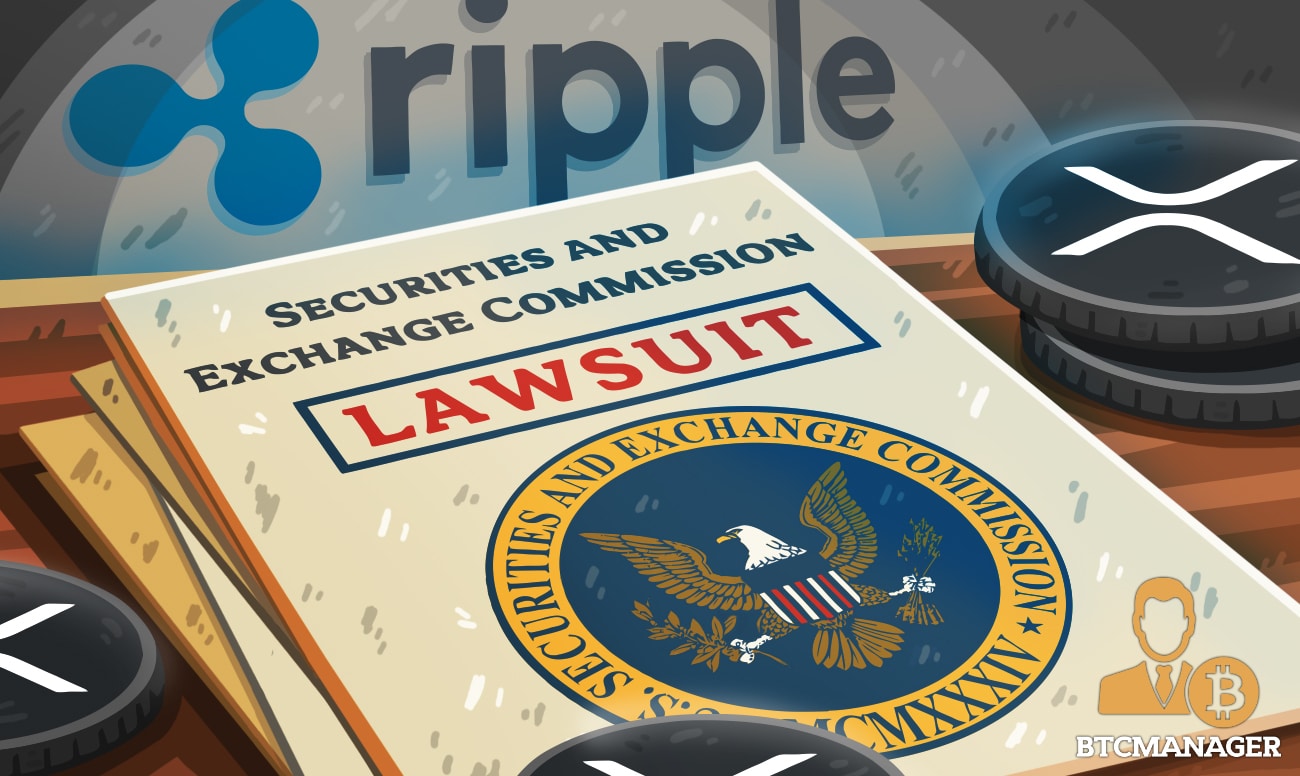
Image Credit: BTCMANAGER
Security vs. Currency -- What's the Big Deal?
If XRP and other cryptocurrencies are declared to be "securities," they must be regulated as such. In its broadest sense, a security can be defined as any tradable financial instrument, but in practice, the delineation can become quite murky and confuses just about anyone without a degree in finance. There are four major types of securities: debt, equity, derivative, and hybrid. Stocks are a type of security that falls under the equity category, while bonds are a form of debt ownership -- basically a loan with a promise to pay with interest. Cryptocurrencies can fall under different categories, mostly depending on their use case and implementations.
To determine whether a cryptocurrency is a security, just like with any other financial product, a legal test dating from 1946 called the "Howey Test" must be applied. To understand the Howey Test, you can start here with this amazing article that explains it in its entirety. If your time is short, just know that if a product meets the criteria of the Howey Test, it is a security, and if it does not, then it is not required to operate by the same regulations that a security would.
Famed fintech attorney Marco Santori gave the following breakdown explaining Howey's Test:
A long time ago, someone named Howey owned an orange grove.
Howey said: “I’ve got this orange grove and I’ve got no way to make money out of it – because I need money to make money.”
Tell you what. I’m going to sell you this orange grove and, in exchange, you get whatever profits are made from that little plot.
I’ll work the land. I’m going to pick the oranges. I’m going to squeeze the juice. You just pay me the money.
The plaintiffs said: “That’s a security.”
The SEC said: “That’s a security.”
Howey said: ‘No, no. That’s just selling plots of oranges.”
Ultimately, the Supreme Court said: “That’s a security” – because it passed this test: There was an investment of money. And a common enterprise. With the expectation of profit, primarily from the efforts of others.
Even though the Howey Test is the standard that must be measured against, the true legal precedent for the SEC's suit against Ripple comes from their 2018 action against The DAO, which held that the The DAO had, in fact, issued securities under US law, and as a result, what was once a very, very promising project came to a crashing halt, ultimately perishing. You can read more about what happened when the SEC won its case against The DAO here.
Because of the fact that this one case was enough to doom an entire project, and because it created a legal precedent for the agency to take similar actions, there remains a very real fact that, if a court agrees that XRP passes the Howey Test and declares it a security, holding the executives responsible for violating SEC regulations around selling unregistered securities, imposing enormous penalties, and changing the way the entire project is traded. This could very well spell the end for Ripple, the same way it spelled the end for The DAO.
On the flip side of things, Ripple has much more staying power than The DAO had. It has enjoyed status as the 4th-largest cryptocurrency in the world, so besides having the support of the crypto-community, Ripple also has a ton of investment from large financial and fintech companies. These companies have huge, huge lobbying organizations working on their behalf, and that can go a very, very long way in terms of effects it could have on the case.
So, as I've said, this amount of risk is a bit too much for my tastes, so I have decided to get out with only a very little loss because I did not want to risk losing it all. For those who have a higher appetite for risk than I do, it may pay off for you significantly. For instance, imagine you put $25,000 into XRP at $0.20. If it raises back to just $0.30, you've profited $12,500. That means there is a huge amount of profit to be had if XRP beats the case and returns to the market during the present bull market in time to see a price of $1-2, even if very briefly and due to FOMO.
1. If I had a higher (high-moderate) appetite for risk, I would probably keep my XRP holdings to around 5% of the overall basket.
2. If I had a "high" appetite for risk, I'd increase to maybe 10-15%, but no more.
3. Alas, my risk tolerance is (low-moderate), so I'm exiting XRP at this time.
Well, I hope that this has helped a few people out. I know I'm not the most technically-correct person out there, but I am a legal professional, so I thought explaining the SEC's actions could perhaps better inform those who have questions about what effect the lawsuit may bring.
Also, with so many exchanges announcing that they will soon de-list XRP, I kinda feel as if the writing is on the wall, so to speak.
References
1. https://www.coindesk.com/simplest-way-understand-dao-security
2. https://www.sec.gov/news/press-release/2017-131






