
The world of physics is fascinating. We can explain many things with physics, both things from the everyday life and things not many even knew was possible.
To start off with the double slit experiment you will need a light source and two slits very close together where the light can pass through. As we know light behaves like waves, very much like waves in a pond. When you let water waves go through two slits, the waves will divide itself, and two
separate sources will be created from the slits where waves can form. And as the waves overlap they will interfere with each other, where the waves intersects they will amplify and in between they will cancel each other out. Light does the same thing when it hits those slits, it diffracts and the waves
interfere with one and another. It’s these spots who will get amplified is what you will spot when it hits a wall.

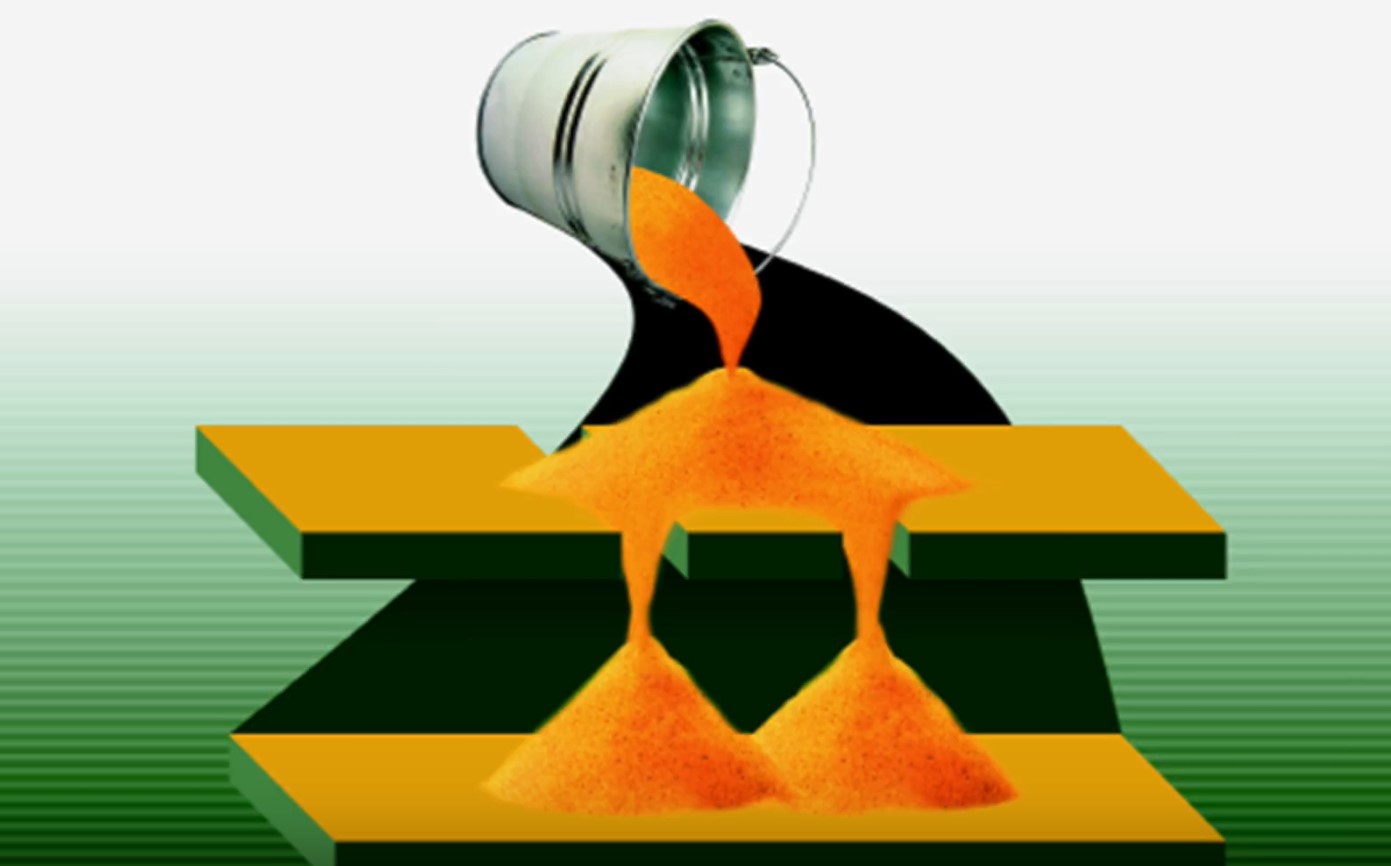
Now do the same thing with particles for an example sand, each particle of sand will either go through the first or the second slit without any interference, therefore they will pile up in two different locations. This is what we cal particle light
behavior.
Now if change to another particle for example atoms and shoot them through the slits, as expected the atoms will pile up in the same way as sand shown on the photosensitive screen. But the first mystery of quantummechanics comes when we open the second slit.


Because now you get something that is very much like the interference pattern with light. So here we have particles behaving in the same way as waves rather then having two bands of atoms. Lets do a second try but this time we send atoms one and one, to prevent the possibility that the
atoms maybe “worked together” in some way to get these patterns. Of course many atoms will hit the first screen with the two slits, but some of the will
pass through and hit the next screen. At first it looks like the dots appear randomly, but as time passes the same interferencepattern appears.
This shows that the atoms by themselves behave like a wave. Just like light. But atoms are still just tiny particles just like rocks are. It seems like the atoms has been aware of there being two slits, or how does it do it? Maybe the atoms split in half and go through both slits at the same time, or maybe it expands to something like cloud and then reassambles after the slits into a particle agan?
But if we now was about to be clever again, and we wanted to be sure that the atom really went through one or another of the slits. Then we could put a detector which without interfering with the atoms could count them.
So we put a detector to count the atoms in one of the slits, and as expected 50% of the time the atoms went through the slit we were looking at. There is nothing suspicious with that. The atoms continue passing and small dots appear on the screen. When we have a quite large amount of dots on the screen we can see that they have appeared in two parallel lines. So we have two slits, particles flying through them and they appear as two lines on the screen. Nothing would be weird with that except the fact that this is a different result from what we got before.


The only difference is the detector that would not interact with the atoms, but that detector made the difference in the results.
It seems like the atoms knew that we was looking at them. So what if we were about to leave the detector there, but gently
unplug it.
Now we are trying to fool the atoms that they are being checked. But the atoms won’t let themselves be fooled, the result of the test with an unplugged detector shows an interference pattern. How can the atom know if you are spying on them or not?
This is the second weird thing in quantumphysics we face in this experiment. If you can explain this in common sense,
there is a nobel prize waiting for you!






