
For years, Bitcoin holders have faced a frustrating trade-off.
They could keep their BTC safe in cold storage and accept that it would generate no yield. Or they could lend it out, wrap it, stake something else, deposit it into a protocol, or trust a centralized platform — and take on risks that often felt completely opposite to Bitcoin’s original philosophy.
That tension has always mattered.
Bitcoin is not Ethereum. It does not have native staking. It does not reward holders simply for locking coins. It was designed as hard money, not as a yield machine. For many Bitcoiners, that is a feature, not a bug.
But the Lightning Network is quietly changing the conversation.
Not by turning Bitcoin into proof-of-stake. Not by creating a new token. Not by promising unrealistic passive income. Instead, it offers something more subtle: the ability to earn bitcoin-denominated fees by providing useful liquidity to a payment network.
That is why BitGo’s new Lightning Earn product matters.
It gives institutions a more structured way to deploy BTC into Lightning infrastructure and capture routing fees, without selling their coins or entering the world of crypto lending. The idea is simple, but the implications are significant.
Bitcoin may not need staking to generate yield.
It may only need useful payment infrastructure.
How Bitcoin Can Generate Yield Without Becoming “Staked”
The word “yield” can be dangerous in crypto.
Over the past few cycles, yield has often meant hidden leverage, unsecured lending, token inflation, smart contract risk or dependency on fragile counterparties. Many investors learned that lesson painfully when platforms promising attractive returns collapsed under the weight of bad risk management.
Lightning yield is different in design.
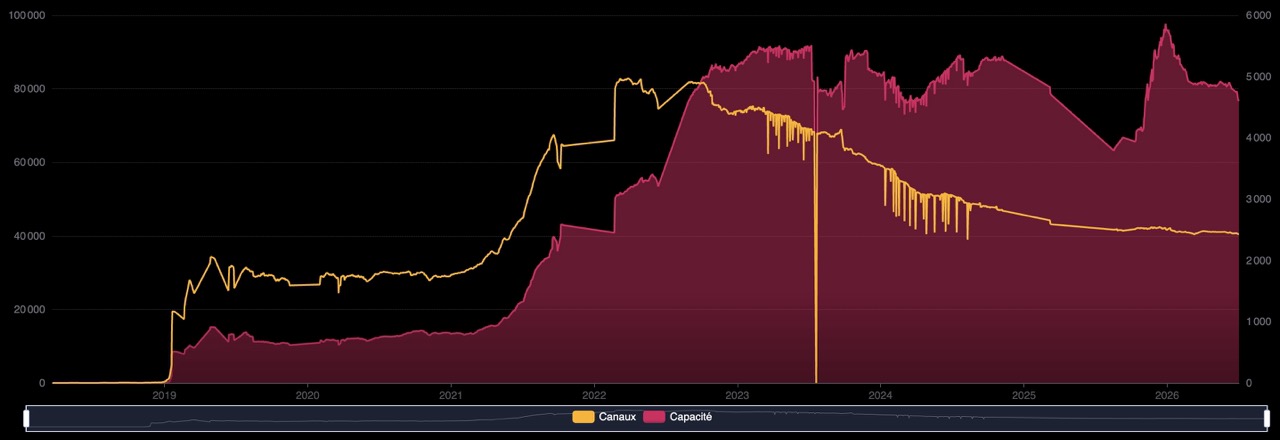
On the Lightning Network, payments move through channels. These channels need liquidity. If one user wants to send BTC to another user, the network must find a path with enough available capacity to route the payment successfully.
That is where liquidity providers come in.
A well-connected Lightning node can help route payments across the network. When it does, it can collect small routing fees. These fees are usually tiny per transaction, but at scale they can become meaningful for operators that provide reliable liquidity in the right places.
This is not staking.
No new bitcoin is created. There is no protocol inflation paid to validators. The yield does not come from monetary expansion. It comes from providing a service: helping payments move.
That distinction is important.
Bitcoin’s base layer remains unchanged. The 21 million supply cap is untouched. Miners still secure the chain. The Lightning Network simply adds a payment layer above Bitcoin where liquidity has economic value.
In plain English, a Lightning liquidity provider is not being paid because they own BTC. They are being paid because their BTC helps the network function.
That is a much healthier form of yield than many of the products crypto investors have seen before.
Why BitGo’s Lightning Earn Is Aimed at Institutions
Running a profitable Lightning operation is not as simple as opening a channel and waiting for money to arrive.
Liquidity must be placed intelligently. Channels need to be balanced. Fees have to be adjusted. Peers must be selected carefully. Poorly positioned liquidity may sit unused. Bad routing policies may generate little activity. Rebalancing costs can eat into earnings.
This operational complexity has kept many large Bitcoin holders away.
Institutions may understand Bitcoin custody, but Lightning channel management is a different skill set. A corporate treasury company, fund, payment processor or allocator may hold significant BTC, yet still lack the internal expertise to run high-quality Lightning infrastructure.
BitGo’s Lightning Earn attempts to solve that problem by combining custody-grade controls with Amboss’s Rails infrastructure.
The pitch is clear: institutions can deploy bitcoin into Lightning liquidity strategies while keeping the process inside a more familiar operational and governance framework. Instead of manually managing channels, fee policies and rebalancing, they can rely on automated infrastructure designed for professional participants.
This matters because institutional Bitcoin adoption has created a new problem.
Large holders now have enormous amounts of BTC sitting idle. Treasury companies, funds and custodians may not want to lend their coins or convert them into wrapped assets. But they may still want a way to make their Bitcoin productive.
Lightning Earn gives them a possible middle path.
The BTC is not being sold. It is not being used to buy a new token. It is not being lent to a trading desk. It is being used as liquidity inside Bitcoin’s own payment layer.
That is why the product feels strategically important.
It reframes Bitcoin yield from speculation to infrastructure.
The Opportunity Is Real — But It Is Not Risk-Free
Lightning yield should not be confused with guaranteed income.
The returns depend on network activity, channel quality, liquidity placement, routing demand, fee settings and operational efficiency. A node with poor connectivity may earn very little. A node with strong positioning may earn more. But the economics are competitive, and routing fees tend to remain low because users naturally seek cheaper payment paths.
There are also practical risks.
Lightning requires active infrastructure. Channels must be monitored. Funds committed to channels are not as liquid as coins sitting untouched in cold storage. Rebalancing may create costs. Channel closures can involve on-chain fees. Operational errors can reduce profitability. Custodial and technical arrangements must be understood carefully.
For institutions, these risks are manageable only if the infrastructure is professional.
That is why custody controls, governance workflows and operational transparency matter so much. A Bitcoin holder evaluating Lightning yield should ask where the coins are held, who controls channel decisions, how liquidity is deployed, how fees are earned, how risks are monitored, and what happens if channels need to be closed.
The biggest mistake would be to treat Lightning yield like a bank account.
It is not.
It is payment infrastructure. It can produce revenue because it provides liquidity, but that revenue is variable. The more the Lightning Network is used for real payments, the more attractive this model may become. If usage stagnates, yields may remain modest.
This is why the product should be understood as an infrastructure strategy, not a magic income product.
That may actually be a strength.
In a market full of artificial yield, real service-based yield is far more interesting.
Why This Could Matter for Bitcoin’s Future
Bitcoin’s long-term security depends partly on fee markets.
As block subsidies decline over future halvings, miners will increasingly rely on transaction fees. At the same time, Bitcoin’s base layer cannot process unlimited transactions without sacrificing decentralization. That means scaling must happen through layers, and Lightning remains one of the most important attempts to make Bitcoin usable for faster, cheaper payments.
If institutional liquidity enters Lightning, the network could become more reliable.
Better liquidity means better payment routes. Better routes mean fewer failed payments. Fewer failed payments make Lightning more useful for exchanges, merchants, apps, wallets and payment companies. More usage then creates more routing demand, which can attract more liquidity.
That is the flywheel Lightning has always needed.
For years, the network had strong ideological support but uneven user experience. Payments could be fast and cheap, but liquidity fragmentation and routing reliability sometimes limited broader adoption. Professional liquidity providers could help solve part of that problem.
This does not mean Lightning will suddenly replace Visa or become the global payment rail overnight.
But it does suggest a more realistic path forward.
Bitcoin can remain a long-term store of value while Lightning grows as a payment network. Institutions can hold BTC as a treasury asset while also deploying a portion of it to support payment infrastructure. Users can benefit from cheaper and faster transfers. Node operators can earn fees for helping the system work.
In that sense, Lightning Earn is not only a product launch.
It is a signal.
The next phase of Bitcoin may not be about making BTC more speculative. It may be about making BTC more useful.
The Quiet Shift From Idle Bitcoin to Productive Liquidity
Bitcoin has always resisted easy comparisons.
It is not a stock. It is not a bond. It is not a company. It is not a staking asset. And yet, as the ecosystem matures, holders are looking for ways to do more with their BTC without betraying the reasons they bought it in the first place.
Lightning-based yield may become one answer.
It is not guaranteed. It is not risk-free. It is not a replacement for cold storage. But it offers something rare in crypto: a yield mechanism tied directly to useful network activity rather than token inflation or hidden leverage.
That is why this trend deserves attention.
If Bitcoin is going to become more than digital gold, it needs infrastructure that makes it move. And if that infrastructure can reward liquidity providers in BTC, then long-term holders may finally have a way to support the network while earning from it.
The hidden yield was not inside a lending platform.
It was inside Bitcoin’s payment layer all along.






