
Societe Generale-FORGE's (SG-FORGE) stablecoin has recently come under fire for its decision to restrict peer-to-peer transactions, leading some experts to criticise its centralised nature. Some experts in the field have been outspoken with remarks such as "The worst code I've ever seen".
The future Stablecoin Euro CoinVertible, an ultra-centralised stablecoin?
French bank Société Générale-Forge (SGF) released its Ethereum-based stablecoin called EUR CoinVertible (EURCV) on 20 April, making it available exclusively to qualified institutional clients. However, some experts who reviewed its smart contract code found that its ERC-20 transfers must be approved by a centralized registrar, most likely controlled by the bank, before the transaction can be processed. This has raised concerns about its centralised nature, prompting criticism from various crypto industry experts.
Alephv.eth, a pseudonymous smart contract engineer, took to Twitter to voice her criticism of the smart contract code for this future stablecoin. In her tweet, she mocks the fact that SGF has coded stablecoin to whitelist all users, process all user transfers, and even process users' ERC20 approvals before processing their "transferFrom" transactions.
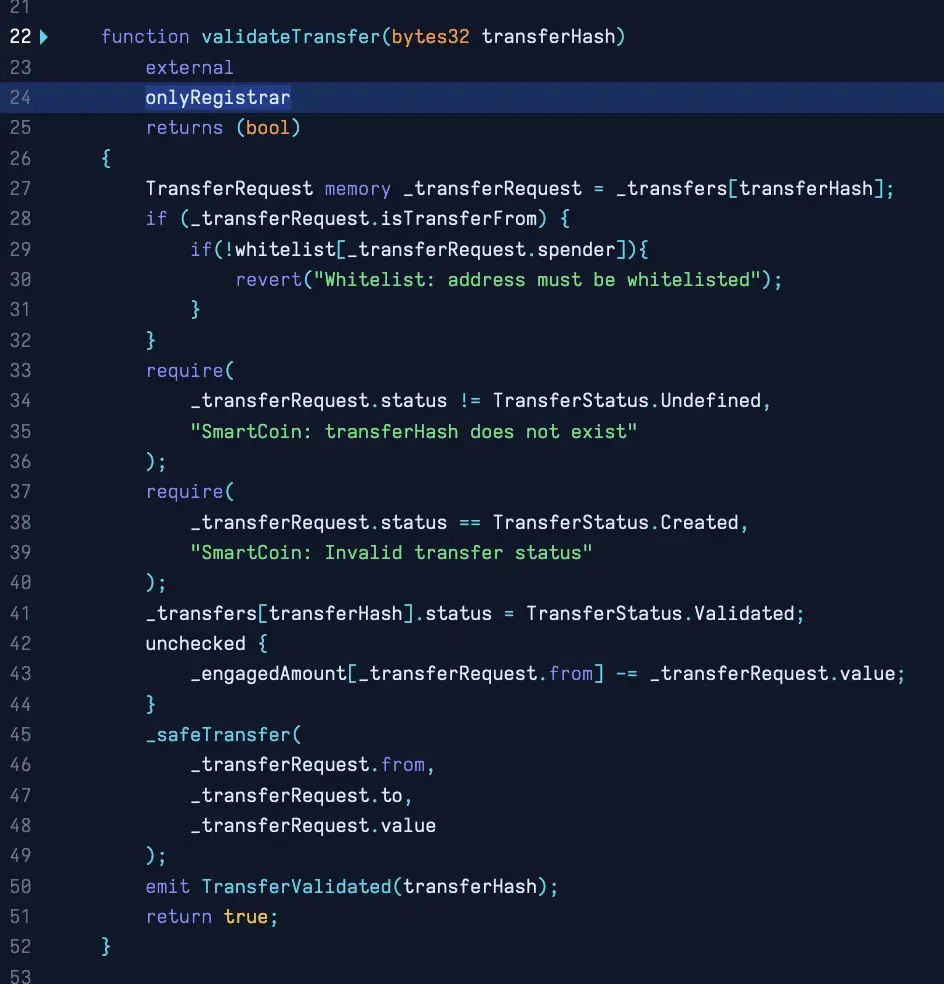
Other experts have voiced their criticism, with the founder of a non-fungible token project describing the code as "the worst code I've ever seen" and suggesting that stablecoin is a "laughing stock". Another crypto researcher called the code "absolutely horrible" and suggested that SGF should "stop trying to sneak" into the crypto space.
France has launched a stablecoin on Ethereum and it is the worst code I have ever seen. Every single ERC20 transfer must be approved in a separate eth tx submitted by a centralized registrar. What a laughing stock, is this your CBDC?
While some see SGF's approach as overly cautious, others, like investor Ryan Berckman, see it as a necessary "baby step" for traditional financial firms entering the blockchain and digital asset space. Berckman predicts that other banks will follow suit in the coming months, launching stablecoins on public networks to bridge the gap between traditional capital markets and the digital asset ecosystem.
A stablecoin for institutional clients only
However, it should be noted that SGF's stablecoin is not for public use, at least not yet. The bank has reserved it for institutional clients who have gone through its identity verification (KYC) and anti-money laundering (AML) procedures, as the stablecoin is designed as a settlement asset for transactions on the blockchain.
In addition, one should also hope that the transactions are of large amounts, as the Ethereum blockchain is known for its high fees. These fees can run into the tens of dollars during periods of heavy network congestion.
Despite the criticism, SGF's decision to launch a stablecoin shows that traditional financial institutions are increasingly recognising the potential of blockchain and digital assets. It remains to be seen how stablecoin will perform in the market, but it is clear that other banks will follow SGF's lead in the near future.






