Ever thought about monetizing bandwidth with crypto? It might sound like something out of a tech podcast or a sci-fi novel, but it’s happening right now – and it’s surprisingly simple. Enter Grass, a project that turns your unused internet bandwidth into cryptocurrency rewards. In plain terms: Grass lets you earn crypto for the internet you’re already paying for but not fully using. Crazy, right? In an age when passive income is the buzzword and everyone’s looking for the next side-hustle, Grass taps into a resource most of us never even knew we had lying around. And it does so at the intersection of some big trends – from AI’s insatiable hunger for data to the rise of decentralized infrastructure and the sharing economy. If you’ve ever wished your Wi-Fi could pay you back, read on. Let’s explore what Grass is, how it works, and why it matters for you and the future of the internet.
Ever Thought of Renting Out Your Internet? Meet Grass, the Wi-Fi Side-Hustle
Imagine if you could rent out your internet connection the same way you might rent out a spare room on Airbnb. That’s basically the idea behind Grass. What is Grass? It’s a new platform (launched in late 2024) that enables anyone to earn digital money by sharing their internet bandwidth. In other words, while you’re sipping coffee and scrolling social media, your unused Wi-Fi capacity could be hard at work earning you crypto. Grass users run a small app on their computer that opens up a portion of their internet connection to the Grass network. This isn’t some shady data-stealing scheme – only your excess bandwidth is shared, and your personal data or browsing habits aren’t exposed. Essentially, you’re leasing out the idle part of your internet, and getting paid in a cryptocurrency called GRASS (yes, same name as the project) as a reward.
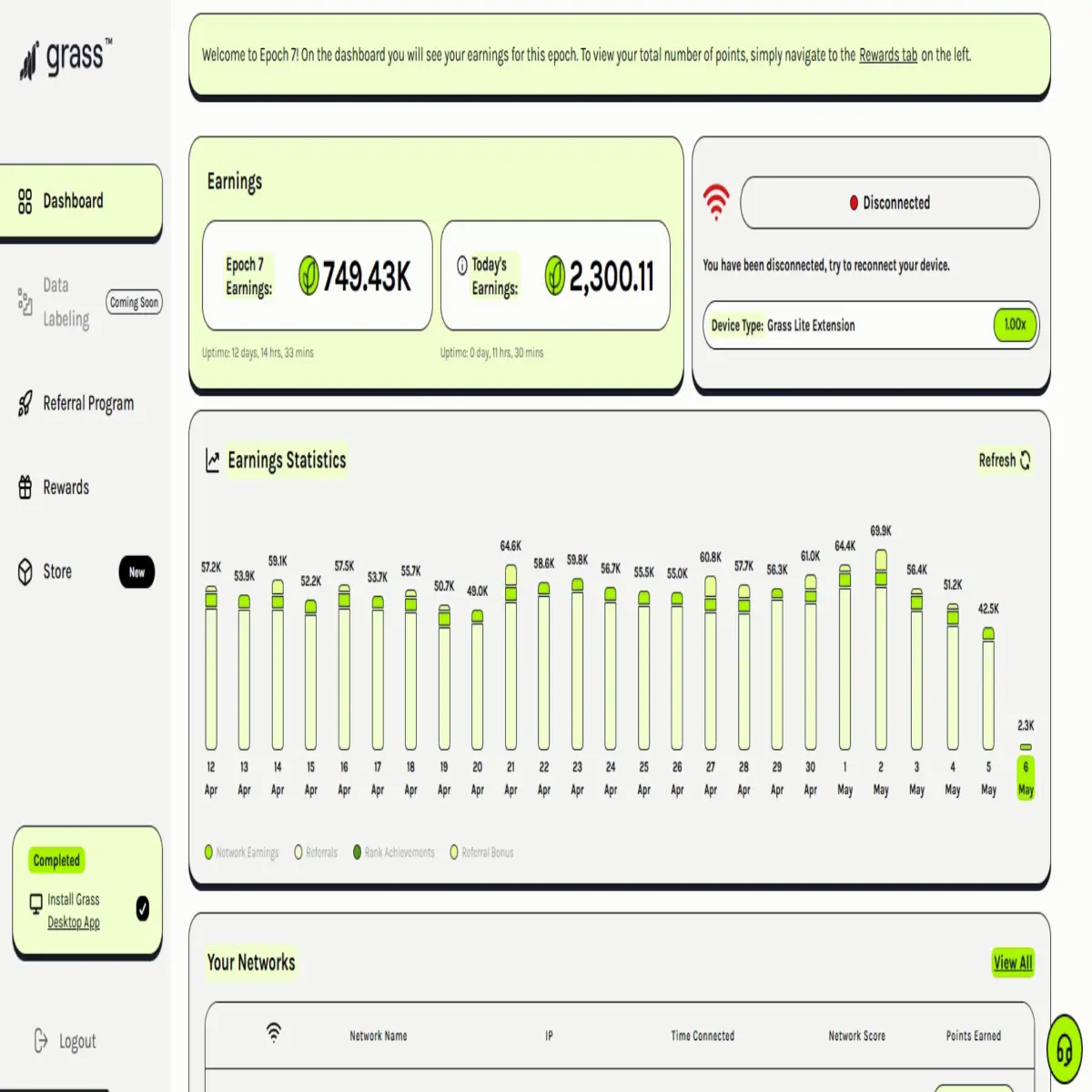
If this sounds a bit abstract, think of it like carpooling or renting out an unused asset. Your internet is a resource, just like a car or an empty guest room. Most of the day, especially if you have an unlimited plan, a lot of your bandwidth is sitting unused. Grass lets “companies and users alike” benefit by putting that idle capacity to work. Instead of letting it go to waste (or letting your ISP be the only one to profit), you share it through Grass’s network. Over 3 million people have already jumped on board in the project’s early stages, which shows that this idea is catching on fast. After all, who wouldn’t want to earn something back for a service you’re paying for anyway?
And it’s not just tech geeks in the know – Grass is designed for regular folks. The website promises you can start earning in “just three clicks”. No complicated setup, no need to understand blockchain wizardry. You don’t have to be a programmer or an investor; if you can install an app, you can join. In short, Grass is like a Wi-Fi side-hustle: you set it up, let it run, and watch the crypto rewards trickle in for doing virtually nothing (beyond what you normally do online). It’s the ultimate “money-for-nothing” pitch – except it’s real, and it’s actually helping build something useful. So, what exactly is happening behind the scenes to make this work? Let’s break it down.
How Does Grass Turn Bandwidth into Crypto? (No PhD Required)
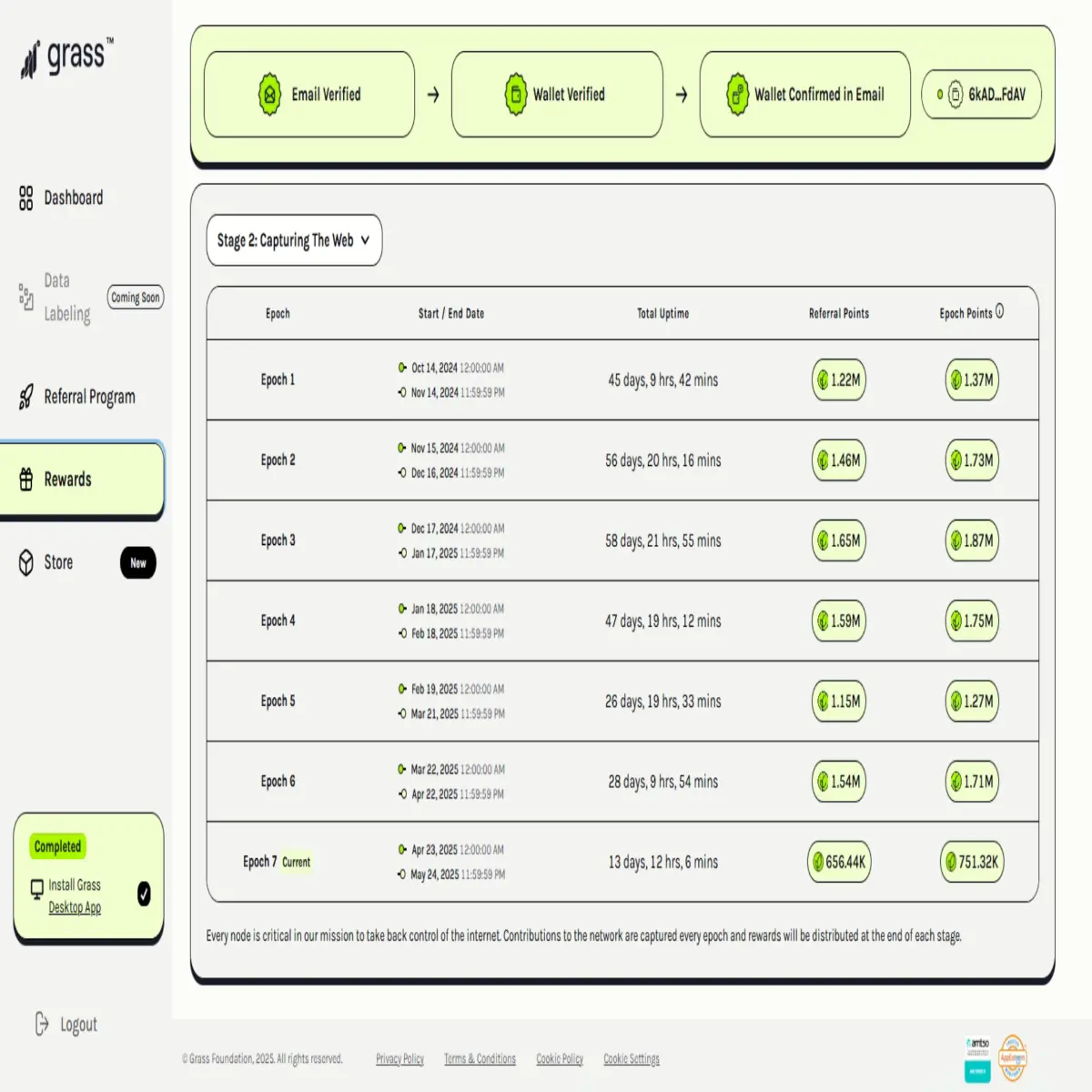
So, how can you get paid for your unused internet without affecting your own Netflix binge or Zoom calls? Grass’s magic lies in its network design, which is both clever and user-friendly. When you run the Grass app, you become a node in a worldwide network. Think of each node as a small internet service station. Various organizations – for example, companies doing web research, AI firms gathering data, or decentralized services in need of global access – can tap into this network of nodes to route their requests through them. It’s a bit like you’ve opened a tiny gateway from your home to the wider internet that others can use for specific tasks. In return, every time your node does work, you earn Grass Points (the system’s way of tracking your contribution). Over time, these points convert into Grass crypto tokens awarded to you. (Yes, actual cryptocurrency that you can hold or trade – not just reward points.)
Let’s use a simple analogy: imagine your internet bandwidth as spare seats in a car. Most of the day, you’re driving with seats empty (bandwidth you’re not using). Grass is like a carpooling service that fills those seats with passengers (data tasks) whenever it can, but only when you don’t need them. You still get to your destination without delay – your own internet use remains priority – but now you’ve got some paying passengers along for the ride, and you earn a fare (crypto) from them. Similarly, Grass only uses your idle bandwidth and won’t bog down your connection when you need it (nobody wants their YouTube to buffer just because they’re earning crypto on the side). It’s designed to operate in the background, quietly leasing out bits of your internet pipeline that you aren’t actively using.
What kind of tasks are these “passengers” doing with your bandwidth? Primarily collecting public data from the web and routing it to those who need it. A big use case is AI data collection. These days, AI models need tons of data from all over the internet to learn and improve. Grass provides a decentralized way to gather that data. For example, an AI company might need to scan public websites or social media for training data – instead of building a giant server farm, they can use Grass’s network of everyday people’s internet connections to do the job. This distributed approach helps them see the web from many points of view (useful for getting diverse data), and it’s harder for any one website to block or bottleneck the process. Grass basically transforms all those little bits of unused Wi-Fi across millions of homes into one powerful web-scraping and data-processing machine for hire. The data collected is then cleaned and structured into datasets for AI training or other services, without ever touching anyone’s private info.
Now, you might wonder: why use individual people’s bandwidth? Why not just rely on big data centers? Two big reasons: cost and decentralization. It can be cheaper and more efficient to piggyback on existing internet connections than to maintain huge servers doing the same thing. Plus, going through real user nodes can sometimes access data that central servers can’t (some web services treat traffic from data centers differently). And on the decentralization front – this is a key philosophy in crypto – spreading the network across thousands of independent nodes means no single entity controls the flow. It’s more resilient and often more private. In Grass’s case, all the usage is coordinated through their blockchain-based system, which transparently logs contributions and rewards. Everything is automated: you don’t have to manually do anything except keep the app running. The network measures how much you contributed (factors include how much data passed through your node and perhaps your location or connection quality) and periodically you’ll receive Grass tokens accordingly getgrass.io. Grass even had a huge initial “airdrop” (token giveaway) where early users’ points converted to real tokens – we’re talking 100 million tokens sent out to over 2 million people in one go. Talk about a grand opening!
The bottom line: Grass works kind of like the Airbnb of bandwidth. You “host” a slice of your internet; the network finds “guests” (data tasks) who need that slice, and you get paid in crypto for the hospitality. And thanks to some solid tech under the hood (including blockchain and fancy privacy-preserving tricks), it’s all secure and encrypted. You don’t need to dive into those details to benefit, though. From a user’s perspective, it’s set-and-forget. Download the app, share when you want, pause when you don’t, and see your earnings accumulate. It’s a refreshingly tangible way of mining crypto – not by solving pointless puzzles or burning electricity, but by providing a real service (internet access) to those who need it. Now that we’ve seen how Grass actually operates, let’s zoom out and ask the bigger question: why does all this matter?
Why Grass Matters: AI, the Sharing Economy, and a Decentralized Future
Okay, so earning a bit of extra crypto for doing virtually nothing sounds great for you – that’s the immediate appeal. But the significance of Grass goes beyond personal gain. It sits at the crossroads of several important tech and social trends:
-
The Passive Income Craze: We live in a time where people are always on the lookout for “income while you sleep.” From staking crypto to renting out storage space, the passive income movement is real. Grass taps right into this trend by introducing a new income stream from an unlikely source – your internet. It lowers the barrier to entry into crypto earnings; you don’t need to buy expensive mining rigs or have popular TikTok videos, you just use what you already have. This democratizes earning in a way that almost anyone with an internet connection can try. In tough economic times, that kind of accessible side-hustle can be a game-changer for many.
-
AI’s Insatiable Appetite for Data: By now, we’ve all heard how “data is the new oil.” For artificial intelligence, that couldn’t be more true. Every AI application – whether it’s teaching a self-driving car to recognize pedestrians or a language model to answer your questions – needs mountains of data. Traditionally, only big tech companies had the means to gather and control those vast datasets, creating a sort of data monopoly. Grass is part of a new wave of solutions changing that. It provides a decentralized, ethical way to collect and access web data. Instead of a giant corporation vacuuming up the public web, Grass empowers a community of users to do it collectively, and everyone gets a slice of the reward. This could make AI development more accessible to smaller startups or research groups who can tap into Grass’s network for data, rather than rely solely on Big Data giants. In the long run, that means more diverse AI development and potentially less concentration of power over data. The internet was built on the idea of sharing information – Grass extends that into sharing the work of gathering information, with participants being compensated fairly.
-
Decentralized Infrastructure (Internet by the People): Grass is a shining example of a broader movement to decentralize the web’s infrastructure. Just as Bitcoin decentralizes finance and Filecoin decentralizes file storage, Grass decentralizes a piece of internet infrastructure – the bandwidth and data retrieval process. It’s what some call a DePIN: Decentralized Physical Infrastructure Network, which is a fancy way to say regular folks collectively power a network that provides real-world services. By doing so, it takes some power away from centralized ISPs and cloud companies and hands it to a distributed community. This can lead to a more resilient internet. Think about outages or censorship: a network like Grass, spread across the globe with no single choke point, is naturally robust. It’s much harder to take down or control something that’s run by millions of independent nodes. In addition, Grass’s use of blockchain means transparency – you can see how the system works, and it runs by code and consensus rather than the whims of a single corporation. For users, this all builds trust that the rules won’t suddenly change on them. The sharing economy mentality that made Uber and Airbnb popular – individuals offering services peer-to-peer – is now seeping into core tech infrastructure. Grass is like the Uber of internet access (but without a CEO in the middle taking a big cut).
-
Network Sharing & Community Power: There’s also a social aspect. Grass has quickly grown a community of enthusiasts who see this as not just earning crypto, but being part of a tech revolution. By sharing your internet, you’re contributing to something bigger – a kind of global collective internet brain that’s being used to advance research and technology (like AI) in a decentralized way. It’s a nifty feeling to know while you sleep, your computer might be helping, say, an AI map flood risks from satellite images or a startup gather price data to build a cheaper flight finder – all while you earn rewards. Plus, since you earn ownership (via tokens) in the network you’re helping to build, there’s a sense of shared ownership. Participants have a stake (literally) in Grass’s success, which is very different from, say, contributing data to Facebook for free. This aligns incentives in a positive way: the network’s growth benefits its users directly, not just its founders or advertisers.
-
A Greener, More Efficient Internet: An interesting twist with Grass is the nod to sustainability. The very concept of using existing idle bandwidth is efficient – it’s making use of resources that would otherwise be wasted. Unlike traditional crypto mining which guzzles electricity, Grass’s approach is relatively lightweight, piggybacking on internet service that’s already up and running. Moreover, the project has positioned itself as environmentally conscious. A portion of the activity on the Grass network even goes toward funding green initiatives like forest conservation, making it appealing to those who care about eco-friendly tech. It’s a small step, but if a tech project can help build AI and plant trees at the same time, that’s pretty cool. The name “Grass” itself evokes green, growing things – fitting for a project that wants the web’s growth to be green and inclusive.
Ultimately, Grass matters because it represents a new mindset about the internet. It asks, “Why shouldn’t regular people benefit from the vast data and bandwidth flowing around the web?” For decades, we’ve been accustomed to paying our ISP bills, using the net, and that’s that. Big companies built services on top, and if anyone was going to make money off data flow, it was them. Grass flips that script. It’s saying the internet can be a two-way street – not just in terms of data, but in value. You share a little of your excess capacity, you get value back. It’s a small revolution in how we think about our role in the digital ecosystem. You’re not just a consumer anymore; you can be a provider and an earner, all while maintaining control and privacy.
So, why should you care? Because even if you’re not an AI researcher or a blockchain buff, Grass offers something immediately relatable: a chance to earn passive income with virtually no effort, in a way that contributes to a forward-thinking, decentralized future. It’s the kind of win-win that doesn’t come around often. And beyond padding your wallet, by participating you’re also casting a vote for the kind of internet you want – one where power (and profit) is shared by the many, not hoarded by the few. In a world of rapid AI advancements and ever-expanding internet needs, projects like Grass show that sometimes the solution is literally right under our own roof, in that Wi-Fi router blinking in the corner. Who knew that little box could start working for you?
Grass turns an ordinary internet connection into an opportunity. It embodies that old saying, “make your money work for you,” except here it’s make your internet work for you. Whether you’re excited by the tech and the trend, or just intrigued by the promise of “free” crypto, Grass is worth knowing about. It’s monetizing bandwidth with crypto, yes – but it’s also painting a picture of a more democratic digital world. And that’s something to get excited about, whether you’re a techie or just an everyday internet user who likes the sound of getting paid to watch Netflix. The grass has never been greener for turning passive tech into active rewards – and with Grass, anyone can take part in this new growth.