
The crypto industry has always been good at selling the future. New networks, new games, new DeFi protocols, new layers, new promises. But every market cycle eventually forces the same uncomfortable question: which projects can actually survive when liquidity dries up?
This week offered a brutal reminder. Five Web3 projects — Fantasy.top, Everclear, ZERO Network, MantaDAO and Soli — either announced closures, suspended operations or began winding down activity. The reasons vary from one team to another, but the common thread is hard to ignore: weak markets, failed fundraising, shrinking user activity and empty treasuries.
A Bad Week for Web3 Survivors
The closures did not arrive as isolated accidents. They came one after another, creating the feeling of a mini-capitulation across different corners of the industry.
Fantasy.top, a crypto-native trading card and SocialFi game, announced it would shut down after roughly two and a half years. The team admitted that its model never fully escaped the speculative nature of on-chain markets: users were not just playing a game, they were trading financialized assets. According to reports, Fantasy.top also plans to refund its pre-seed and seed investors in full.
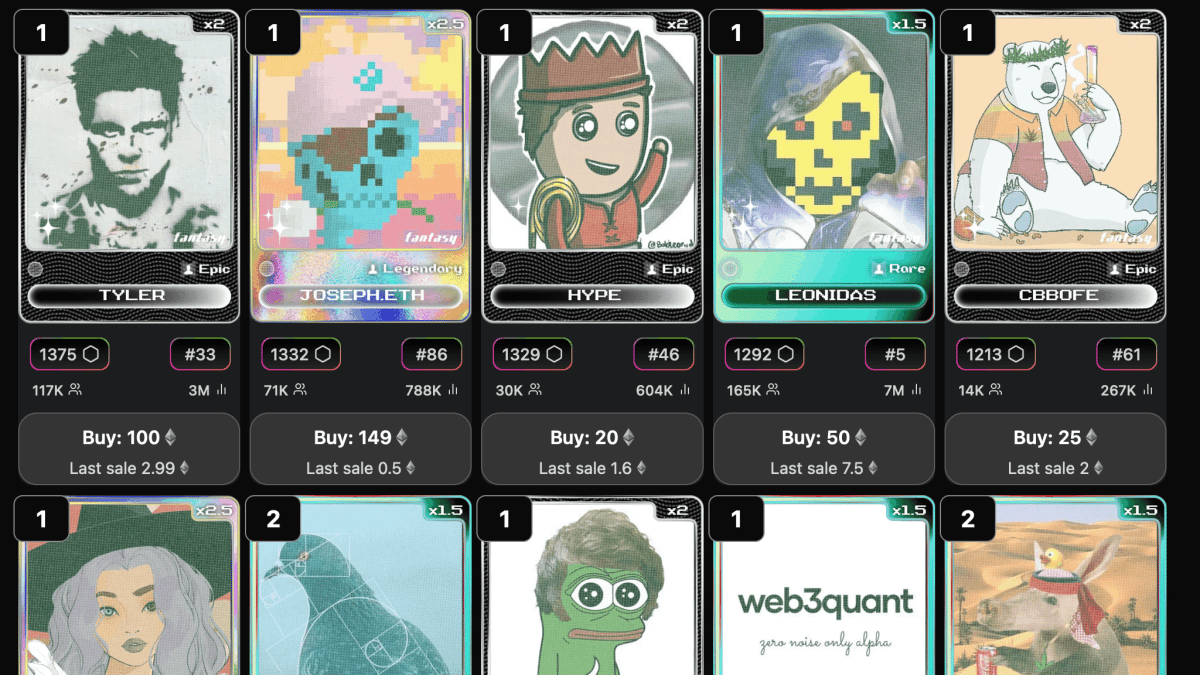
That detail matters. It suggests the issue was not necessarily a dramatic scam-style collapse, but something more structural: the product simply could not grow into a sustainable business.
In crypto gaming, this has become a familiar problem. Projects often launch with excitement, token incentives and secondary-market activity. But once the speculation fades, many discover that the “game” was not strong enough to keep people engaged on its own.
Everclear: Traction Was Not Enough
Everclear’s shutdown is arguably even more revealing.
The project was active in cross-chain infrastructure and had reportedly reached around $500 million in monthly volume. In a bull market, that kind of number would have sounded like a strong growth signal. But volume alone does not pay salaries, legal bills or infrastructure costs. Everclear said it could not turn usage into sustainable revenue, and attempts to pivot toward a B2B2C model did not materialize fast enough.
That is one of the harshest lessons of the current cycle: activity is not the same as business viability.
A protocol can move assets. It can generate headlines. It can even attract meaningful usage. But if it cannot capture value, raise capital or build a reliable commercial model, the runway eventually ends.
Everclear’s case shows that Web3 infrastructure is no longer judged only by technical ambition. Investors now want revenue, distribution, partnerships and clear demand. “Build it and they will come” is no longer enough.
ZERO Network Winds Down Its Ethereum Layer 2
ZERO Network, an Ethereum Layer 2 linked to Zerion, also began its shutdown process. Users have reportedly been told to withdraw ETH, tokens and NFTs before July 31, 2026, after which the network is expected to stop producing blocks. Deposits have already been disabled, while withdrawals remain open during the transition period.
The project was built around gasless transactions and a smoother user experience, two ideas that remain important for Ethereum adoption. But the Layer 2 market has become extremely crowded.
That is the uncomfortable reality: Ethereum scaling is a promising sector, but not every L2 can become a lasting ecosystem. Liquidity fragments quickly. Developers follow incentives. Users go where applications already exist. Without a strong network effect, even technically useful chains can struggle to justify their existence.
ZERO Network’s closure is less a rejection of Layer 2 technology than a sign that the market is consolidating around fewer, better-capitalized ecosystems.
MantaDAO and the Limits of Smaller DeFi Ecosystems
MantaDAO also suspended its activities, citing a difficult funding environment. The Journal du Coin describes it as a DeFi project built around Polkadot, affected by the same problems hitting many smaller ecosystems: not enough capital, not enough user flow and not enough momentum to keep operations alive.
This fits a broader pattern.
During bull markets, capital spreads everywhere. Every chain has its own DeFi layer, its own DAO, its own liquidity incentives and its own community narrative. But when conditions tighten, users tend to retreat toward the most liquid ecosystems. Smaller projects are then forced to fight for attention, funding and relevance at the same time.

Manta’s wider ecosystem has also been undergoing strategic changes. Manta Network previously said it would not renew Manta Atlantic’s Polkadot parachain slot, choosing instead to consolidate resources around Manta Pacific, its Ethereum Layer 2 environment.
That kind of move reflects a broader truth: in this market, focus has become more valuable than expansion.
Soli: Another Lending Platform Hits the Wall
Soli, described as a crypto lending platform, also closed its doors after failing to secure the funding needed to continue operating.
Crypto lending is one of the hardest sectors to rebuild trust in. After the failures of previous cycles, investors and users are far more cautious. A lending product must now prove not only that it can attract deposits, but also that its risk management, liquidity model and legal structure can survive stress.
That is a high bar, especially for smaller teams.
In the old market, a good narrative could raise money. In the current market, investors increasingly want evidence: revenue, risk controls, retention, compliance and a real reason for users to stay.
The Common Problem: No More Easy Money
The clearest theme across all five cases is not technology. It is money.
For years, crypto startups benefited from abundant venture capital, token launches, incentive programs and speculative retail activity. That environment allowed many teams to build before they had real customers.
Now the situation is different.
Investors are more selective. Users are more skeptical. Token incentives are less effective. Regulators are more active. Infrastructure costs remain high. And many projects that looked promising in a liquidity-rich environment are discovering that they were never built for lean conditions.
The Journal du Coin points to the same core issue: when projects cannot raise money and cannot generate enough revenue, survival becomes almost impossible.
This Is Not the Death of Crypto — It Is a Filter
It would be easy to describe these closures as proof that Web3 is collapsing. That would be too simplistic.
Markets go through cleanups. Crypto, because of its speed and speculative nature, experiences them more violently than most industries. Weak models disappear. Overfunded narratives deflate. Teams without product-market fit run out of time.
But this process can also make the industry healthier.
The projects that survive this environment will likely be the ones with real users, strong revenue, careful treasury management and a reason to exist beyond token incentives.
The lesson is not that all Web3 projects are doomed. The lesson is that the market is becoming less forgiving.
From Hype Cycle to Survival Cycle
The crypto industry is entering a more demanding phase.
A few years ago, launching a token, announcing a roadmap and building a community could be enough to attract attention. Today, that playbook is wearing out. Users want products that work. Investors want business models that make sense. Regulators want accountability. And teams need enough discipline to survive long periods without easy liquidity.
The shutdowns of Fantasy.top, Everclear, ZERO Network, MantaDAO and Soli are not just five separate stories. Together, they show a market growing colder, more selective and more mature.
The next wave of successful crypto companies may not be the loudest ones.
They will be the ones that can keep building when the hype is gone.






