
Bitcoin has just sent one of its most uncomfortable technical signals in years.
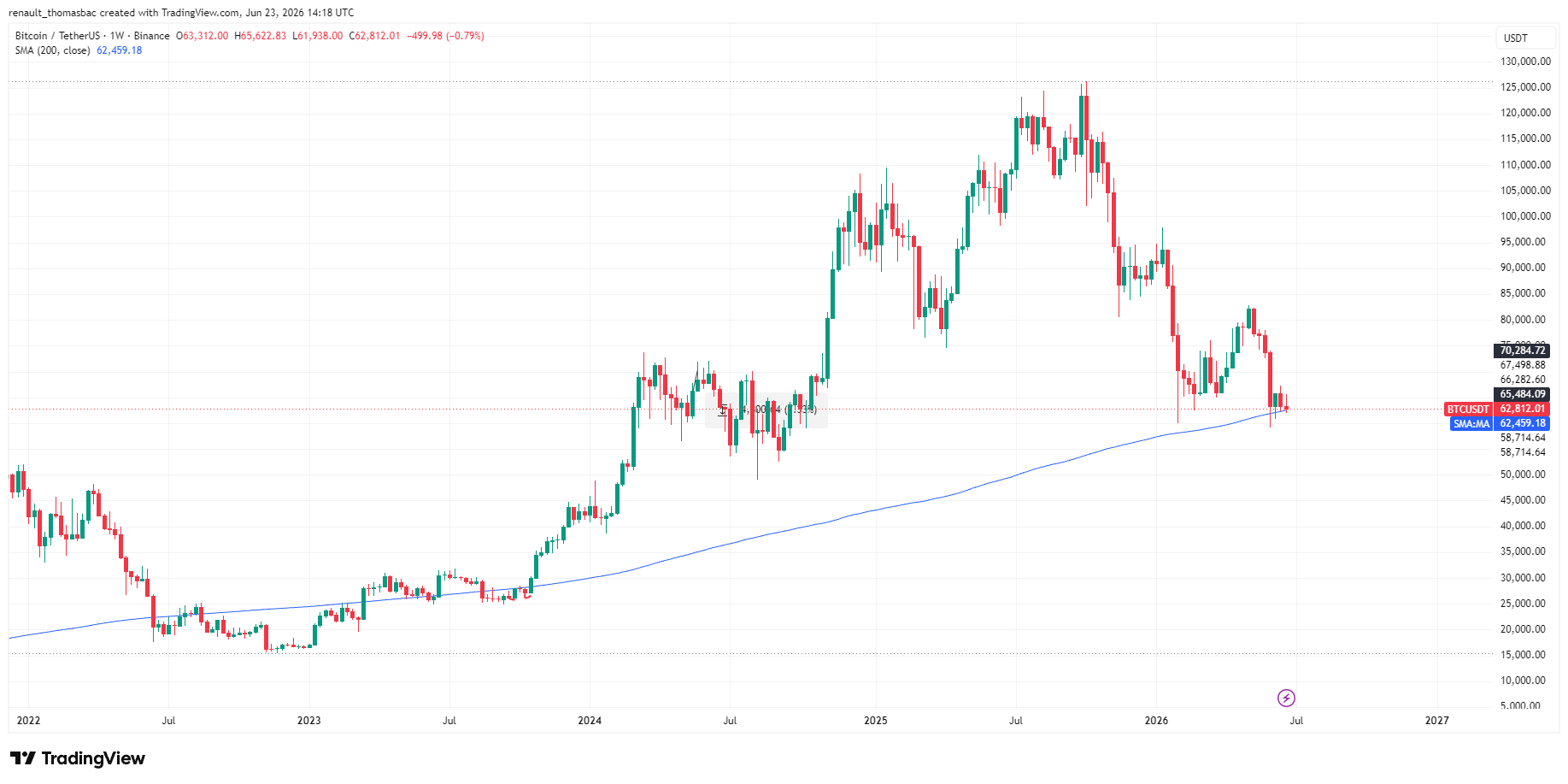
After weeks of pressure, BTC slipped below a level that many long-term investors watch closely: the 200-week moving average. This line is not just another chart indicator. For years, it has acted as a symbolic boundary between ordinary corrections and deep bear-market stress.
The move does not automatically mean Bitcoin is heading into disaster. But it does change the conversation.
Until recently, many investors still viewed the current downturn as painful but manageable. Bitcoin had corrected sharply from its highs, sentiment had weakened, and liquidity had left parts of the crypto market. Still, as long as BTC remained above its major long-term supports, bulls could argue that the broader cycle structure was intact.
Now that argument is harder to defend.
Bitcoin’s fall toward the $60,000 region has placed the market at a critical crossroads. Either this becomes a fast, violent shakeout that is quickly reclaimed, or it becomes the beginning of a deeper and more dangerous phase.
1. Why the 200-Week Moving Average Matters
The 200-week moving average is one of the most followed long-term indicators in Bitcoin.
It smooths almost four years of price data and gives investors a broad view of the market’s underlying trend. Unlike short-term moving averages, it does not react dramatically to every pump or correction. That is exactly why it matters. When Bitcoin moves above or below this line, traders tend to pay attention.
Historically, the 200-week moving average has often acted as a floor during major bear markets. In previous cycles, Bitcoin either bounced from this zone or spent time below it only during periods of extreme stress. For long-term holders, it became something close to a psychological safety net.
That reputation is powerful.
But reputation is not the same as certainty.
The 2022 bear market already proved that Bitcoin can fall below this line and stay there for a long time. During that cycle, BTC spent months struggling beneath major long-term averages before eventually recovering in late 2023. That period was painful, boring and emotionally exhausting. It showed that breaking the 200-week moving average does not always create an immediate rebound.
This is why the current break is so important.
It is not simply a technical event. It is a test of confidence.
If Bitcoin quickly recovers above the 200-week moving average, traders may interpret the move as a bear trap or a final liquidity flush. But if BTC remains below it for several weekly closes, the market may begin treating the breakdown as confirmation that the broader trend has deteriorated.
In Bitcoin, time matters as much as price.
A quick wick below support is one thing.
Living below it is another.
2. The Fall Below $60,000 Is More Than Just a Chart Problem
Bitcoin’s recent weakness did not happen in a vacuum.
The broader macro environment has become more difficult for risk assets. Investors are once again questioning how soon central banks can cut rates, whether inflation is truly under control, and whether liquidity will remain tight for longer than expected.
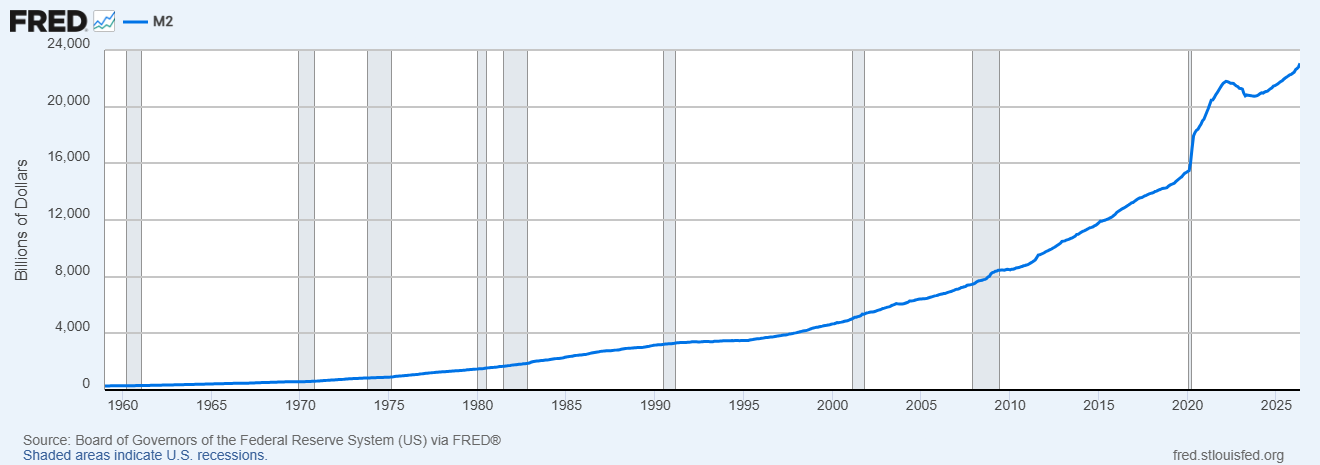
That matters because Bitcoin has become increasingly sensitive to global liquidity.
When money is cheap and investors are willing to take risk, BTC usually benefits. When yields rise, the dollar strengthens, or markets begin pricing in fewer rate cuts, speculative assets often suffer. Bitcoin may be sold as “digital gold,” but in practice, it still trades like a high-beta liquidity asset during stressful periods.
There is also a rotation problem.
Capital has been flowing heavily toward artificial intelligence stocks, large-cap technology names and high-profile equity market stories. In comparison, Bitcoin has recently struggled to attract the same excitement it enjoyed earlier in the cycle. When another narrative becomes dominant, crypto can quickly feel like yesterday’s trade.
That shift is visible in sentiment.
A few months ago, many investors were still discussing new highs, institutional adoption and long-term treasury accumulation. Today, the conversation has changed. Traders are talking about broken supports, ETF outflows, failed rebounds and the possibility of another leg lower.
This kind of psychological shift can become self-reinforcing.
When support breaks, short-term traders sell. When traders sell, price falls. When price falls, headlines become worse. When headlines become worse, hesitant investors wait longer before buying. What begins as a technical breakdown can turn into a wider confidence problem.
Bitcoin does not need good news every day to rise.
But it does need enough demand to absorb fear.
Right now, that demand is being tested.
3. What Happens If Bitcoin Cannot Reclaim This Level?
The next few weeks are important.
A recovery above the 200-week moving average would calm part of the market. It would suggest that buyers are still willing to defend long-term trend levels and that the recent drop may have been exaggerated by forced selling, liquidations or short-term panic.
But if Bitcoin fails to recover quickly, the downside scenario becomes more serious.
The first danger is technical. Once a major support breaks, it can turn into resistance. Traders who bought near the previous support may sell when price returns to that level, simply to exit at breakeven. That can make the recovery harder.
The second danger is psychological. If investors begin to believe that the cycle structure has broken, they may reduce exposure even if they still believe in Bitcoin long term. Markets do not only move because of conviction. They move because of positioning, fear and liquidity needs.
The third danger is that deeper targets become more credible.
If Bitcoin remains below $60,000, many analysts will begin watching the $50,000 to $54,000 region. That zone matters because it lines up with several long-term valuation and on-chain frameworks. It would also represent a more complete reset from the previous cycle high.
That does not mean Bitcoin must fall there.
Markets rarely move in straight lines. BTC could rebound violently at any moment, especially if short positioning becomes crowded or if macro conditions improve. But the burden of proof has shifted.
Before the breakdown, bulls could argue that Bitcoin was correcting within a long-term uptrend.
After the breakdown, they now need to prove that the damage is temporary.
4. A Breakdown Is Not the End of Bitcoin — But It Is a Warning
The biggest mistake would be to treat this technical break as proof that Bitcoin is dead.
Bitcoin has survived deeper crashes, harsher bear markets, exchange collapses, regulatory pressure, miner stress, macro shocks and years of public skepticism. Its long-term story has never depended on a perfectly smooth chart.
But the opposite mistake would be just as dangerous: pretending that nothing has changed.
Breaking the 200-week moving average is a serious warning. It tells investors that the market is no longer in a comfortable technical position. It suggests that long-term support is being tested, liquidity is fragile, and confidence has weakened.
For traders, this is a moment that requires discipline rather than emotion. Chasing rebounds too aggressively can be dangerous. Selling in panic can also be costly. The better approach is to define levels, manage risk and wait for confirmation.
For long-term investors, the situation is more nuanced.
Historically, periods near or below the 200-week moving average have often been attractive for accumulation over multi-year horizons. But they have rarely felt easy in real time. These zones are emotionally difficult precisely because they arrive when the chart looks damaged, sentiment is poor and the market feels uncertain.
That is the paradox of Bitcoin.
The best long-term opportunities often appear when short-term confidence is weakest.
But opportunity is not the same as certainty.
Bitcoin’s break below a major support level should be respected. It may become a short-lived shakeout. It may also mark the beginning of a deeper bear-market phase. The answer will depend on whether buyers can reclaim lost levels, whether macro pressure eases, and whether confidence returns to the market.
For now, Bitcoin is not broken as a network.
But its chart has clearly cracked.
And the market is waiting to see whether that crack becomes a scar — or a collapse.






