
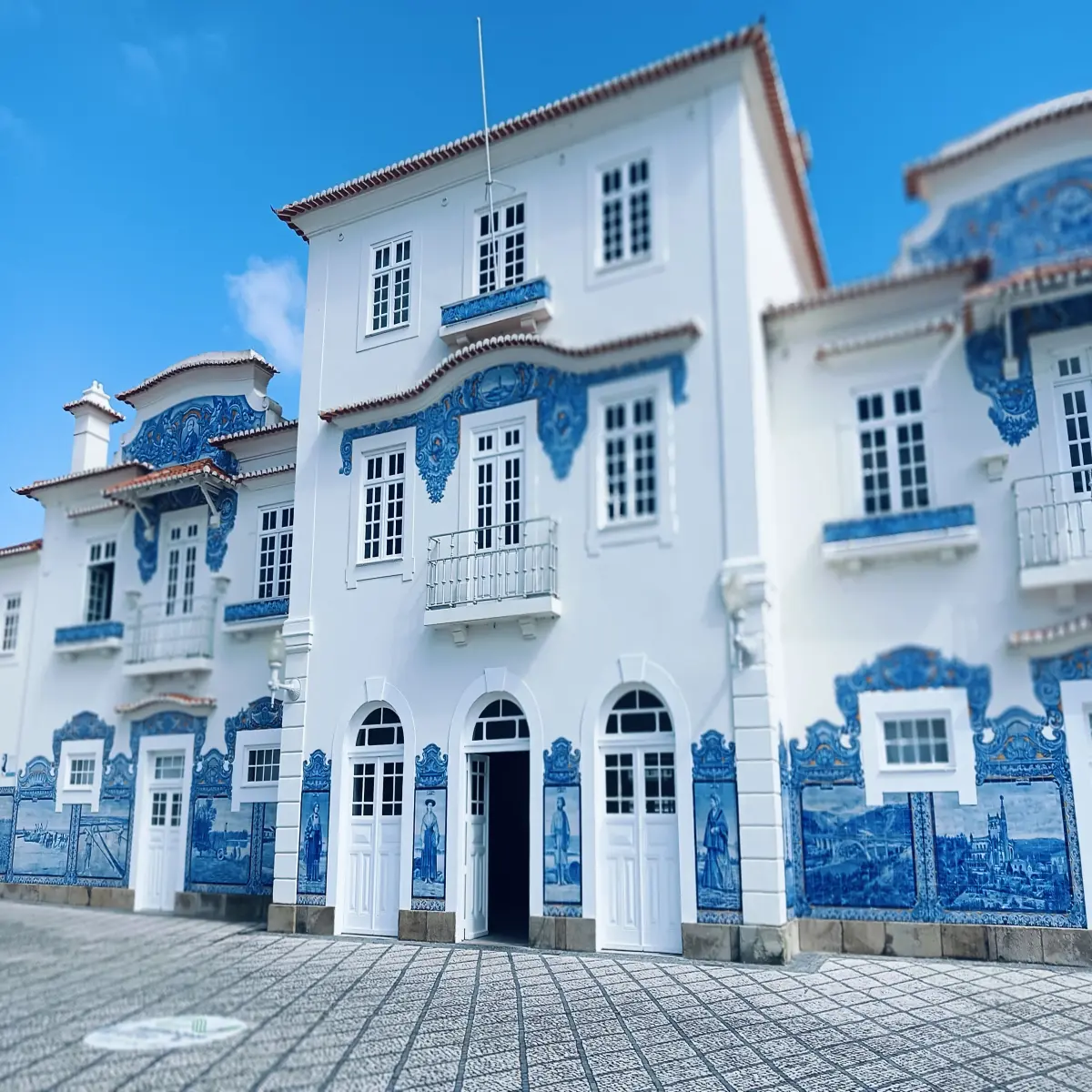
Opened in 1864, the primitive Aveiro station proved insufficient for the traffic that existed at the beginning of the twentieth century. Thus, in 1915, it was decided to build a new building, which was opened the following year in accordance with the style designated as “Casa portuguesa”, which gave it a regional character. The station, located in the eastern part of the city, is richly decorated with tile panels with regional motifs created by Francisco Pereira and Licinio Pinto, dating back to 1916 and made at the Fonte Nova factory.
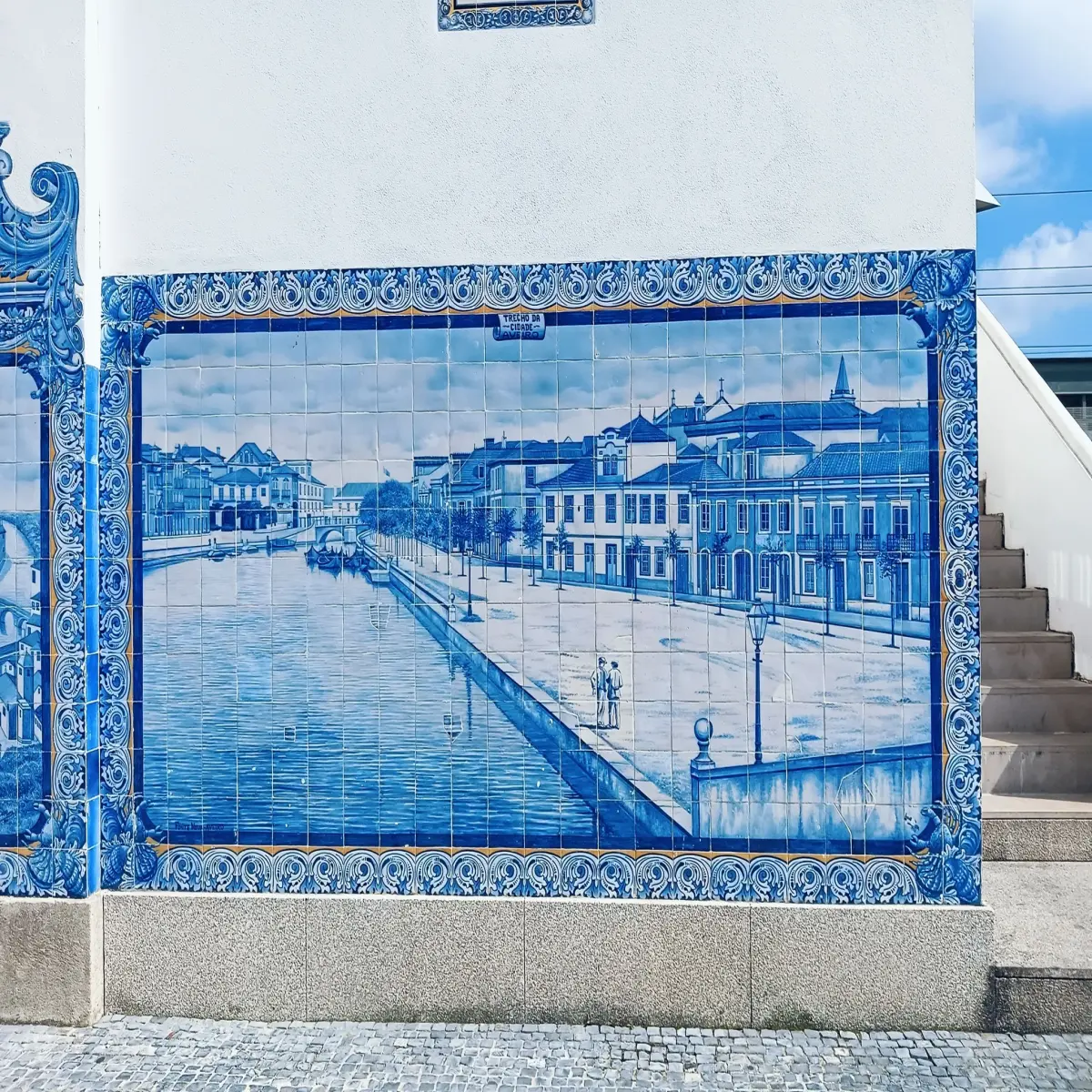
On the main facade, the ethnographic character of these panels stands out in the central part with regional characters such as Peixeiro, Varina and Trikana from different eras. Other panels of regional landscapes with great detail have been added to the side segments at the ground floor level. These panels tell stories of a tourist and ethnographic nature, such as the region's relationship with the river and the sea, Bairrady wine production, or the region's monuments.
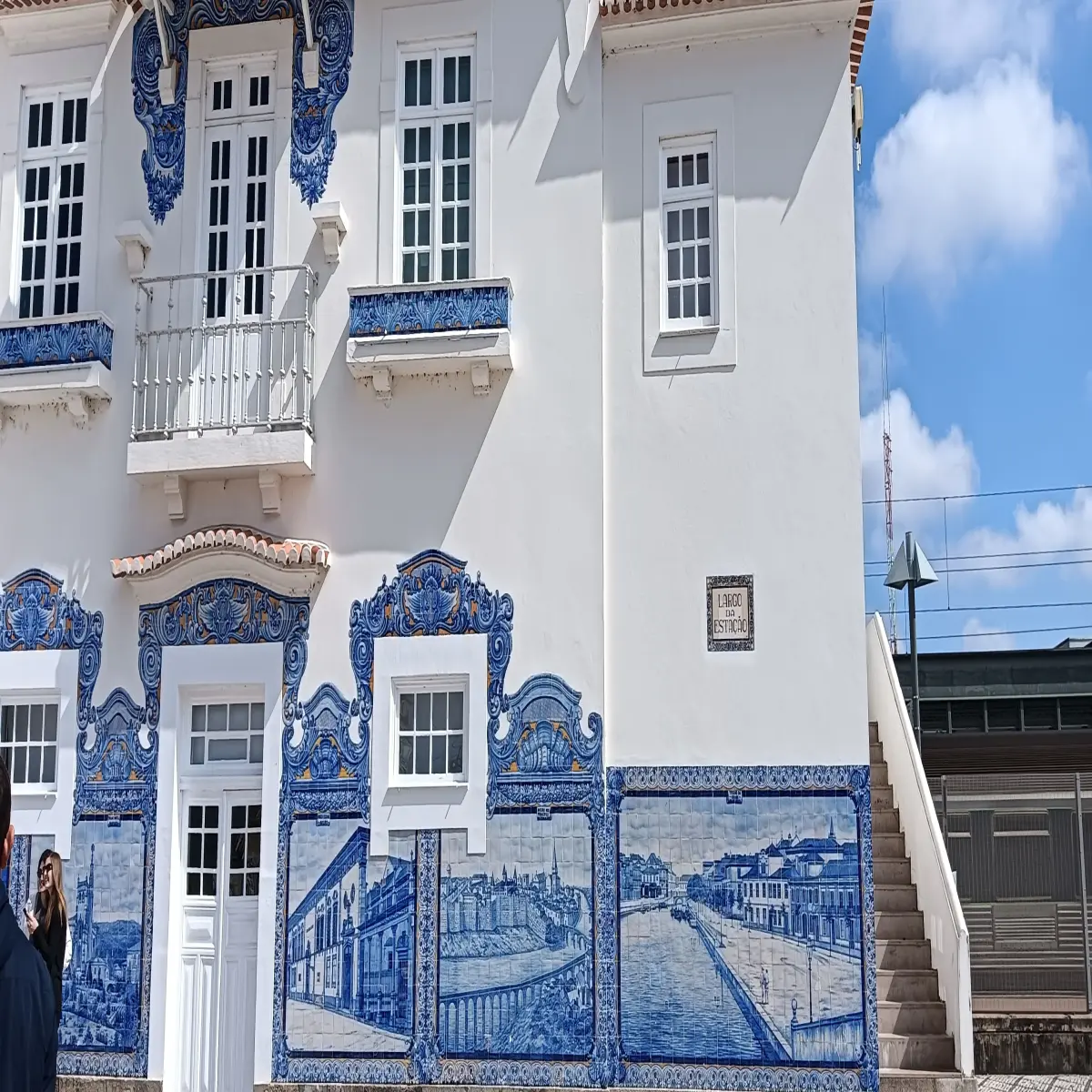
In the center of the image, bordered by blue and white, are surrounded by friezes and pediments, in which the blue color is enriched with yellow elements that decorate not only the upper part of the panels, but also the doors and windows. It is on the upper floors that the influence of the “Casa Portuguesa" style is most felt, with canopies over the windows and bay windows, along the axis of the main facade, superimposed pediments, richly decorated with tiles.
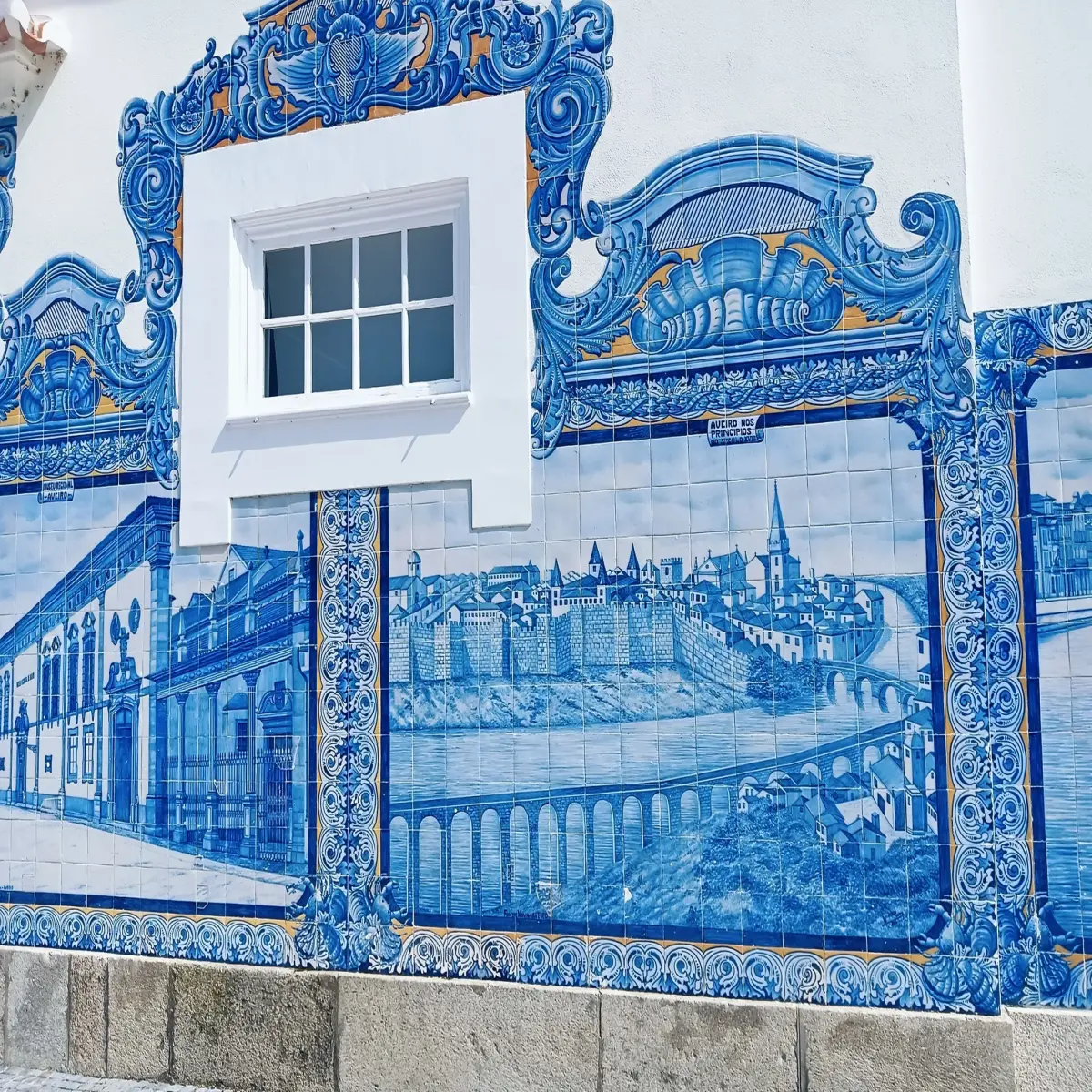
After many years, the building was restored, retaining its architectural layout. In July 2021, this old train station opened to the public with a new concept, where every visitor can find on the ground floor a municipal tourist service center and a store of identical products from Aveiro/the region, namely salt and ovos molesh from Aveiro, as well as wines and sparkling drinks from the Bairrada area.






