
She's been the first to describe the star meltdown processes
Another one of the greatest women in astronomy world, has gone: Margaret Burbidge has passed away last sunday, 5th of April 2020.
The first woman to lead the Royal Greenwich Observatory, in 1957 she became weel-known about an article, subsequently called "B2FH", about the heavy elements synthesis in stars nucleus, “Synthesis of the Elements in Stars”.
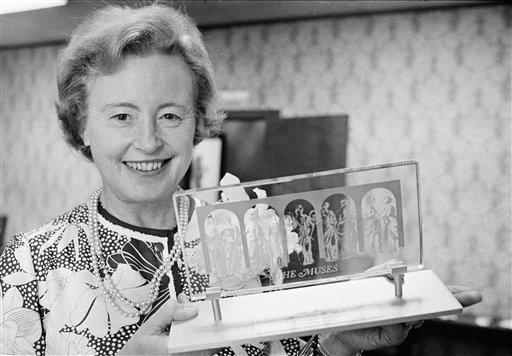
In that article, published together Geoffrey Burbidge (her husband), William A. Fowler (a future Physic Nobel Price) and Fred Hoyle, she well explained for the first time the processes causing the formation of heavy elements, in particular the iron ones. She introduced for the first time ever, the concepts of process R, process S and the theoretical idea of the process P, confirmed and modified between 70s and 80s
What does this processes consist of?
Just to have a general idea, without being too much annoying:
- Process R is a process in which, inside a Supernova nucleus, there is a formation of an half of neutron atoms, heavier than Iron;
- Process S is a secondary process in which there is a slow capture of neutrons, in low-density-medium-temperature conditions. During this process a stable isotope captures a neutron, but the created nuclide decades before another neutron is being captured. This happens in "Giant" star phase.
- Process P is a process that happens in the nucleus during a Supernova explosion, generating atoms containing high number of protons, some of that heavier than iron.
Margaret Burbidge, "Lady Stardust", simply can be considered the first nuclear astrophysics of the history.
See you next time






