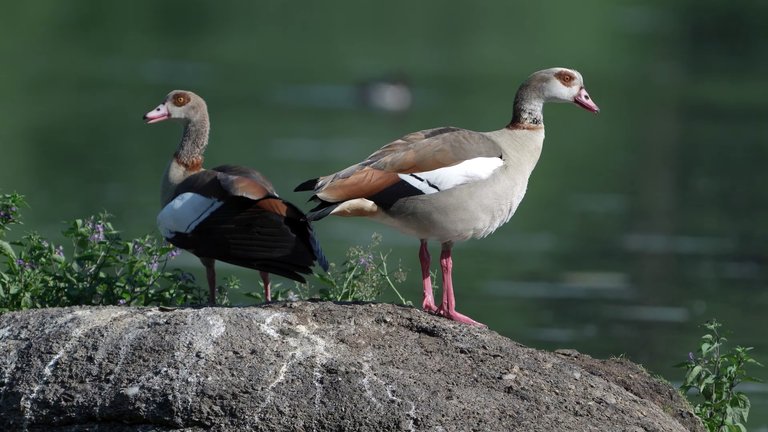

Although the bird naturally occurs throughout Africa, apart from the Sahara and the northern part, it is found almost everywhere in Europe. In Poland, the species was first observed in 2004 and since then it appears regularly every year. In many European countries it is bred for ornamental purposes.
Choć ptak naturalnie występuje w całej Afryce, poza Saharą i północną częścią spotyka się go prawie w całej Europie. W Polsce gatunek zaobserwowano po raz pierwszy w 2004 roku i od tego czasu pojawia się regularnie co roku. W wielu krajach Europy jest hodowana w celach ozdobnych.


Where did this bird in Europe come from?
Skąd ten ptak w Europie?
The history of the Egyptian goose as a breeding bird began in the parks of East Anglia, around The Hague and Groningen in the Netherlands, and near Brussels, Belgium in the 1970s. The bird was bred for ornamental purposes in private properties and parks. The most sacred bird of the ancient Egyptians (though the Ibis is more sacred) looks like a colorful duck and lives like a goose.
Historia Kazarki Egipskiej jako ptaka hodowlanego rozpoczęła się w parkach Anglii Wschodniej, w okolicach Hagi i Groningen w Holandii oraz w pobliżu Brukseli w Belgii w latach 70. ubiegłego wieku. Ptaka hodowano w celach ozdobnych do prywatnych posesji i parków. Ten najświętszy ptak starożytnych Egipcjan (choć Ibis jest bardziej święty) wygląda jak kolorowa kaczka, a żyje jak gęś.


The Egyptian goose, is a species of large water bird from the ducklings family and is characteristically colored. The top of the body is dark, while the underside is light, there is a dark spot on the chest. Wings long, dark red legs are also long. Concave beak, pink-red in color, with darker edges.
Kazarka egipska, gęsiówka egipska, to gatunek dużego ptaka wodnego z rodziny kaczkowatych i jest charakterystycznie ubarwiona. Wierzch ciała jest ciemny, spód natomiast jasny na piersi znajduje się ciemna plama. Skrzydła długie, ciemnoczerwone nogi również są długie. Dziób wklęsły, w kolorze różowoczerwonym, z ciemniejszymi krańcami.


The tail is black and quite short. The neck is also long and has a rusty brown collar on it. The silhouette of the bird is rather stocky and massive. The eye iris is orange and there is a dark brown area around the eye. The male and female are similar to each other, although the male is larger and more massive. It can be over 70 cm long.
Ogon w kolorze czarnym i dość krótki. Szyja jest również długa, a na niej znajduje się rdzawo-brązowa obroża. Sylwetka ptaka jest dość krępa masywna. Tęczówka oczna jest pomarańczowa a wokół oka znajduje się ciemny brunatny obszar. Samiec i samica są do siebie podobne, choć samiec jest większy i masywniejszy. Może mieć ponad 70 cm długości.


Food and habitat
Pokarm i siedlisko
This bird feeds in the morning and evening. It eats like a goose, nibbling on grass, young leaves or seeds. In the wild, it lives mainly in lakes, swamps and swamps, oxbow lakes, and breeding ponds.
Ptak ten żeruje rano i wieczorem. Odżywia się jak gęś skubiąc trawę, młode liście czy nasiona. Na wolności zamieszkuje głównie jeziora, mokradła i bagna, starorzecza, stawy hodowlane.

Faithfulness to the death
Wierność aż po grób
The Egyptian goose mates for life. They are for long-lived birds, as they can live up to 25 years. They build a nest together and look after the young together.
Kazarka egipska łączy się w pary na całe życie. Są jak na ptaki długowieczne, bo mogą dożyć nawet 25 lat. Budują gniazdo wspólnie i wspólnie opiekują się młodymi.


Territorialism, i.e. with a hoe to the sun
Terytorializm czyli z motyką na słońce
These birds also have an exceptionally strong sense of territorialism. They are also known for daringly defending their nests and chicks against intruders. The most heroic defense was made by a male who once set off on a helicopter, who came too close to the nest with a female disembarking.
Ptaki te mają też wyjątkowo silne poczucie terytorializmu. Znane są też z brawurowej obrony swoich gniazd i piskląt przed intruzami. Najbardziej bohaterskiej obrony dokonał pewien samiec, który ruszył kiedyś na helikopter, który nadto zbliżył się do gniazda z wysiadującą samicą.


Nest and young chicks
Gniazdo i młode pisklęta

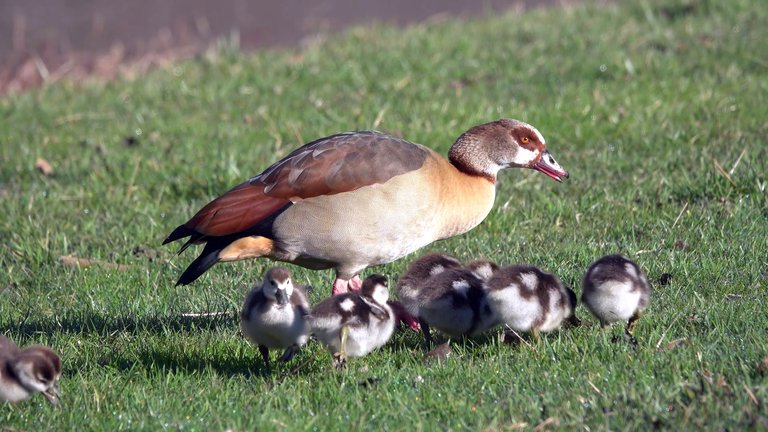
They usually build their nest, lined with grass and down, on land, under the cover of vegetation, but sometimes in holes, burrows, on rock shelves and even in great hollows of old trees. In it, she lays up to 12 creamy eggs which they hatch for about a month. Young reach volatility after about 70 days.
Gniazdo wyścielone trawą i puchem buduje zwykle na lądzie pod osłoną roślinności, ale zdarza się, ze w dołkach, norach, na półkach skalnych a nawet w wielkich dziuplach starych drzew. Składa w nim do 12 kremowych jaj które wysiaduje przez około miesiąc. Młode osiągają lotność po ok. 70 dniach.


Enjoy 🦅