
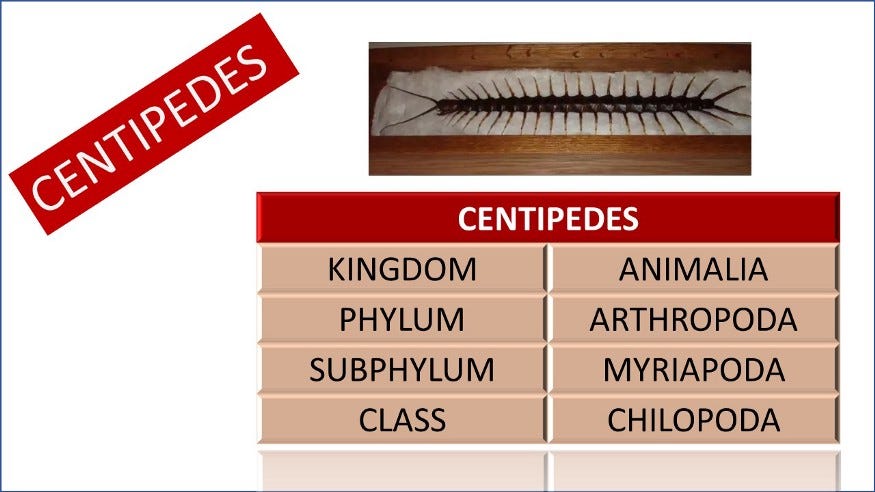
Centipedes are a scary predator and one that the insects would not want to cross paths with. Not only insects, even smaller mammals, and amphibians would rue crossing paths with the prehistoric killer. Let’s know more about them.
WARNING: SOME OF THE VIDEOS ARE LIVE-FEEDING VIDEOS. PLEASE AVOID IT IF THAT DOES NOT SUIT YOU.

Centipedes — What’s in a Name?
As most would have guessed, the name centipede has something to do with a hundred, and it refers to the legs of the creature. However, there are hardly any centipedes with a hundred legs. In general, it is a name given to mean — many legs.
The centipede is one of the most versatile creatures to inhabit a vast expanse of the planet and feed on almost anything. It has rarely been known to feed on plants, but even that option is considered when food is scarce. It is the centipedes' predatory nature, which is the scariest one, and most creatures would pray that they never end on the prey side of the equation.
Centipedes, much like cockroaches, are believed to be prehistoric and once roamed the world along with the dinosaurs. If the centipedes in the current form are not scary enough, the past ones were eight feet long and few feet wide. You heard me right, eight feet long. This means even mammals the size of humans were not safe. But these prehistoric ancestors of current centipedes and millipedes were believed to be herbivores.
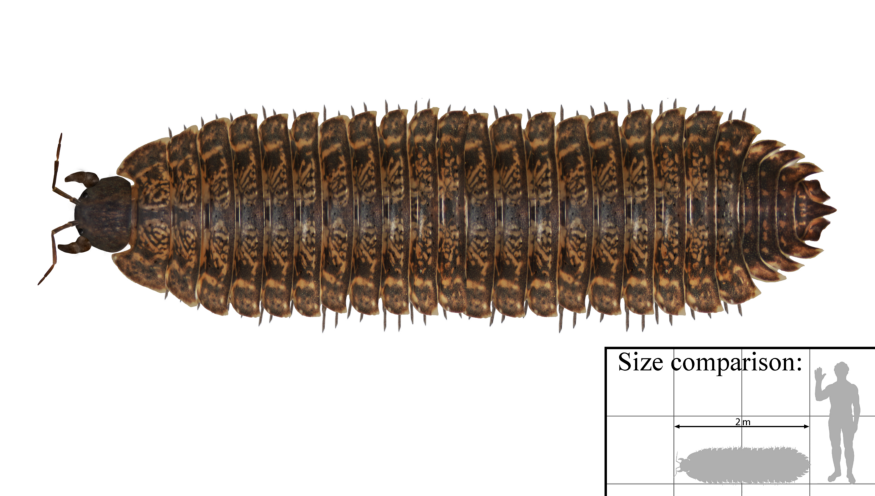
Coming back to the current day, centipedes are assassins which would consider anything a game. And if we are talking about the giant centipedes, then even mammals, amphibians, and reptiles can kiss life goodbye.
Staying with the giant centipede, did you know that the largest giant centipede recorded was 10 inches? That’s about nearly a foot long. But what is exciting is that a man in Hawaii claims to have caught a 14-inch giant centipede. He has even captured it and pinned it to a Styrofoam board, though he still has to apply for the record recognition.
Here is how it looks:
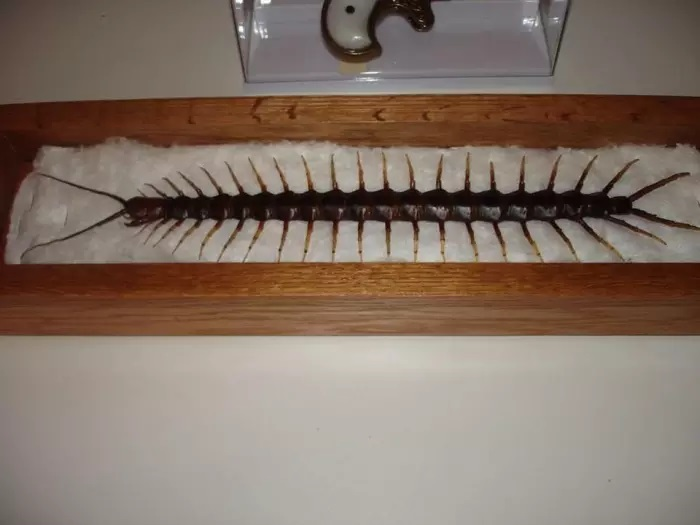
Just to put that size into perspective. The centipede is more than a foot long. The average human height world-over is about 5 feet. The centipede is 20% of our height (length). Get that? And now I am sure you would appreciate why it is one of the deadliest predators.
Size does matter! Oh, by the way, did I mention that most of them are venomous too!
To get a sense of the size, take a look at this video where an owner lets the centipede crawl all over him.
Do I need to say anything more? I guess not.
Centipedes — One of the Fastest Critters
At the beginning of this article, we compared the centipede to a tiger, and now we compare it to a cheetah in terms of speed. The centipede is one fast critter. It can do a speed of 0.4 m/s or 1.44 kmph. That is really fast relative to its size. While it may not catch an American cockroach capable of achieving 5.4 kmph in an all-out race, it does feed on cockroaches, as it uses speed and stealth to sneak up on its snack.
The cockroach would end up being the fastest food item on the centipede’s menu, or should I say fast food. 😊 😊. Take a look at the house centipede, the fastest of the centipede.
That would mean that the centipede is strong like a tiger and fast like a cheetah. It isn’t a great life as a bug when they are in centipede territory; neither can it overpower the predator nor run away from it. That is the most lethal combination in any predator.
Centipede vs. Snake
This has to be one of the weirdest battles. It would be easy to conclude that the snake would emerge as the winner. Or would it? Well, there have many instances where giant centipedes devoured snakes without even breaking a sweat. The centipede starts eating the snake even before the venom kills it. And centipedes eat their victims, not digesting them with their toxins and then sucking them dry like a spider. Scared now?
Centipede vs. Snake [where the snake got it wrong]
As I mentioned in the previous section, there are many instances of a snake eating a giant centipede. However, most are extremely cautious of killing it first before devouring it. With pincer-like venomous mouthparts, the last thing any snake would want is to have a centipede eating it inside out. Interestingly, that is the exact mistake this snake made.
From the video, it is apparent that the centipede has eaten the snake inside out. One can only conjecture that the snake must have swallowed the centipede assuming that the venom would have killed it already. It was in for a rude shock when the centipede started gnawing it from the inside. Then at some point, the venom would have taken effect and killed the centipede but not before the centipede killed the snake.
That would have been total sci-fi stuff!
Here is another video of a pygmy rattlesnake feeding on a giant centipede. It seems to bite it and throw away the centipede. The idea would be to avoid a counter-strike by the centipede. It seems to work.
Even a predator of the giant centipede is wary of its venomous prey.
Centipede vs. Mouse
How many of us would actually think that this is even a contest? But it is. Centipedes can easily overpower a mouse and start feeding on it. Wow, being a mammal is no advantage if an arthropod, daring like a centipede, gets hungry.
Mouse are actually way bigger than the centipede, but that does not stop the centipede from taking the mouse. The centipedes are usually agile and are able to stalk and attack prey stealthily. Once the centipede grabs its prey, there is hardly any chance of escape. It's game over for the mouse.
But then there are instances where the mouse gives it back like this mama grasshopper mouse.
Never mess with a mama! 😊
Centipede vs Tarantula
Well, now tarantulas are one of the biggest spiders and venomous at that. They are predators and, in some regions, share territory with centipedes. But when you are sharing territory with the giant centipedes, you better be on the lookout.
If not, this is what happens to you.
Centipedes have been known to enter the trap door spider's den, head first, kill them, and grab them out. That is something no other creature would dare to do as they know that the trap door’s big fangs would be waiting for them. But centipedes foster no such fear.
Centipede vs Scorpion
The tail of the scorpion is one of the most feared parts, and yet here in the following video, the centipede goes straight for the tail and destroys it before injecting the venom and immobilizing the scorpion.
Suggestion: Watch from the 4:00 minute mark.
The scorpion ended as an easy meal. There are instances of scorpions overpowering centipedes too, but mostly it is the centipede that emerges as the winner.
Centipede vs. Frog/Toad
It doesn’t matter how big a toad or frog is, a centipede would consider anything a game, so long as it can overpower it. And with the strength of the centipede, it can indeed beat a toad or a frog.
Take a look at this video:
Mind you, frogs or toads are no pushovers when it comes to centipedes. Even they are known to relish centipede food. It is just a matter of who got the other first. Here is another video where a bullfrog gets the better of a centipede. Suggestion: Watch from 1:00 minute mark.
Centipedes and Its Young
Centipedes are interestingly one of the few critters which actually take care of their eggs and little ones for some time. They actually hold the eggs and hatchlings between their legs, stay with them, and protect them.
That is quite a parental instinct, considering that even complex creatures belonging to the mammal world or the reptilian world do not show such behavior.
Centipedes — Human Interaction
Here’s where the centipedes meet their match. There is no fight here; rather, humans eat giant centipedes. You heard me right. They are one great delicacy in South-East Asian countries.
Here is a video that had gone viral recently where a girl is dipping giant centipedes in hot oil in a wine glass.
Apologies to centipede lovers out there, but they are indeed a food item in some countries. You can find tons and tons of videos of centipedes on the menu.
Final Words
While the centipedes appear obnoxious (apologies to those who have them as pets), they are actually a boon to the ecosystem. Think about the explosion of the insect population, if not for the centipedes keeping them in check. In fact, the house centipedes are known to relish on known pests like cockroaches, bed bugs, and other insects. So, what would you prefer at home, centipedes or cockroaches? You decide. 😊
Despite many of our apprehensions, they are not really a bad thing for the ecosystem. After all, they are the tigers of the insect world, and I do hope readers had fun reading about them.
We will look at more things from the animal kingdom soon, but until then, goodbye!
Image Courtesy:
1. Mr. Clayton Cambra (Who had caught the biggest centipede)
2. Wikimedia Commons
Disclaimer:
The videos do not belong to the author but to the respective people who have posted them on YouTube. The author intends to give the readers a glimpse of the episodes on track through the videos. Also, the author does not certify that the people who have posted the videos on YouTube are the video's copyright owners. The videos most appropriate to the topic being discussed have been posted here.






