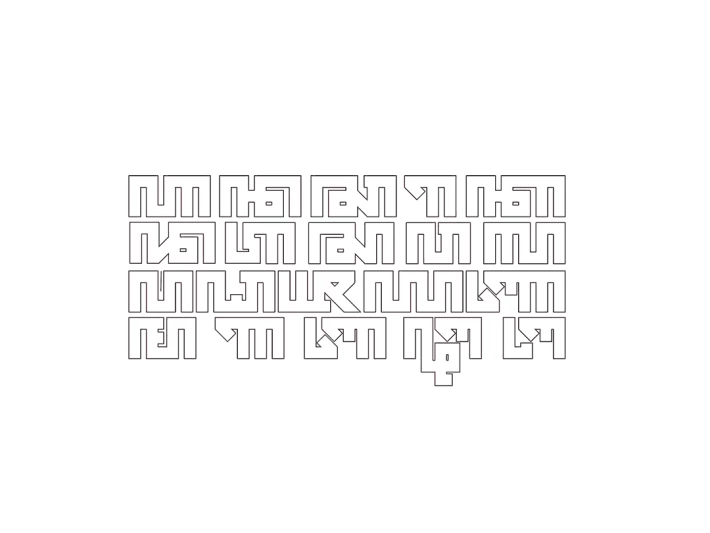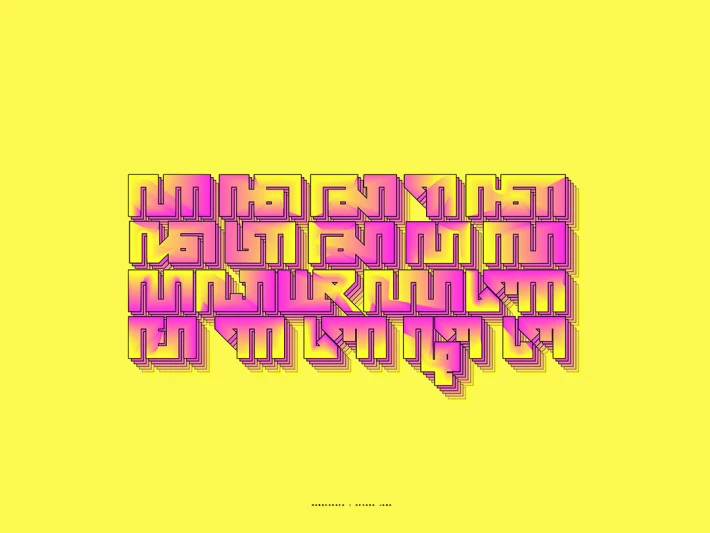
The Javanese script, natively known as Aksara Jawa and Hanacaraka, formally known as Déntawyanjana and Carakan is an abugida developed by the Javanese people to write several Austronesian languages spoken in Indonesia, primarily the Javanese language and an early form of Javanese called Kawi, as well as Sanskrit, an Indo-Aryan language used as a sacred language throughout Asia. The Javanese script is a descendant of the Brahmi script and has many similarities with the modern scripts of South India and Southeast Asia. The Javanese script, along with the Balinese script, is considered the most elaborate and ornate among Brahmic scripts of Southeast Asia
The script was widely used by the court scribes of Java and the Lesser Sunda Islands. However, further development was halted abruptly following World War II and especially during the Japanese occupation of the Dutch East Indies, in which its use was prohibited, and the script's use has since declined. Today, everyday use of the Javanese script has been largely supplanted by the Javanese Latin alphabet.
The Javanese script was mainly employed by court scribes centered in Surakarta and Yogyakarta, but the use was widespread among various courts of Java and the Lesser Sunda Islands. They are used to write historical accounts (babad), stories (serat), ancient verses (kakawin), and divination guides (primbon) among many others, with the most popular being copied and rewritten over the centuries.
According to legend, Javanese script comes from the story of Aji Saka, a Javanese legend that tells the story of how civilization came to Java, brought by the legendary first king of Java named Aji Saka. It was said that Aji Saka came from Bumi Majeti. Bumi Majeti itself is a mythological middle of nowhere, but some interpret that Aji Saka originated from Jambudwipa (India) from the Shaka tribe (Scythia), which is why it was named Aji Saka (Raja Shaka). This legend symbolizes the arrival of the Dharma (Hindu-Buddhist teachings and civilization) to the island of Java. However, other interpretations assume that the word Saka is derived from the Javanese term saka or soko which means important, base, or origin, so the name means "origin king" or "first king". This myth tells of the arrival of a hero who brought civilization, order and order to Java by defeating the evil giant king who controlled this island. This legend also mentions that Aji Saka was the creator of the Saka Year, or at least the first king who implemented the Hindu calendar system on Java.
As soon as the island of Java was nailed into place, the island became habitable. But the first nation to inhabit this island was a denawa (giant) who was savage, oppressor, and liked to prey on humans. The first kingdom to stand on this island was Medang Kamulan, led by a giant king named Prabu Dewata Cengkar, a tyrannical giant king who had a habit of eating humans and his people.
One day there came a wise young man named Aji Saka who intends to fight the tyranny of King Dewata Cengkar. Before his departure, he gave a message to his two servants named Dora and Sembodo, that he would leave for Java. He advised that when he left they both had to guard Aji Saka's heirloom. No one can take the heirloom besides Aji Saka himself. After arriving in Java, Aji Saka headed inland where the capital city of Medang Kamulan was. He then challenged Dewata Cengkar to fight. After a fierce battle, Aji Saka finally succeeded in pushing Prabu Dewata Cengkar to the South Sea (Indian Ocean).
Meanwhile, after Aji Saka ruled at Medang Kamulan, Aji Saka sent a delegation back to his home in Bumi Majeti to preach to his faithful Dora and Sembodo servants, to deliver his heirloom to Java. The messenger met Dora and preached Aji Saka's message. So Dora came to Sembodo to inform Aji Saka's order. Sembodo refused to give the heirloom because he remembered Aji Saka's message: no one except Aji Saka himself could take the heirloom. Dora and Sembodo suspect each other that each party wants to steal the heirloom. Finally they fought, and because both of them were equally strong they were both dead. Aji Saka wondered why the heirloom had not arrived in so long, so he returned to Bumi Majeti. Aji Saka was surprised to find the corpses of his two loyal servants and finally realized the misunderstanding between the two led to this tragedy. To commemorate the loyalty of his two servants, Aji Saka created a poem which, if read as Javanese script hanacaraka. The arrangement of the Javanese alphabet into poetry as well as perfect pangram, which is translated as follows.
Hanacaraka
Datasawala
Padhajayanya
Magabathanga
There are two messengers
Who were quarelling
(They are) equally victorious (in a fight)
These are (their) corpses.
Javanese script is divided into several types based on its function. Basic scripts consist of 20 syllables used to write modern Javanese, while other types include swara characters, punctuation marks, and Javanese numbers. Each syllable in Javanese script has two forms, called nglegéna (basic characters), and pairs (mostly in subscript form, written under the nglegéna script used to write consonant clusters).
In this series I will try to respond the form of 20 syllables of the basic scripts to become works of art in each syllable, and give a little explanation about the syllables.
The next post is the first character; "ha"
Until we meet again, and always be happy!
Uh, and wish me luck on this! Cheers!