
In today's fast-paced world, the automotive industry is undergoing a massive transformation, driven largely by advancements in data analysis and artificial intelligence (AI). These technologies are not just buzzwords; they're revolutionizing how vehicles are designed, manufactured, maintained, and driven. But why is data analysis so critical in this sector, and how is AI enhancing it?
The Evolution of AI in the Automotive Industry
Historical Perspective
The automotive industry has always been at the forefront of technological innovation. From the first assembly line introduced by Henry Ford to the sophisticated computer systems in modern vehicles, the sector has continually evolved. AI's journey in the automotive industry began with basic automation and has now progressed to complex algorithms that can predict, learn, and adapt.
Milestones in AI Integration
Key milestones include the development of advanced driver-assistance systems (ADAS), the introduction of electric vehicles with smart capabilities, and the ongoing development of fully autonomous vehicles. Each step has been fueled by data and the ability to analyze it effectively.
Data Collection in the Automotive Sector
Sources of Data
Data in the automotive industry comes from various sources. Sensors in vehicles collect data on speed, engine performance, fuel efficiency, and even driver behavior. Additionally, external data sources like traffic patterns, weather conditions, and road infrastructure play a crucial role.
Types of Data Collected
The data collected can be broadly categorized into operational data (e.g., engine diagnostics, fuel usage), environmental data (e.g., weather conditions, traffic data), and user data (e.g., driving habits, in-car preferences).
AI Technologies Used in Data Analysis
Machine Learning
Machine learning algorithms are designed to identify patterns and make predictions based on vast amounts of data. In the automotive industry, machine learning is used to forecast maintenance needs, predict traffic conditions, and enhance autonomous driving systems.
Neural Networks
Neural networks, inspired by the human brain, are used for tasks that require high-level abstraction. These networks are crucial for image and speech recognition systems in vehicles, such as those used in ADAS and voice-activated controls.
Deep Learning
Deep learning, a subset of machine learning, involves layers of neural networks that can analyze data at multiple levels of abstraction. This technology is pivotal for developing advanced features like object detection in autonomous vehicles and personalized in-car experiences.
Applications of AI in Automotive Data Analysis
Predictive Maintenance
Predictive maintenance uses AI to anticipate when a vehicle part might fail. By analyzing data from sensors and historical maintenance records, AI can predict failures before they happen, reducing downtime and repair costs.
Quality Control
AI-driven quality control systems analyze data from the production line to detect defects in real-time. This ensures that only the highest quality vehicles reach the market, enhancing brand reputation and customer satisfaction.

Highest quality vehicles photo by Deblocari Auto Oradea
Supply Chain Optimization
AI analyzes data from suppliers, production schedules, and logistics to optimize the supply chain. This reduces costs, minimizes delays, and ensures that production lines run smoothly.
Enhancing Vehicle Performance and Safety
Real-time Monitoring and Diagnostics
AI systems monitor vehicle performance in real time, diagnosing issues as they arise. This proactive approach enhances vehicle reliability and safety, providing drivers with real-time alerts and recommendations.
Autonomous Driving Systems
Autonomous vehicles rely heavily on AI for safe and efficient operation. AI systems process data from cameras, LIDAR, and other sensors to navigate roads, avoid obstacles, and make split-second decisions.
Customer Experience and Personalization
Personalized Marketing
AI analyzes customer data to deliver personalized marketing messages. This can include tailored promotions, recommendations for vehicle features, and reminders for service appointments, enhancing the overall customer experience.
In-car Personal Assistants
In-car personal assistants, powered by AI, provide drivers with real-time information, navigation assistance, and entertainment options. These systems learn from user preferences to offer a more personalized driving experience.
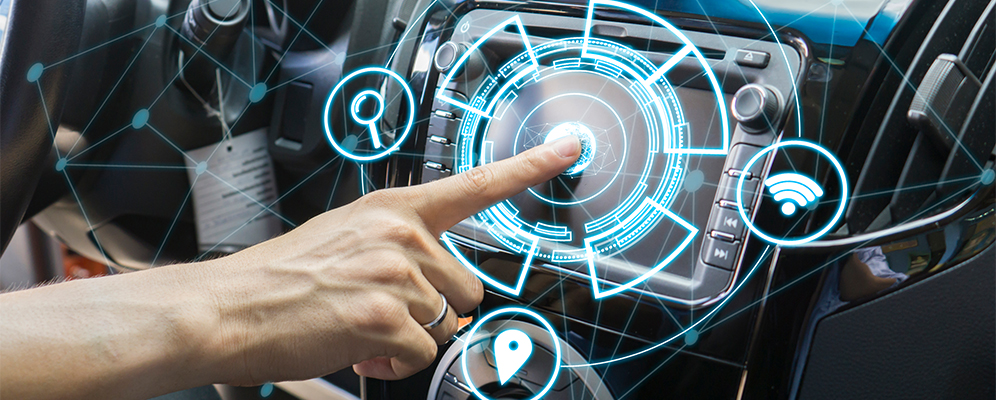
In-car personal assistants photo by Deblocari Auto Oradea
Challenges in Implementing AI for Data Analysis
Data Privacy and Security
With the increasing amount of data collected, ensuring its privacy and security is a major concern. The automotive industry must adhere to strict data protection regulations and implement robust security measures to protect sensitive information.
Technical and Operational Hurdles
Implementing AI systems can be technically challenging and costly. There are also operational hurdles, such as integrating AI with existing systems and training staff to work with new technologies.
Future Trends in AI and Data Analysis in the Automotive Industry
Edge Computing
Edge computing processes data closer to where it is generated, reducing latency and improving real-time decision-making. This is particularly important for autonomous vehicles, where split-second decisions are crucial.
5G Integration
The rollout of 5G networks will provide the high-speed, low-latency connections needed for advanced automotive applications. This will enable more reliable communication between vehicles and infrastructure.
Enhanced AI Algorithms
Continual improvements in AI algorithms will lead to more accurate predictions, better performance, and more advanced features in vehicles. These enhancements will drive the next generation of automotive innovation.
Case Studies
Tesla's Use of AI for Autonomous Driving
Tesla is a pioneer in using AI for autonomous driving. Their vehicles collect data from millions of miles driven, which is then used to improve the AI algorithms that power their self-driving technology.
BMW's Predictive Maintenance System
BMW uses AI to predict when maintenance is needed, reducing the likelihood of unexpected breakdowns. This system analyzes data from vehicle sensors and maintenance records to provide timely alerts to drivers.
Regulatory and Ethical Considerations
Regulatory Compliance
The automotive industry must navigate a complex landscape of regulations governing AI and data usage. Compliance with these regulations is essential to avoid legal issues and maintain customer trust.
Ethical AI Usage
Ethical considerations include ensuring that AI systems are transparent, and fair, and do not discriminate. The industry must also address concerns about job displacement and the societal impacts of AI.
Impact on Workforce and Employment
Job Transformation
AI is transforming jobs in the automotive industry, creating new roles in data science, AI development, and cybersecurity, while reducing the need for some traditional roles.
New Skill Requirements
As AI becomes more prevalent, there is a growing need for employees with skills in AI, machine learning, and data analysis. Training and education programs are essential to prepare the workforce for these new demands.
AI and Environmental Sustainability
Emission Reduction
AI can optimize engine performance and route planning to reduce emissions, contributing to a more sustainable environment. Electric vehicles powered by AI also play a significant role in reducing carbon footprints.
Efficient Resource Usage
AI helps in optimizing resource usage during manufacturing, reducing waste, and improving energy efficiency. This contributes to more sustainable production processes.
Competitive Advantage through AI
Market Leaders and AI Adoption
Companies that adopt AI early gain a competitive advantage by offering innovative features, improved efficiency, and enhanced customer experiences. Market leaders like Tesla and BMW are setting the pace in AI integration.
Startups Leveraging AI
Startups are also leveraging AI to disrupt the automotive industry. By focusing on niche markets and innovative solutions, they are challenging established players and driving industry-wide innovation.
Visit the Pandora's Charms website for more articles.






