
• Before the Beginning
Gold and silver are the two surviving commodity money owing to their durability. The duo served as money (inform of coins or dust) thousands of years back until the world-war eras when they were both put out of circulation. Nevertheless, in recent time both precious metals have proven great investment tools (serving as inflation hedge and reserves) for individuals and countries, especially for the purpose of settling international trades respectively.
Meanwhile the story of money and world economics isn't complete without the mention of world-war one and two (WWI & II), though were infamous in history of mankind, the unhealthy competition amongst the warring nations led to great technological and financial innovations of the millennium; from the first atomic bomb to current monetary system which was mostly inspired by an ambitions to create surplus money to finance warfare. But before the advent of current monetary policy gold and silver were the standards of money. How is that?
• Monetary Standards
There are three known monetary standards in global financial system: monometalic (gold or silver standard), bimetallic and the current paper currency standard (aka fiat monetary system). Unlike modern day economics based on the later (where the value of banknotes is determined by legal decrees of the issuing government, fiat, or let it be done in latin), during the pre-world-war era silver and gold were the standards of money instead, otherwise known as monometallism (a metallic monetary system applicable to when one of the precious metals is the basis of a country's monetary policy). But before the divergence of world economies to gold standard, countries like great Britain used to have both metals simultaneously circulating their economy, a system that was then known as bimetallism or bimetallic standard. Gold standard on the other hand is "a monetary system where the value of circulating money is linked to the value of gold, (silver standard alike)."
Under these metallic money standards the total paper monies circulating an economy was expected to correspond with the value of precious metals (silver or gold) in their reserve. Moreover, under this standard banknotes dispensation by individual banks was equally been regulated to ensure it harmonizes with total gold (or silver) in their possessions. And for a country or individual banks to exceed their gold reserve limit in paper money printing or issuance would rather mean a scam or devaluation of the said currency in the financial system of that time.
Nevertheless, there were two mode of gold standards practiced in those days economies:
i. (Classic) Gold Standard
This was a long-standing monetary standard which succeeded silver and paved way for paper currency standard. And as mentioned earlier, under this standard the value of circulating money was linked to the value of gold. This implied that gold circulated alongside banknotes for daily economic activities and citizens were able to make bank deposits in gold for banknotes vice versa. Nonetheless, there was a tie or binding that made the government/banks accountable to the public or gold depositors who banked their gold in exchange for banknotes (that is currencies like America's gold certificates) in hope to redeem their precious metals anytime they so desire in future. A breach of this binding or agreement often led to the masses loss of faith in government and its legal tender, and in worst case led multiple banks to bankruptcy through bank-run. And that was the situation in most economies during the early days of forceful implementations of paper currency standard.
ii. International Gold standard
This is the opposite or de-facto of the former whereby government halts gold coins from circulating, moulds them into bullion which are kept in the nation's reserve for settlements of international trade. Under this standard citizens uses of gold coin for daily transactions within a said economy is outlawed, but rich international traders were able to redeem bullion for their foreign trade. And being the fact that transactions under this version of gold standard were internationally based, there was equally a need to implement rules and regulations to govern trades between participant countries, which brought about the Breton wood agreement.
• The Breton Wood Agreement
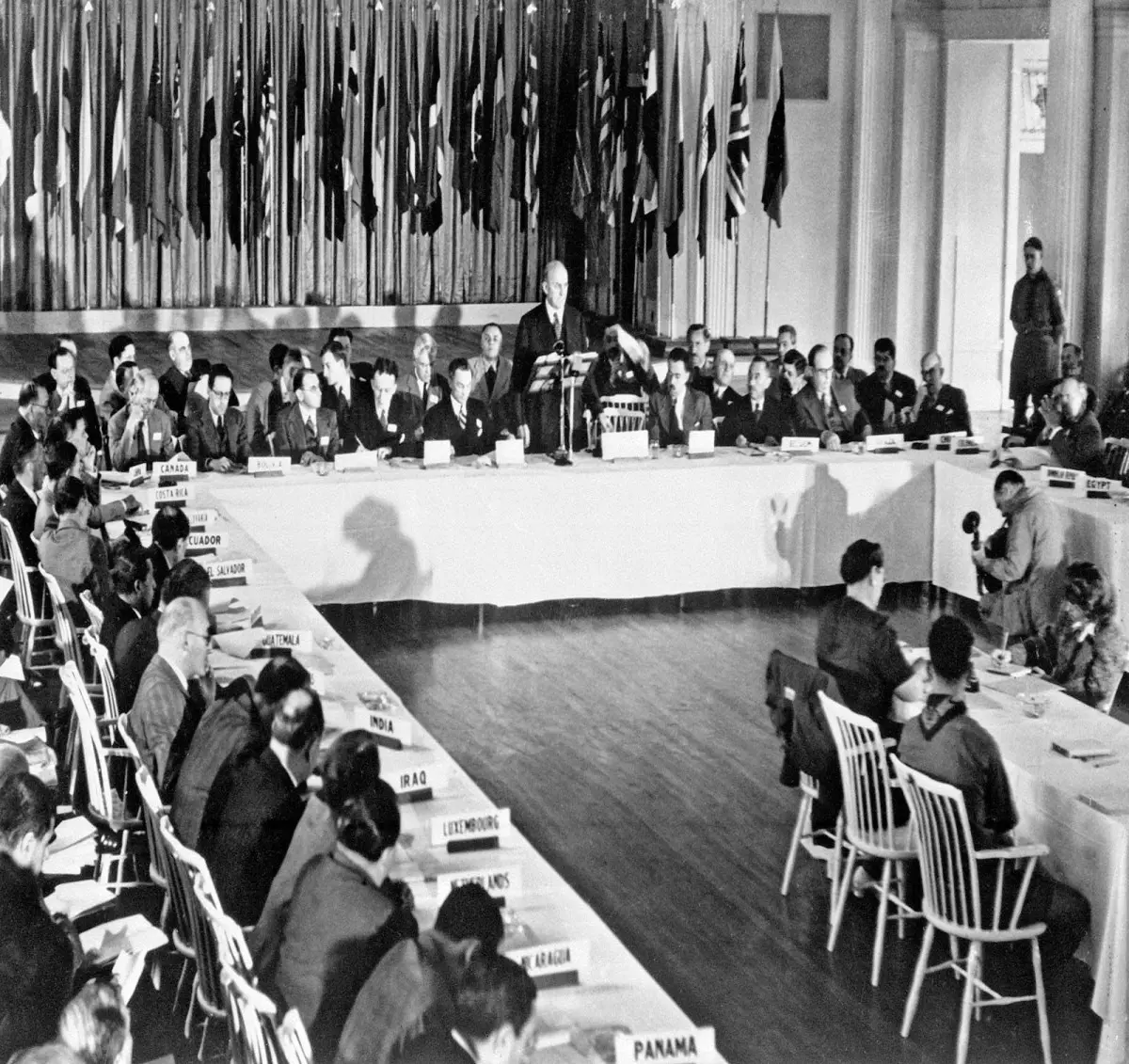
Just like the aforementioned financial tie of government to their respective citizens under the classic gold standard, there was an agreement amongst participant countries of post-world-war-II- international gold standard which ensured and checkmated the convertibility of their currencies (hard monies) into gold, vice versa. And that was the Breton wood agreement. But like the saying goes; "where there is money there is a cheater", this post-war international trade arrangement didn't ran smoothly, as most nations at some points ran short of gold in their reserves or weren't willing to redeem their currencies for gold upon demands of member countries, but would rather others accept theirs for gold instead. If I may say, this was the initial sign that paper currency standard which is void of commodity backing (but mere words of mouth) is more a less a scam. And this instability of Breton wood agreement was the circumstance surrounding president Nixon's declaration of 15th August 1971, otherwise known as Nixon shock.
• A shift of Economic Power
Before America became the world leading economy Britain was, but WWI brought a financial strain on Britain's economy and thus transferred their world economic influence to America. Meanwhile the main events that led to this was the fact that America joined the war 3 years later than other warring economies and refused to leave the gold standard, whereas Britain and other belligerents of WWI left it (gold standard) for expansionary policy (replacing the circulation of gold coin with printed notes).
Consequently there's an economic principle known as Gresham's law which states that "when a government overvalues one type of money over another, the undervalued money will leave the country or disappear from circulation into hoards, while the overvalued money will flood into circulation; or "bad money drives out good". And that implied that the approval of banknotes over gold by governments of those warring economies must have led to their loss of gold to other nations that yet valued it then as viable means of day to day transactions while the war was on. And while these outflows of gold was going on in the economies of those allies of WWI, Britain especially, America's economy was on the receiving end instead.
when a government overvalues one type of money and undervalues another, the undervalued money will leave the country or disappear from circulation into hoards, while the overvalued money will flood into circulation;
This shift brought American economy to the global spotlight which not only made them a role model economy but placed enormous financial responsibility upon their shoulder due to the tie and demands of the Breton wood agreement on member countries, especially on the reserve currency's owner-country which the US dollar became thenceforth (till date). Because under the post-war international trade arrangement every other currencies were valued in relation to pounds and pounds to dollar being the apex currency.
With that change of economic power, gold outflows from America's economy became imminent through a possible surge of dollars inflows/deposits from member countries (of the Breton wood agreement) in demand for gold. On seeing where the new financial trend may lead America's economy president Nixon wishfully and unashamedly breached the Breton agreement this day in history and introduced a fiat based monetary policy. And that saw the end of metallic monetary standards. Meanwhile, as of the time of writing the last invented monetary policy (paper currency standard) is 52 years old, while the anticipated Bitcoin standard is 14 years in the making.
You can read our previous passage [FIAT THE FEAR].
AND Please don't forget to:
Follow, like, express yourself in the comment box and more importantly drag the tipper to encourage me & reward yourself for time spent on this passage. Thanks. As a new reader you can SIGN UP to start earning tips.






