
If you’ve ever heard someone mention “tokens” and thought of arcade machines, you're not wrong—but you’re not quite right either. It’s one of those words that gets dragged into new contexts every few years, and now it lives in the world of blockchains. And, well, things get a bit weird here.
Let’s slow this down.
A token, in the blockchain sense, is basically a digital marker. Not just “a thing,” but something that stands for something else. Sometimes it stands for money. Other times, it stands for a vote, a license, a sword in an RPG, or even a piece of music you can prove you own (but can’t quite touch). The core idea? It’s all happening on a distributed system—one where no single person holds the eraser.
That’s the dry version. But here’s the twist.
Fungible? Non-fungible? Sounds...clinical.
Most people don’t walk around saying "fungible" in casual conversation. It sounds like something you catch on a long flight. But in economic terms, it's simple: something fungible is interchangeable. Your twenty-dollar bill and my twenty-dollar bill? Identical in value, even if yours has a coffee stain and mine is crisp from the ATM.
But a non-fungible thing? It’s distinct. It might look similar, but it’s not swappable at equal value. Think baseball cards. A Picasso. Or your childhood teddy bear—priceless to you, meaningless to others. Now imagine that kind of uniqueness... but in a digital format.
That’s what an NFT is. A non-fungible token. A one-of-a-kind marker on a blockchain that says, “This thing belongs to this wallet.” The “thing” could be almost anything—a song, a 3D object, a ticket to a virtual concert, or something much weirder. (And believe me, it gets weird.)
But...why?
Good question. And it deserves more than the usual soundbite.
NFTs exploded in the public eye as digital art. That’s where the headlines came from. “JPEG sells for $69 million” is great clickbait. But art was just the Trojan horse. The deeper play is about ownership in the digital world—a concept that, until recently, was blurry at best.
Before NFTs, owning a digital file was like trying to hold water. Sure, you had a copy of that song or skin or video, but so did everyone else. You didn’t own it the way you own your shoes. You had access—conditional, revocable, fragile.
NFTs flipped that. Now, when you buy an NFT, you get a public, time-stamped, cryptographic statement: “This is mine.” And no centralized server can quietly delete or overwrite it. That might sound small. It’s not.
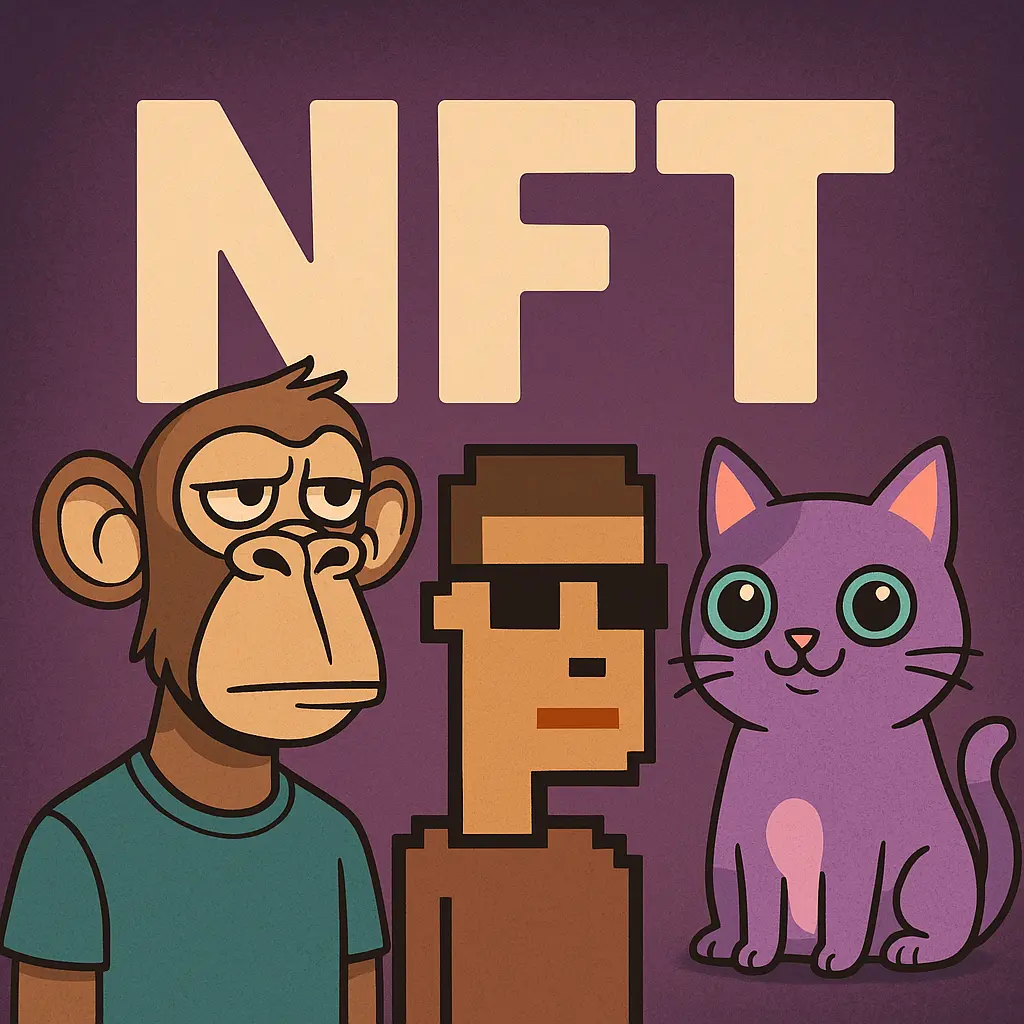
Beyond art: what NFTs are really doing
Let’s push past the hype. There’s real stuff happening under the surface:
In gaming, NFTs represent in-game assets that players can buy, sell, or transfer freely. Your weapon, your castle, your digital pet—it’s yours in a way that can outlive the game itself.
For identity, NFTs can encode academic degrees, licenses, or even your online reputation in a way that’s tamper-resistant.
In events, tickets can be NFT-based, making scalping and fraud nearly impossible. The ticket knows who it belongs to.
In finance, believe it or not, NFTs are being used to represent collateral in decentralized lending systems. Your position in a loan pool? It’s a token, too. And sometimes, it’s non-fungible.
At the center of all this is a simple truth: the internet was never built for ownership. NFTs are an attempt to patch that hole.
“It’s a bubble.” Maybe. “It’s the future.” Also maybe.
Is there hype? Obviously. There always is with emerging tech. But to say NFTs are worthless because someone paid too much for a cartoon ape is like saying the entire internet is a scam because of email spam. The early phase of anything looks messy. Unfiltered. A bit embarrassing.
But the rails are being built. Standards like ERC-721 and 1155. Cross-chain wallets. Decentralized marketplaces. The infrastructure is outpacing the narrative. And in tech, that’s usually a good sign.
So maybe it’s not about art. Maybe it’s about control. In a world where data slips through our fingers and platforms decide who gets to exist, NFTs are a strange little anchor—a technical way of saying, “this one thing is mine, and no one else can fake it.”
That idea won’t vanish. Because, deep down, everyone’s still trying to figure out what “owning” something online even means. NFTs, for all their noise, offer an answer. Not the final one, perhaps. But a better one than we had.






