

For months, DataHaven looked like one of those promising Web3 infrastructure projects everyone was quietly farming.
It had the right narrative: AI infrastructure, decentralized storage, EigenLayer security, and a “fair launch” token model. The project positioned itself as a protocol designed to store AI datasets, models, and logs in a verifiable and censorship-resistant way. But this week the story took a sudden turn. Without a token launch, without a final airdrop, and after months of community activity, the team announced that DataHaven is shutting down.
The story was compelling, a decentralized data infrastructure, purpose-built for the AI age. It was secured by Ethereum restaking and designed to hold datasets, models, and logs in a way that could be verified. It had the feel of an infrastructure layer that could actually matter, given the increasing intersection of AI and crypto. The website, the documentation, and the messaging all pointed toward a long-term vision where decentralized networks could handle the growing demand for secure and transparent data storage.
But most people didn’t encounter DataHaven through its technical vision first. They encountered it through the community campaigns.

DataHaven, much like its contemporaries in the crypto space, poured resources into cultivating its community via gamified participation. Zealy quests, experience point systems, Discord competitions, and social media activities were all designed to keep users engaged and invested. The setup would be instantly recognizable to anyone who's dabbled in early Web3 campaigns: finish tasks, accumulate XP, keep up streaks, and get in on the ground floor, potentially positioning yourself for an airdrop down the line. The project even introduced systems like Camp Haven XP, where participation across the ecosystem was rewarded with points tied to potential future rewards.
And it worked. People showed up. The Discord kept moving, quests were getting completed, and more accounts started talking about the project over time. For many participants the mindset was simple: get involved early and it might pay off later when a token eventually launches. The project leaned into that idea as well, often mentioning that a large share of the future token supply would go to the community. In crypto, that kind of message spreads quickly. Users started doing the usual routine, finishing quests, sharing posts, inviting friends, collecting XP all with the belief that the time they were putting in could eventually turn into something tangible.
Then the announcement came.
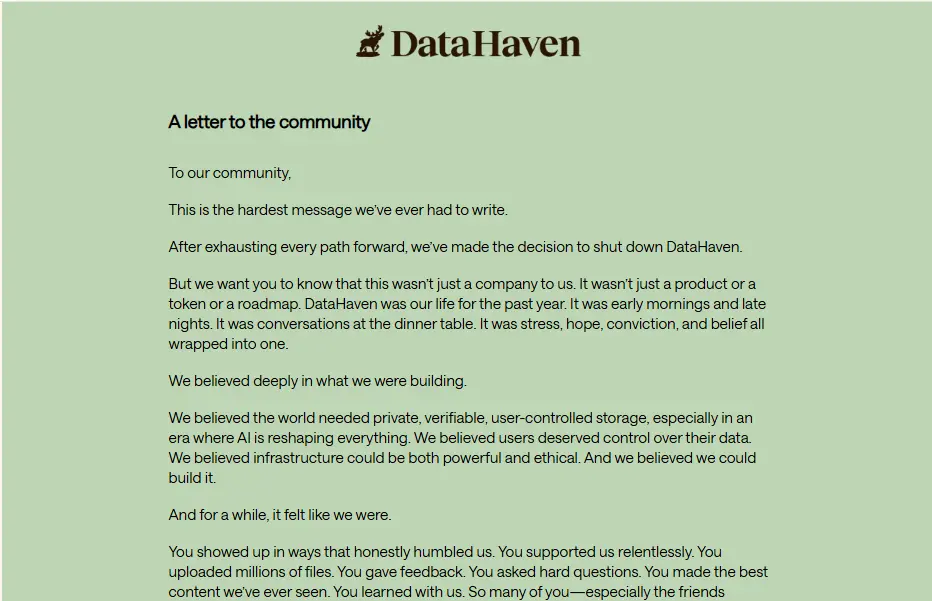
The team publicly announced the project's impending closure to the community. Development would stop, the network would wind down, and the communities built around the project would eventually close. According to the team, the decision came after months of exploring possible paths forward, including funding, partnerships, and alternative token strategies. None of those options led to something they believed would be sustainable long term. The explanation regarding the token was the most noteworthy aspect of the message. The team said they could have pushed forward with a token launch but chose not to. In their view, launching a token under uncertain conditions could have caused financial harm to the community if the project failed afterward. Instead of taking that risk, they decided to end the project entirely.
Situations like this highlight something that’s become common in Web3. Campaigns built around quests, XP systems, and incentive programs can grow communities very quickly. They get people involved and keep activity flowing, but they also build a certain level of expectation. When thousands of users spend their time contributing to something, it’s natural for them to believe there might be a reward if the project makes it. When a project stops before reaching that point, it leaves an odd feeling behind. The community was there, the activity was real, and people genuinely put time into it. But the moment everyone was waiting for never actually happened.
Final Thoughts
DataHaven started with an ambitious goal: building decentralized storage infrastructure for the AI era. Technically, the vision was compelling. Socially, the campaign strategy worked. But the economics behind the project ultimately didn’t hold up. The result is another reminder of how fragile Web3 projects can be. Behind every leaderboard and XP system, there’s always a simple reality; Not every project makes it to the finish line.





