![Ethereum: What do you need to know? [A Guide To Understanding Ethereum]](https://www.publish0x.com/img/63588.webp?action=resize&ar=1&enc=webp&inv=0&ori=1&st=1&up=1&w=1140&signature=20b06f61abefecae6966e3699aab3c0fddc4c296d71d5a876fadce61fdd3def6)
Ethereum (ETH) is the second largest crypto currency after bitcoin. Although bitcoin gets the most attention in the mass media of all cryptocurrencies, Ethereum is growing rapidly. Experts expect Ethereum to dominate the market in the future. In this article we explain everything you need to know about ETH.
What is Ethereum?
Ethereum is a decentralised platform for applications. These applications can be anything, but the Ethereum network is optimized to execute certain rules when certain criteria are met, such as a contract. An important application is the execution of smart contracts.
Smart contracts are contracts that are digitally recorded and automatically execute instructions based on incoming data from the network. It is actually like programming: if this... then that. The terms of the contract are defined, and what happens with certain outcomes is defined. When the outcome is known to the network, a smart contract will automatically execute itself. In other words: if condition A and/or B are met, then C will happen.
The advantage of smart contracts is that the blockchain is a decentralized way to check and execute contracts. Decentralized means that there is not one central server, unlike for example WhatsApp or Facebook. The decentralized aspect makes it very difficult to commit fraud or censorship. As a result, third parties are not able to change the contract without authorisation. Ethereum strives to make daily life more efficient and cost effective with smart contracts by making unnecessary third parties unnecessary. Smart contracts offer more security and lower costs than traditional contracts. Some people predict that smart contracts will be widely used in the financial world and other industries.
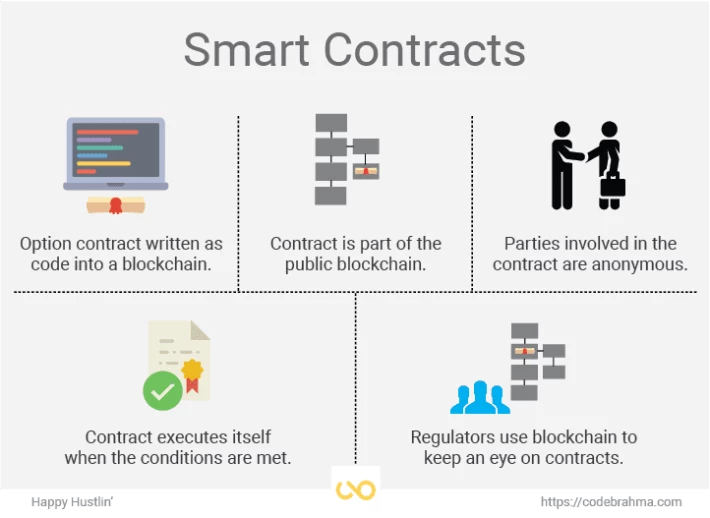
Some practical examples of smart contracts:
Example 1: an investor can set that he only wants to invest in a certain company if that company launches a new product within a certain deadline. When that company launches a new product within the deadline, the investment is made automatically.
Example 2: when a company wants to raise money, it can be set that the donors' money is retained by the smart contract until the target amount is reached. If the target amount is not reached by a set date, everyone automatically gets their money back. If the target amount is reached before a set date, then the company receives its raised money. A fundraising platform (which charges a fee for its services) is then no longer necessary.
Example 3: your colleagues make a bet on which country will win the World Cup soccer. Everyone bets 20 euros, and the winner gets the entire pot. You can put this pool in an Ethereum smart contract, in which the winner automatically receives the entire pot at the end of the match. This way you don't have to trust one person with all money.
Example 4: you can put your will in the blockchain. When you die and a death certificate is issued (and uploaded into the blockchain), the inheritance is automatically distributed according to the will. A notary is then no longer needed.
Smart contracts and Ethereum
Smart contracts are decentralized applications that anyone can create. Programmers can build applications on Ethereum themselves. Ethereum has created a Javascript based programming language for this: Solidity. Ethereum uses its own public blockchain to store, execute and secure smart contracts. Ultimately, a smart contract consists of a piece of code. Smart contracts are uploaded to the platform and then executed by a decentralized network of computers. Each computer in the network downloads a copy of the ETH blockchain and can then execute smart contracts. The Ethereum blockchain is public and can be viewed on Etherscan.
Ether (ETH) is used to reward those who run the computers that ensure that smart contracts are executed. Ether is a cryptocurrency, just like bitcoin. Ether has a financial value and can be used to exchange value between two people, but Ether is primarily intended to compensate the people who make the Ethereum network possible. Anyone who makes their computer available to the Ethereum network to run a decentralized application receives ETH as a reward. Users of the Ethereum blockchain have to pay the network in ETH to execute their smart contract. The more computing power a contract requires (the more complex the contract is), the more ETH has to be paid. Ether is therefore the fuel that runs the Ethereum network. In practice, Ether is often called Ethereum, so Ethereum refers to both the network and the currency.
Revolutionary technology
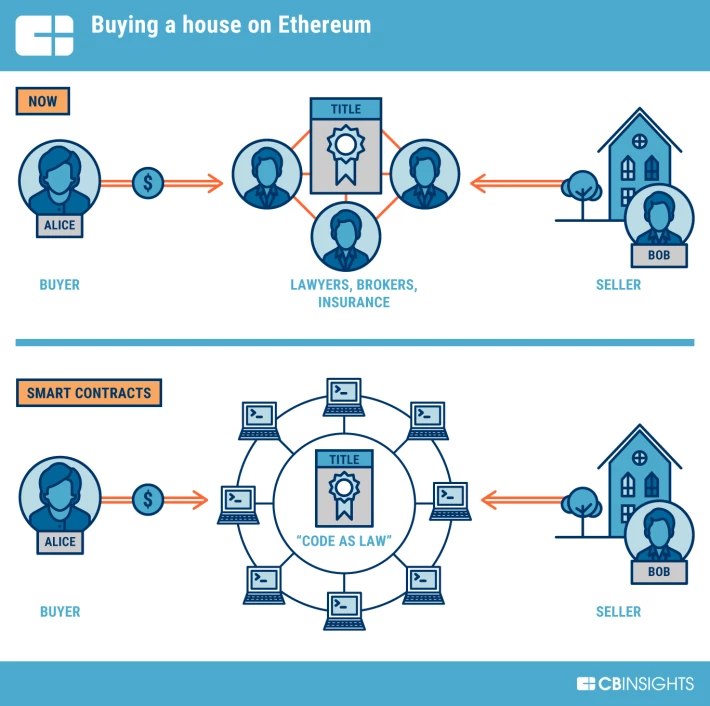
Many people are enthusiastic about Ethereum. Just as the internet has changed how people communicate, Ethereum has the potential to change how the world executes contracts. Before the blockchain technology existed, we had to trust a third party to execute a contract. That could be, for example, a notary, a lawyer or a bank. That third party would, of course, charge a fee for his/her role in the performance of the contract. Ethereum offers the possibility of concluding a contract between two parties online, using technology to automate what third parties used to do, namely execute the contract. In other words: two parties can use Ethereum to digitally conclude a contract with each other, which is executed automatically.
There are many applications to use Ethereum for contracting, where third parties traditionally perform that role. Think for example of buying a house. Now, the buyer and seller must go to a notary or lawyer to arrange the deed of sale. Ethereum could do all these things digitally and automatically. In this way a lot of costs could be saved.
Mining
Ethereum currently uses a proof-of-work system to perform and verify transactions on the network (but will change to proof of stake in early 2020). ETH, like bitcoin, is produced by mining. Transactions are grouped in blocks. Once transactions are approved by the network, the block is added to the Ethereum blockchain. Every 12-14 seconds a new ETH block is mined. The computer that mined the block receives a fee of 5 ETH.
EVM
When data is linked to smart contracts, consensus is needed on what the code should do. The Ethereum Virtual Machine (EVM) is a virtual machine that is run by all decentralized users (nodes) in the network. The EVM executes code of smart contracts when certain conditions are met. Each Ethereum node runs its own copy of the EVM. Each node performs the same transactions, so each node performs the same calculations and stores the same values. This way you can see the EVM as one big world computer. The EVM is Ethereum's main innovation.
ERC-20 tokens
Developers can build their own decentralized applications on Ethereum. Within these applications you can also use your own tokens and/or coins. In this way, new cryptocurrencies can arise, which are built on Ethereum. Many decentralised applications raise money by means of crowdfunding in the form of an ICO (initial coin offering). An ICO is the equivalent of an IPO of a company, but in the crypto world. Ethereum is nowadays the most popular platform for starting ICOs. ICOs use the security and trust built into the platform to launch new cryptocurrencies. Ethereum has standardized this process with the ERC-20 protocol. Many ICO's use the ERC-20 standard to issue their tokens. A crypto built on Ethereum is an ERC-20 token. An overview of all ERC-20 tokens can be found here. Some well-known examples:
- Golem (GNT). This allows people to lend their server capacity to others when they are not using it. In return, they get paid in Golem tokens.
- Salt. This allows people to borrow money in exchange for crypto as collateral.
- Request (REQ). This allows people and companies to send everyone a request for payment, at extremely low cost.
- Walton (WTC). This combines blockchain with RFID (radio-frequency identification) to help companies in supply chain management.
New decentralised applications are added every day. A complete overview of these decentralized applications on the Ethereum network (decentralized apps, or dApps) can be found here. And if you want to start building Ethereum applications yourself, you can find a lot of resources here. The Yellow Paper of Ethereum gives you a lot of technical insights in the project.
Who invented Ethereum?
Ethereum was conceived in 2013 by the Russian Vitalik Buterin when he was 19 years old. His father told him about bitcoin. Vitalik then became involved in Bitcoin Magazine as a programmer. He thought Bitcoin should be more than just a digital currency. He saw the digitization of money as an opportunity to build in logic in money matters and proposed to add the smart contract functionality to bitcoin. This was rejected by the bitcoin community. He then decided to create his own platform for smart contracts, something that bitcoin is not. He took bitcoin as a basis and improved it with the functionality of smart contracts. He called this Ethereum. He published the white paper in which he described Ethereum at the end of 2013. In January 2014 he publicly announced the start of the project on the Bitcointalk forum. The Ethereum Foundation was founded in June 2014. In November 2014 the first Ethereum event was held in Berlin: Devcon-0. The first beta version went live on June 30, 2015, just over 1.5 years after the publication of the white paper. At the time, this was the biggest crypto news since the birth of bitcoin. At the ICO, 60 million ETH tokens were sold, for a value of 18 million dollars in bitcoin at the time. Since then, the interest in Ethereum from the community and the business community has grown considerably. Vitalik Buterin is still involved in Ethereum and holds regular seminars in which he gives his vision on the future of the platform.
Scalability
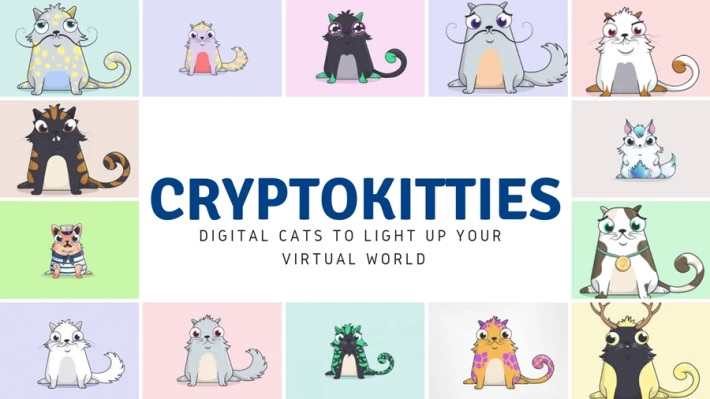
Ethereum has the problem of scalability. It can only handle a limited number of transactions per second. The importance of this was demonstrated when CryptoKitties was released. CryptoKitties is a game in which you can pay with ETH to raise and collect virtual cats. The popularity of the CryptoKitties game, which runs on the Ethereum network, caused the whole Ethereum network to become slow in December 2017. More than 200,000 people played the game. At one point CryptoKitties was responsible for 15% of all ETH transactions worldwide. If a simple game like CryptoKitties can slow down the entire Ethereum network, then you can question the global scalability of this. A complete overview of Ethereum's challenges from a technical perspective can be found here.
What can you do with Ether?
Ether is meant to pay for computing power in the Ethereum network. Ether is not meant for other things. As Ethereum says on its own website: Ether is "a token whose purpose is to pay for computation, and is not intended to be used as or considered a currency, asset, share or anything else." However, that is what most people do. Most of the people buy Ether as an investment and not to pay for computing power.
After you have bought ETH, you can keep it and hope it will increase in value over time. In addition, with Ethereum you can also buy other coins on online exchanges, such as bitcoin or many others. Many online exchanges use Ethereum just like bitcoin as a trading pair (trader) to trade coins against.
The flippening
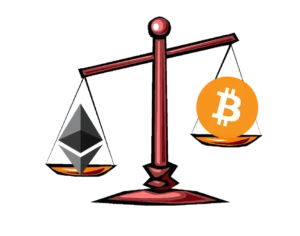
Bitcoin is still the largest cryptocurrency in terms of market capitalization. Some people expect Ethereum to outperform bitcoin in terms of market capitalization. This possible event is called the flippening. On the flippening watch website you can see the current state of the flippening, i.e. some important key figures of bitcoin versus Ethereum. Here you can see that Ethereum already executes many more transactions per day than bitcoin.
The Enterprise Ethereum Alliance
Smart contracts can save a lot of time and money. As a result, companies are also interested in Ethereum's applications. Several large companies have founded the Enterprise Ethereum Alliance (EEA). This organisation looks at ways in which Ethereum can be further implemented in the business community. The organization connects large companies with startups and Ethereum experts. More than 200 companies are already part of the Enterprise Ethereum Alliance. Well-known companies include Accenture, BP, Deloitte, HP, ING, Intel, JP Morgan Chase, MasterCard, Microsoft, Rabobank and Samsung.
Risks of investing in Ethereum
Although Ethereum is a promising technology, it does not mean that there are no risks. There are a number of possible risks associated with investing in ETH:
- Legislation. Governments could prohibit Ethereum or introduce legislation that would make the platform impractical. This does not seem likely at the moment, but no one can predict the future.
- Safety. Hackers could attack the availability and integrity of data from the network. Although the team behind Ethereum takes security very seriously, no one can ever guarantee that software is 100% secure.
- Adoption. The question is whether Ethereum is really being used on a larger scale. That would mean that Ethereum would replace the traditional pen and paper contracts. It is also possible that a new technology will emerge (an improvement of Ethereum), which will take on this role.
Ethereum Classic
In 2016, there was an ICO called DAO that raised $150 million. DAO was built on the Ethereum network. However, DAO was hacked, resulting in a loss of $55 million in Ether. After the hack, the U.S. regulator SEC expressed doubts about the safety of blockchain. After the DAO hack, a fork (split) of the Ethereum blockchain took place. This resulted in the establishment of Ethereum Classic. Ethereum Classic (ETC) is the original Ethereum blockchain, and Ethereum (ETH) is the new, modified blockchain. Most developers have switched to Ethereum (ETH), although Ethereum Classic still exists.
conclusion
Although many people compare Ethereum with bitcoin, the reality is that they are two different projects with different intentions. Bitcoin wants to be a digital currency or the digital gold, while the possible applications of Ethereum are much broader than that. Ethereum is a platform on which developers can build decentralized applications themselves, and Ether is the fuel that runs the network. However, Ethereum would never have been possible without bitcoin. Ethereum sees itself as complementary to bitcoin, it is not a direct competitor. While bitcoin does not have a person who is the face of bitcoin (founder Satoshi Nakamoto is a pseudonym), Ethereum has a concrete face to the outside world with Vitalik Buterin.
In the future, smart contracts could potentially become very large and Ethereum the network on which they run. The value of Ether would then increase considerably. However, the opposite can also happen. After all, it is a new technology and the future is uncertain. As the technology continues to develop, we will probably see applications of smart contracts that we do not yet think are possible.





![[Anime] Akame ga Kill: Dying is literally part of the process.](https://www.publish0x.com/img/1196684.webp?action=resize&ar=1&enc=webp&h=287&inv=0&ori=1&st=1&up=1&w=510&signature=f92c2c605d8660e6c4baac02a7db03d4c59ae82b552f00544134caf8e8372581)

