
Write Your Way Into Crypto
So you're a budding writer on the Publish0x platform and a student of the prices of cryptocurrencies and you happen to win a writing competition and have... ooh, say $50 of USDT to invest on the BYDFi crypto exchange. What do you do?
Well, first of all naturally you do your own research (DYOR) because crypto prices can go up or down very quickly. And then once you have a carefully reasoned strategy in mind you login, enter the e-mail activation code and voila... here you are on BYDFi ready to trade...
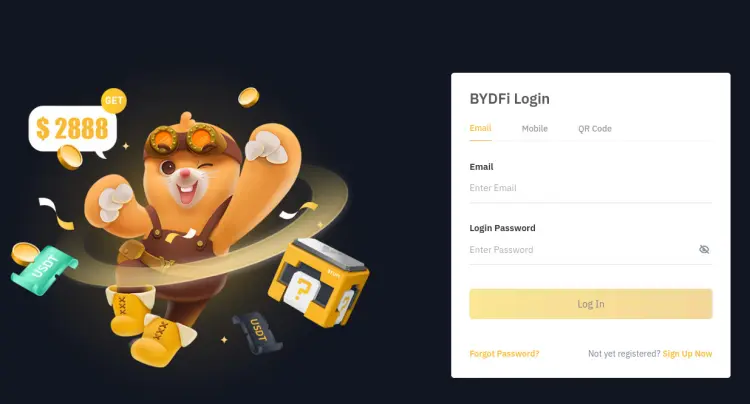
BYDFi
With over 400 cryptocurrencies and more than 600 derivative pairs available to trade on BYDFi there are many different trading strategies to consider. It can be difficult to know where to start. Happily, BYDFi provides a few easy options for beginners.
Crucially there are three different approaches to trading on BYDFi: spot trading, derivatives trading and copy trading. A good understanding of the differences between each will be very helpful before placing your trades.
Spot Trading
Spot trading effectively means buying and selling crypto at the current price. Spot trading is for immediate buying and selling of actual cryptocurrency assets. The simplest way to do this is to use BYDFi's easy Convert feature shown below.

You can use the classic trader's template for spot trading if you prefer. So if you have a good feeling about one of the main crypto assets rising in price you may be happy to simply spot trade (or convert) 50 USDT to Bitcoin (BTC) or ETH, XRP or DOGE and withdraw to your wallet. Fair enough... but you won this money in a competition anyway; you're well acquainted with price fluctuations in the crypto market, have a way of spotting them and wish to use that insight to generate greater rewards. Step this way for...
Derivatives
Derivatives trading is sometimes known as futures trading, options trading or CFD (contract for differences) trading. It can get pretty complex but there are just a few basic things you need to know. Derivatives trading can be used speculatively (a) to make large bets to dramatically increase one's profits, or more cautiously (b) to hedge risks and lock in guaranteed profits. For example, if you're buying Bitcoin at a spot price then it can be a safe and sensible move to take a short position on the asset, thereby ensuring that if the price falls significantly your potential loss is limited.

Derivatives trading or contract trading has been around for centuries. Traditionally, setting limits enabled farmers, producers and businesses to guarantee a minimum or maximum price at which they would either sell or buy commodities at in the future. A lot of terms from traditional derivatives trading are still used (such as margin and leverage) but there are some important differences between buying derivatives on BYDFi (or similar crypto exchanges) and the more traditional meaning of derivatives.
Margin traditionally meant the collateral that you put forward to a broker. Leverage was in the past a risk covered by the broker or exchange (i.e. speculative credit). These terms are still used but you cannot play with $50 of USDT on BYDFi and expect to lose any more than this. If you play at 40x leverage then your margin is 1/40th of your total funds.
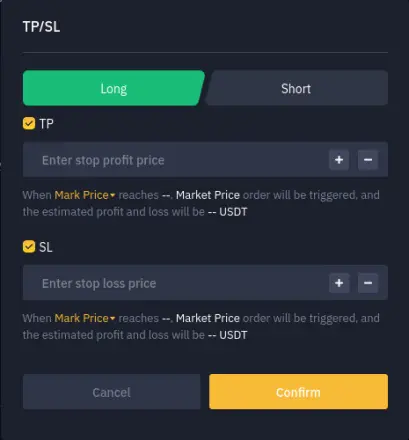
Still it's a nice way of quickly earning a few bob. If you expect the price of BTC to rise in the next few hours you can bet on it doing so and effectively put your whole stake of $50 USDT up. You declare the price at which you are willing to buy and the price at which you wish to sell. You can further set positions for the price level at which you wish to bank your gains - Take Profit (TP) - and the price level at which you wish to exit the trade - Stop Loss (SL) - if the market is going against you. You are however free to close out on the trade at any point before these limits are reached. You can see current trades (and orders) at the bottom of the trading window.
In practice it is quite easy to have a go and see how it works. BYDFi offers easier options ('leverage without the risk of liquidation') such as BTC3L/USDT. This means you are buying a contract on the BTC price where you are confident Bitcoin's price will rise and it pays out at three times the rate simple spot trading of BTC would do. If you're wrong and the price of BTC falls then similarly you lose 3 times the amount you would usually lose. And BYDFi always takes into account your total funds (in this article, the suggested $50 in USDT) so you cannot lose more than that. These 'Leveraged Tokens' are an easy entry into understanding how Derivatives work.
Copy Trading
The third trading option offered by BYDFi is copy trading. This is where you simply follow or copy the trades of another trader. BYDFi provides a quick and simple interface into copy trading. Defaults will be suggested again ensuring you can only lose as much as you have put in. Though only termed copy trading in more recent times, following the strategies of investment brokers or hedge funds again has a long history in traditional finance.
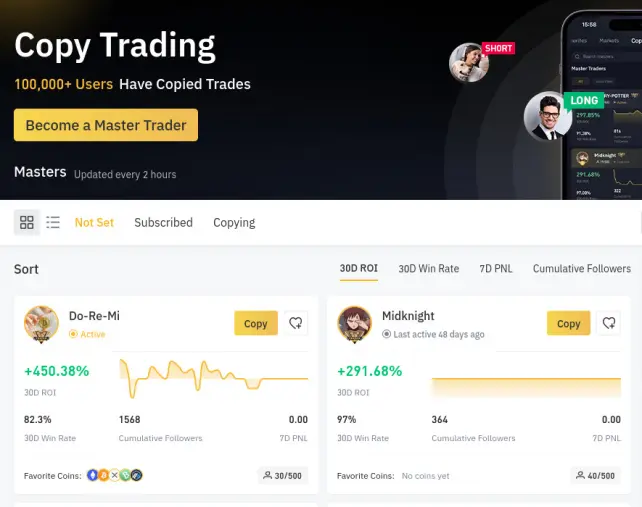
So those are the three central options for trading at your disposal on BYDFi. Staking crypto to earn yields is not available on the platform. Fees vary but are between 0.1% to 0.3% of the transaction for regular spot trading. Withdrawing funds from BYDFi entails a fixed $2 fee and the minimum withdrawal amount is $50 (which means $52 is needed to withdraw funds).
Formerly known as BitYard before a recent rebranding, BYDFi is currently celebrating its third anniversary so it has a little skin in the game. The exchange is based in Singapore. In the past BitYard offered trading on the derivative price of material commodities such as gold and oil (no longer available). The platform seems a little easier to understand now than it used to be. You can earn a few rewards by completing tasks - things like KYC and bolstering your security by using Google Authenticator. BYDFi runs an affiliate commission program (here is my affiliate link! come join me on BYDFi) while there are links to fiat on-ramps such as Banxa and Transak.
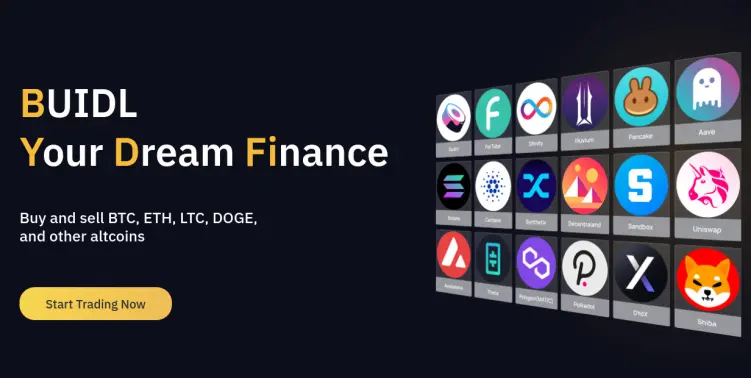
BUIDL Your Dream Finance
And that's BYDFi. That's how the crypto exchange works. That's the boring stuff; the rules; the framework for trading. Now the exciting part is strategising and deciding which crypto asset or pair you are going to go long on.
- What crypto asset will you trade?
- Which way will the market go?
- Is today an up or down day in the world of crypto?
- Is it sunny or raining outside?
- What trade reports are about to come out from Washington?
- What is Elon Musk tweeting about now?
Study the charts, the news, the reports. Many things to consider and strategise around. Welcome to cryptocurrency asset trading.






