
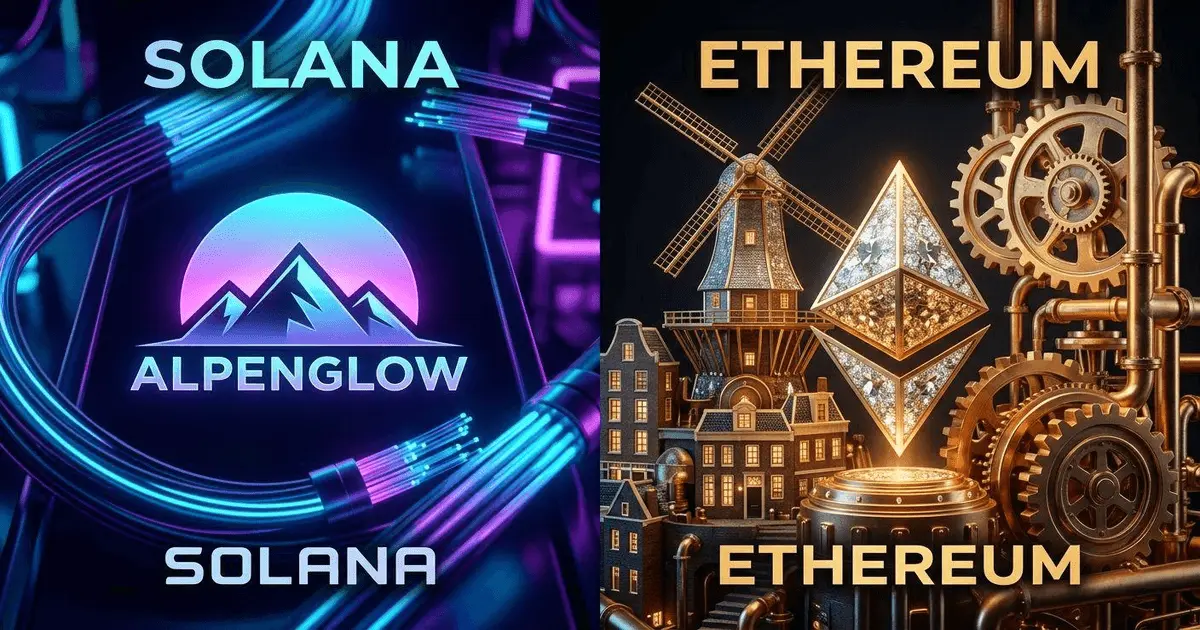
A visual representation of the contrasting architectural philosophies: Solana’s focus on hardware-speed vs. Ethereum’s modular expansion.
The scalability war has entered a sophisticated new chapter. While the previous era was defined by "TPS (Transactions Per Second) wars," the current landscape is about architectural philosophy. On one side, we have Solana, pushing the boundaries of hardware-software integration with its Alpenglow upgrade. On the other, Ethereum is refining its modular roadmap through the Glamsterdam proposal, specifically targeting gas limit adjustments to provide immediate relief to its L1.
For investors and developers, understanding the technical nuances between these two "upgrades" is the difference between catching a trend and falling for hype.
Solana’s Alpenglow: The Pursuit of Synchronous Scaling
Solana has always bet on a "monolithic" but highly parallelized architecture. The Alpenglow upgrade isn't just a patch; it’s a strategic refinement of how the network handles state and data propagation.
1. Quic and Fee Markets Refinement
Alpenglow introduces more robust implementations of QUIC (Quick UDP Internet Connections). Previously, Solana suffered from network congestion caused by spam. Alpenglow enhances the scheduler’s ability to prioritize genuine transactions without sacrificing the sub-second finality that defines the chain.
2. Localized Fee Markets
Unlike Ethereum’s global gas price, Solana’s Alpenglow further optimizes Localized Fee Markets. If a specific NFT mint is congested, it won’t spike the cost of a simple SOL transfer elsewhere on the network. This "isolation" is a technical marvel that keeps the network usable during peak volatility.
Ethereum’s Glamsterdam: The Strategic Gas Expansion
Ethereum’s Glamsterdam upgrade represents a pivotal shift in the "Modular vs. Monolithic" debate. Rather than just waiting for Layer 2s (L2s) to solve everything, Glamsterdam focuses on the Execution Layer (L1).
1. Increasing the Gas Limit
The core of Glamsterdam is the proposal to increase the Block Gas Limit. By raising this limit, Ethereum can process more data per block. However, this is a double-edged sword:
-
The Benefit: Higher throughput on L1 and lower data availability costs for Rollups (Optimism, Arbitrum, etc.).
-
The Risk: Increased hardware requirements for node operators, potentially risking decentralization.
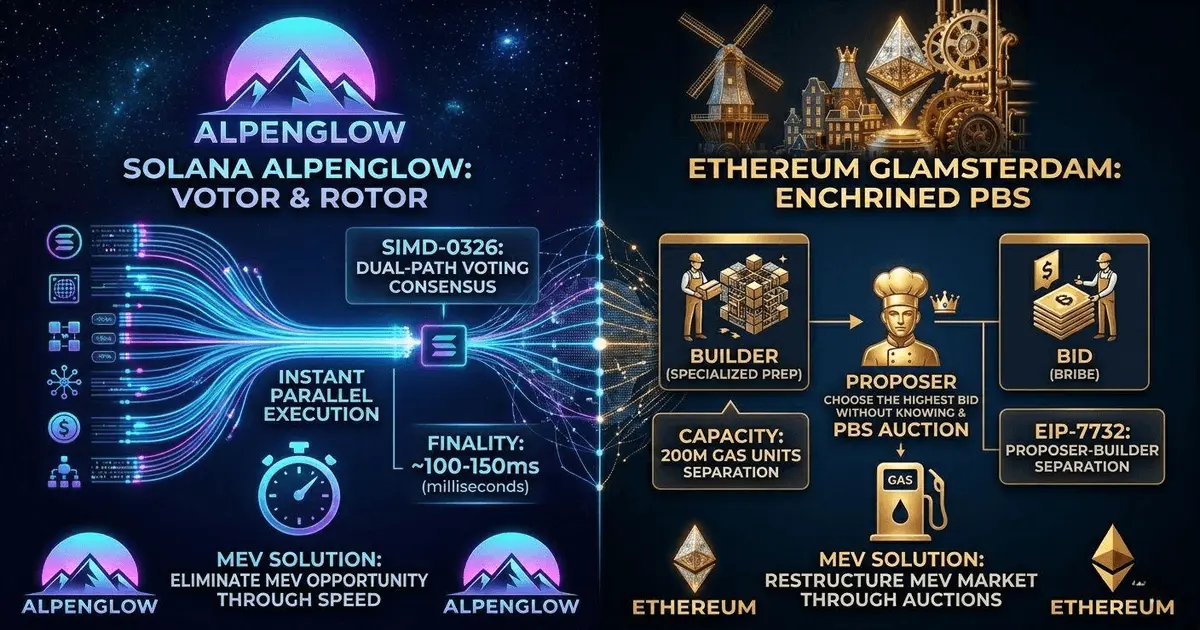
Figure 3: Deep Dive: How Votor & Rotor eliminate MEV through speed, while ePBS restructures the MEV market via auctions.
2. EIP-7702 & Smart Account Synergy
Glamsterdam also integrates better support for Account Abstraction. By making the L1 more efficient, it allows complex "Smart Accounts" to operate with lower overhead, making the user experience feel more like a traditional banking app and less like a crypto wallet.
Deep Technical Comparison: Two Different Paths to the Same Goal
Feature Solana (Alpenglow) Ethereum (Glamsterdam) Philosophy Hardware Efficiency (Moore’s Law) Modular & Layered Security Throughput Logic Parallel Execution (Sealevel) Sequential Execution + L2 Rollups Upgrade Focus Latency reduction & Spam prevention Increasing Block capacity & L1 efficiency Node Hardware High-spec (Industrial grade) Medium-spec (Accessible for home users) State Management Distributed via Cloudbreak Merkle Patricia Tries (Transitioning to Verkle)
The Verdict: Which Strategy Wins?
Solana’s Alpenglow is built for the high-frequency trader and the "DePIN" (Decentralized Physical Infrastructure Networks) era. It aims to make the blockchain invisible by matching the speed of centralized servers.
Ethereum’s Glamsterdam is a calculated move to keep the "Settlement Layer" competitive. By increasing gas limits, Ethereum is ensuring that it remains the most secure and liquid foundation for the world’s financial data, even if it means a slower, more deliberate pace of change.
For a platform like Publish0x, the takeaway is clear: Solana is winning the "Performance" narrative, while Ethereum is doubling down on the "Sustainability and Liquidity" narrative.
Research Sources & Technical References
To maintain transparency and verify the data presented, the following sources were utilized for this analysis:
-
Solana Labs Technical Blog: Deep dives into the QUIC implementation and scheduler updates for the v1.18/v2.0 transition (Alpenglow roadmap).
-
Ethereum Foundation (EIP Repository): Analysis of recent EIPs (Ethereum Improvement Proposals) regarding gas limit increases and Execution Layer scaling.
-
Dune Analytics: Comparative data on "Successful Transactions Per Second" and "Gas Spend" across both ecosystems.
-
Vitalik Buterin’s Blog: Philosophical frameworks for "The Surge" and the trade-offs of increasing block sizes.
-
Solana Compass: Real-time metrics on network health, epoch performance, and validator distribution.
Solana Alpenglow upgrade, Ethereum Glamsterdam gas limits, Blockchain scaling strategies 2026, Solana vs Ethereum technical analysis, Layer 1 scaling solutions, Crypto institutional accumulation metrics.






