
The cryptocurrency landscape just witnessed a structural paradigm shift. For nearly a decade, mainstream financial media used one name as the ultimate weapon against Web3 adoption: Dr. Nouriel Roubini. Affectionately dubbed "Dr. Doom" for predicting the 2008 global financial crisis, Roubini has been the most vocal, uncompromising critic of digital currencies, famously calling Bitcoin the "mother of all scams."
But the economic realities of 2026 have flipped the script.
In a shocking development that has sent shockwaves through both Wall Street and decentralized networks, Dr. Nouriel Roubini has officially entered the digital asset space. Co-authoring a groundbreaking whitepaper with Atlas Capital Team Inc., Roubini is backing USAFi a new class of digital reserve asset built under Dubai’s Virtual Assets Regulatory Authority (VARA) framework.
When the fiercest bear becomes a builder, the narrative changes permanently. Here is an analytical breakdown of why this shift happened, how Dubai is capturing institutional liquidity, and what this means for the future of Real-World Asset (RWA) tokenization.
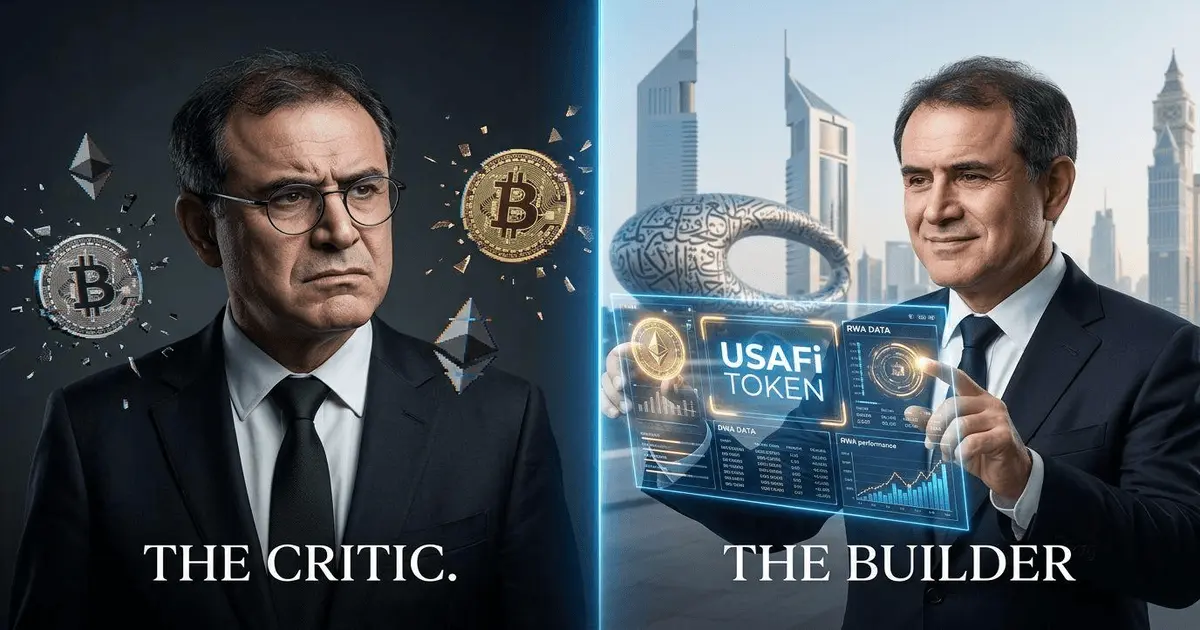
From Critic to Builder: The structural narrative shift of Dr. Nouriel Roubini into the digital asset space.
Quick Takeaways:
If you are scrolling through quickly, here is the core macro thesis you need to know:
-
The Big Shift: Dr. Nouriel Roubini, a legacy crypto critic, has co-authored the whitepaper for USAFi, launching in Q3 2026.
-
What is USAFi? It is marketed as the world’s first regulated, permissionless security an ERC-20 token built via Securitize infrastructure, backed by an SEC-registered, NASDAQ-listed ETF (NASDAQ: USAF).
-
The Underlying Asset: Unlike algorithmic stablecoins or speculative tokens, USAFi is backed by a diversified mix of US Treasuries, gold, commodities, and AI-driven growth sectors (the "Technodollar").
-
The Regulatory Play: Dubai’s VARA framework is successfully drawing massive traditional finance (TradFi) players by establishing legally compliant, institutional-grade digital frameworks.
The Macro Catalyst: Why "Dr. Doom" Turned to Blockchain
To understand why a systemic economic skeptic like Roubini changed his stance, one must look at the current structural vulnerabilities of global fiat systems. Central banks are battling persistent inflation, geopolitical friction is squeezing shipping lanes, and traditional savings instruments are yielding negative real returns.
In his official statement regarding the release of the USAFi whitepaper, Roubini noted:
"For years I argued that most digital assets offered no protection from this, because they had no real assets behind them. What Atlas has built is different: a reserve diversified across Treasuries, gold, food and strategic commodities, defense, cyber, and other industries being reshaped by AI... This is an instrument built for the world as it actually is."
This marks a crucial evolutionary leap for the industry. Roubini isn't embracing pure speculation; he is validating blockchain as a superior delivery mechanism for risk-managed, collateralized value. The entry of traditional finance critics signals that tokenization is no longer a Web3 experiment it is a modern wealth preservation necessity.
Deconstructing USAFi & The "Technodollar" Core
USAFi represents an advanced approach to merging traditional capital markets with decentralized finance (DeFi) liquidity rails.
[NASDAQ-Listed ETF: USAF] ──> [Securitize Protocol] ──> [Regulated ERC-20 Token: USAFi]
(Custodied at BNY) (24/7 Permissionless Access)
The underlying architecture of USAFi relies on a distinct hybrid mechanism:
-
Institutional Backing: The asset is collateralized by the Atlas America Fund (NASDAQ: USAF), an actively managed ETF custodied securely at the Bank of New York (BNY).
-
The Technodollar Concept: Instead of pegging value to a single commodity or raw fiat dollar, Atlas introduces the concept of the Technodollar.This is a digital reserve backed by a broad claim on highly productive industries transformed by Artificial Intelligence, defense infrastructure, and hard commodities.
-
Permissionless Security Structure: Powered by Securitize’s tokenization engine, USAFi functions as a permissionless ERC-20 token. This allows compliant, institutional-grade collateral to move seamlessly across public chains with 24/7 portability.
Dubai’s VARA Framework: The Ultimate Institutional Magnet
While Western jurisdictions grapple with regulatory ambiguity and enforcement-led oversight, Dubai has systematically built an environment customized for institutional migration.
USAFi is scheduled to launch under the oversight of Dubai’s Virtual Assets Regulatory Authority (VARA), utilizing its dedicated Asset-Referenced Virtual Asset Rulebook.
VARA’s regulatory success is driven by two main operational strategies:
-
Rulebook Customization: Instead of forcing digital tokens into legacy legal definitions written decades ago, VARA designed specialized legal frameworks specifically for asset-backed tokens, stablecoins, and digital securities.
-
Operational Clarity: By delivering explicit compliance benchmarks, Dubai offers a safe harbor for multi-billion-dollar fund managers who cannot afford the legal risks of vague regulatory systems.
As Roubini highlighted, jurisdictions offering clear regulatory enablement will inevitably capture the next generation of infrastructure, talent, and institutional capital.
The Broader Implications for Web3 and RWA Tokenization
The tokenization of Real-World Assets (RWA) is rapidly scaling to become a multi-trillion-dollar sector. The transition of elite economists from critics to active designers establishes a precedent that will likely trigger a domino effect across legacy finance.
When an asset is backed by an SEC-registered ETF, custodied by a major banking institution like BNY, tokenized by an industry leader like Securitize, and regulated under Dubai's VARA framework, it addresses the core challenges that previously kept institutional capital on the sidelines: counterparty risk, compliance failure, and systemic volatility.
The narrative that digital assets are inherently detached from tangible value is officially outdated. The era of highly regulated, tokenized asset classes has arrived—and the builders are the very experts who warned us about the vulnerabilities of the old financial system.
Verifiable Research Sources
To maintain analytical transparency, you can cross-reference the data, quotes, and market specifics directly from the official releases:
-
Official Launch Whitepaper: Available for public download and review at the dedicated asset hub: USAFi Official Portal.
-
Corporate & Market Disclosures: Global regulatory filings and partnership confirmations detailing Atlas Capital Team Inc. and Atlas AI Labs' frameworks can be verified via PR Newswire Institutional Feed and Markets Data Index via Financial Times.
-
Blockchain Infrastructure Validation: Technical network architecture confirmations regarding the ERC-20 tokenization layer can be reviewed via the official distribution updates from Securitize Digital Asset Infrastructure.
Disclaimer: This post is for educational and research purposes only and does not constitute financial advice. Always do your own research (DYOR).
⚡ Never miss an urgent market shift: I post daily real-time crypto setups, micro-analyses, and exclusive charts. Follow My Daily Updates Here
🎮 Want to turn your gaming time into passive income?
👉 Start Your Crypto Mining Journey Now






