
tl;dr: Taiwan’s use of social platforms to create a consensus-driven democracy and thoughts on where to look for innovation.
As I shared the other day, I was enamored with the interview with Taiwan’s first Digital Minister, Audrey Tang.
That led me down the path to explore and seek to understand a bit more about what Taiwan is doing to reinvent their digital democratic infrastructure.
The result was the discovery a transcribed keynote by Colin Megill, the founder a US-based startup called Pol.is and the origin story of the digital revolution in Taiwan, How Taiwan’s ‘civic hackers’ helped find a new way to run the country
What Taiwan, with the help of pol.is and Tang, who started off as a anti-government protester, has done is figured out a way to scale the good parts of social media while minimizing the negative behaviors.
Keep the Opinion, Kill the Comments
Through pol.is, anyone can state an opinion, such as “Chocolate ice cream is better than vanilla.”
The platform will not allow comments, which will invariably descend into something like “Nazis like chocolate.” Instead, it allows registered member to vote by stating “agree,” “disagree,” or “pass.”
However, what it does that is really fascinating is to make public and transparent patterns of thought among the population that would otherwise be hidden.
Facebook probably has the same information, but for them, it’s how they make money. For Taiwan and pol.is, it’s how to figure out where areas of overlap exist and, therefore, opportunities for agreement.
So, they might discover that while there’s sharp disagreement about ice cream flavor preference, there’s an unusually high number of vegetarians who like vanilla and a large number of pro-Uber people who like chocolate.
Discovering Consensus
Now, these may be silly examples, but what if someone agrees on “it’s ok for Uber to deny rides to people eating an ice cream” and 90% of people agree on the topic?
Well, in that case, you have a case for regulation on which everyone can agree, even though they may disagree on the best flavor or whether Uber should be banned.
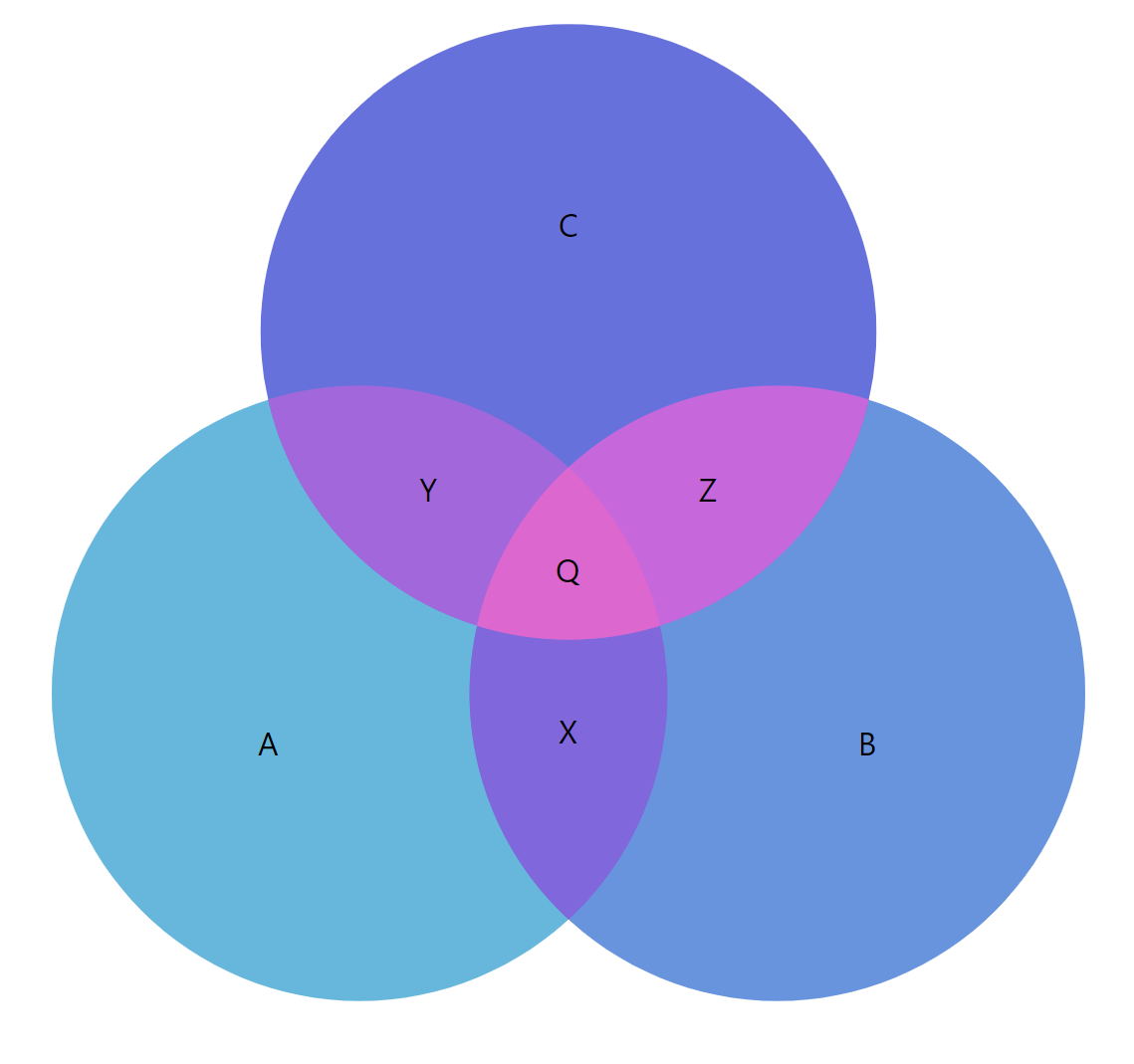
It’s Venn diagram upon Venn diagram-–at scale.
Little Innovation Giants of Democracy
As I read these articles and reflected on what Taiwan is doing, I couldn’t help but think about another democracy in extremely close proximity to a big, autocratic, expansionist neighbor.
Yeah, one of my all-time favorites, Estonia.
Then I thought about South Korea and Israel, two other democracies that are in close proximity/adjacent to enemies with goals of domination and annihilation, and the innovation that is coming from each of them.
When you’re small, you have to be nimble. And when you’re next to a stronger power or seriously outnumbered (or both), you have to be smart and innovative.
In an ironic way, the existence of the enemy, like the opposite polarity, is the driving force in the innovation in these little giants of democracy.






