tl;dr: what the shipping container did for physical global trade, Ocean datatokens might do for data. Yeah, it’s big.
It’s difficult for me to convey the amount of excitement and enthusiasm I have when I have the opportunity to sit down and immerse myself in a blog post by Trent McConaghy.
Trent is the CTO of Ocean Protocol and may be one of the best technical writers I have ever come across.
There are many reasons why he is so skilled. His use of language, the formatting of the paper, the general outline supporting the thesis, the historical parallels he provides, even down to the images he chooses for the post.
The most recent post, Ocean Datatokens: From Money Legos to Data Legos How DeFi Helps Data, and Data Helps DeFi, is only the most recent example.
But all of that is just the wonderfully decorative icing on a robust cake of mental model re-orienting awesomeness.
What Trent introduces in the post is nothing short of a game changer. I had one of those “sit up on the couch and say ‘holy crap!'” moments as I read it. Here’s why.
Ocean Protocol is proposing to do to the data economy what the invention of the standardized freight container did to the physical economy.
The result could be a “network of network effects” in terms of value creation.
Same, But Different
My old boss, Ragy Thomas, used to say that “when marketing, you need to give people ‘same, but different.'”
Ground them in something they already know and with which they are familiar before you introduce the new concept.
Beginning a post talking about how Ocean Datatokens can serve as wrappers which leverage the existing DeFi infrastructure to unlock new forms of value….well, that is going to confuse most people.
On the other hand, explaining how the size of the standard railway gauge is a carry-on, almost Lindy-like, effect of the width of Roman chariots is less difficult to follow.
In fact, it’s a ‘physical protocol.” As Trent writes:
The first railroad builders kept the same width that they’d used in building pre-railroad tramways before that.
The tramway builders used the same width as wagons before that, so that they could leverage wagon tooling.
Wagon builders followed a standard width because inconsistent spacing would break wheels in roads with deep ruts.
The era of rutted roads goes back to the Romans and their chariots.
https://blog.oceanprotocol.com/ocean-datatokens-from-money-legos-to-data-legos-4f867cec1837
His conclusion: standards have staying power
Overlay Protocols
Next, Trent goes into a history of logistics, tracing items as they move from farm to train to ship, back to train, etc. This is where his picture selection skills shine.
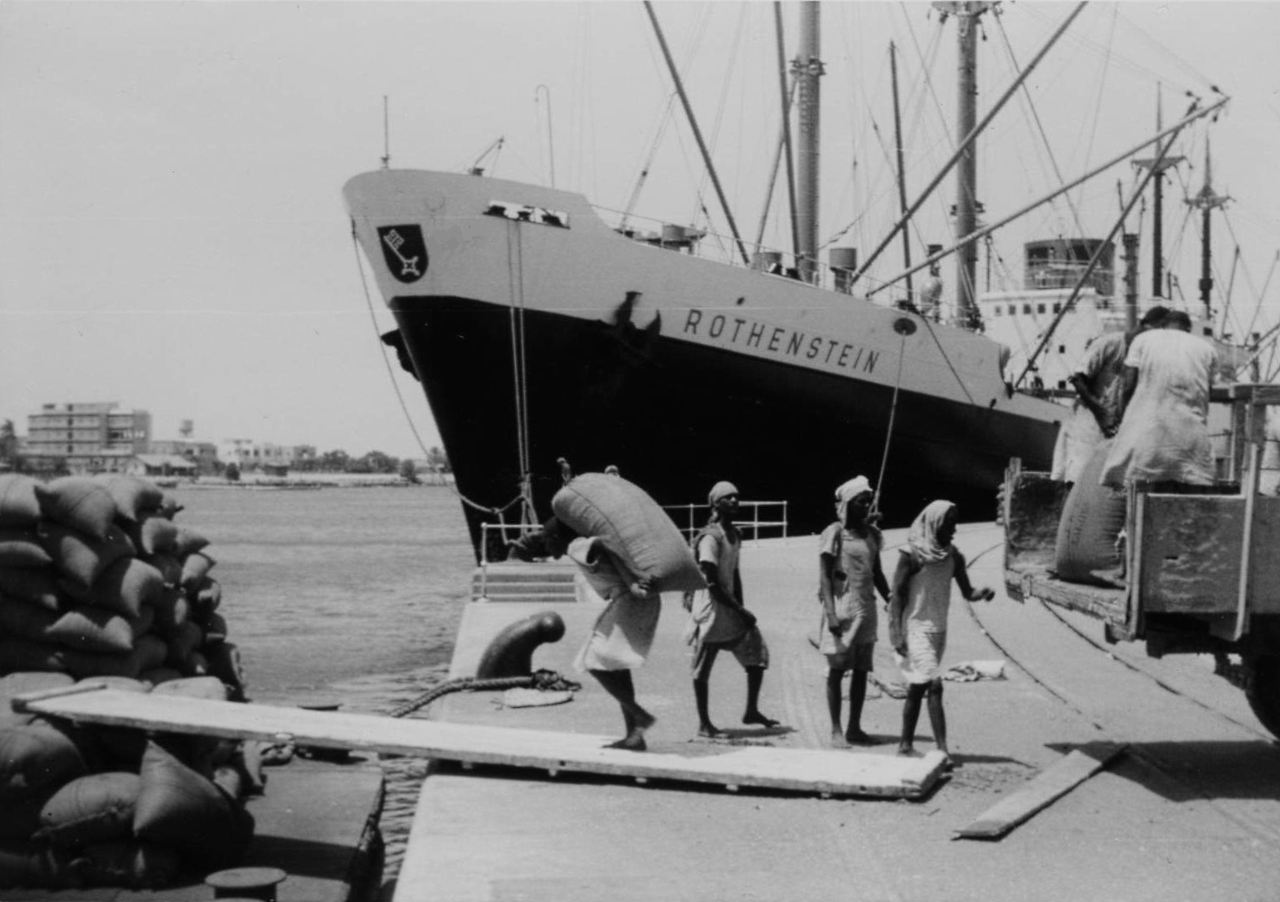 Shiploading used to be totally manual source
We’ve all seen pictures like that.
And we’ve all seen pictures like this:
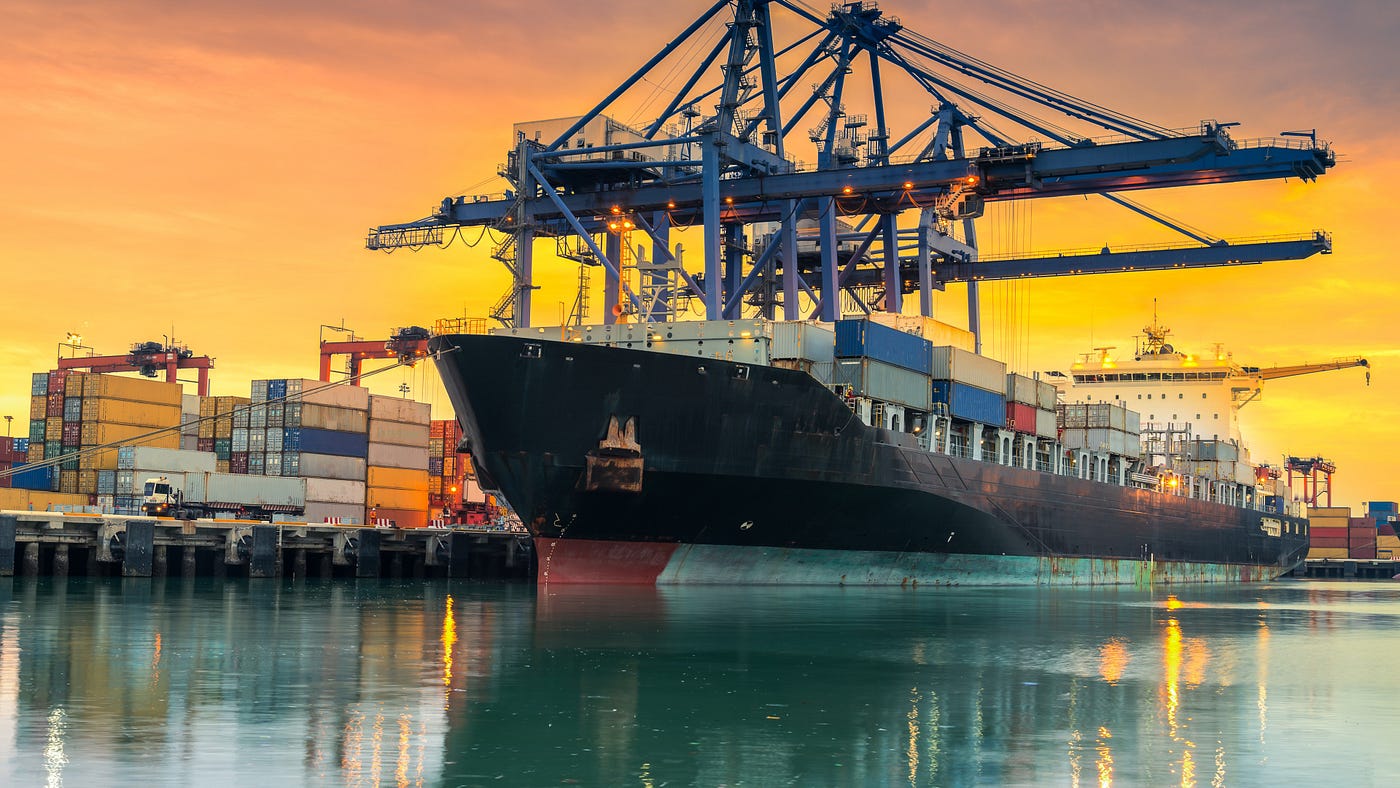 modern shipping facilities source
So, what changed?
Well, and this was my favorite line in the entire post,
But along came an idea so good that it seems obvious in retrospect:
This was the invention of the standard shipping container that could be moved from truck to train to ship to train to truck, dramatically reducing the cost of shipping and allowing for an explosion of trade.
The shipping container is an “overlay protocol” to the network of roads, railroad tracks, and ships moving goods around, a standardized way to operate on-and leverage-those networks.
This is the unlocking of “networks of network effects” and it’s the plot twist that sets you up for the “holy shit!” moment to come later…even if you don’t fully appreciate it while you are reading it the first time.
Then, he moves on from the past to the present and future.
Data…the new Asset Class
Trent then reminds us how today (and in the future), the value that will be “shipped” around isn’t physical, it’s digital.
In fact:
“The data economy is already 377B€ for Europe alone, and growing. That’s 30x larger than DeFi assets under management (AUM).”
https://blog.oceanprotocol.com/ocean-datatokens-from-money-legos-to-data-legos-4f867cec1837
And if you think that’s not going to get bigger, well I have a number of bridges to sell you.
And that’s just the existing, Web 2.0 data/surveillance economy.
What’s different now is that there are Web 3.0 tools- which all exist and can be used- that, like the roads, railways, and ships of the 1800s, are sitting out there, waiting for an overlay protocol.
This is the graphic he uses at the beginning of the post, setting the stage for the big finish.
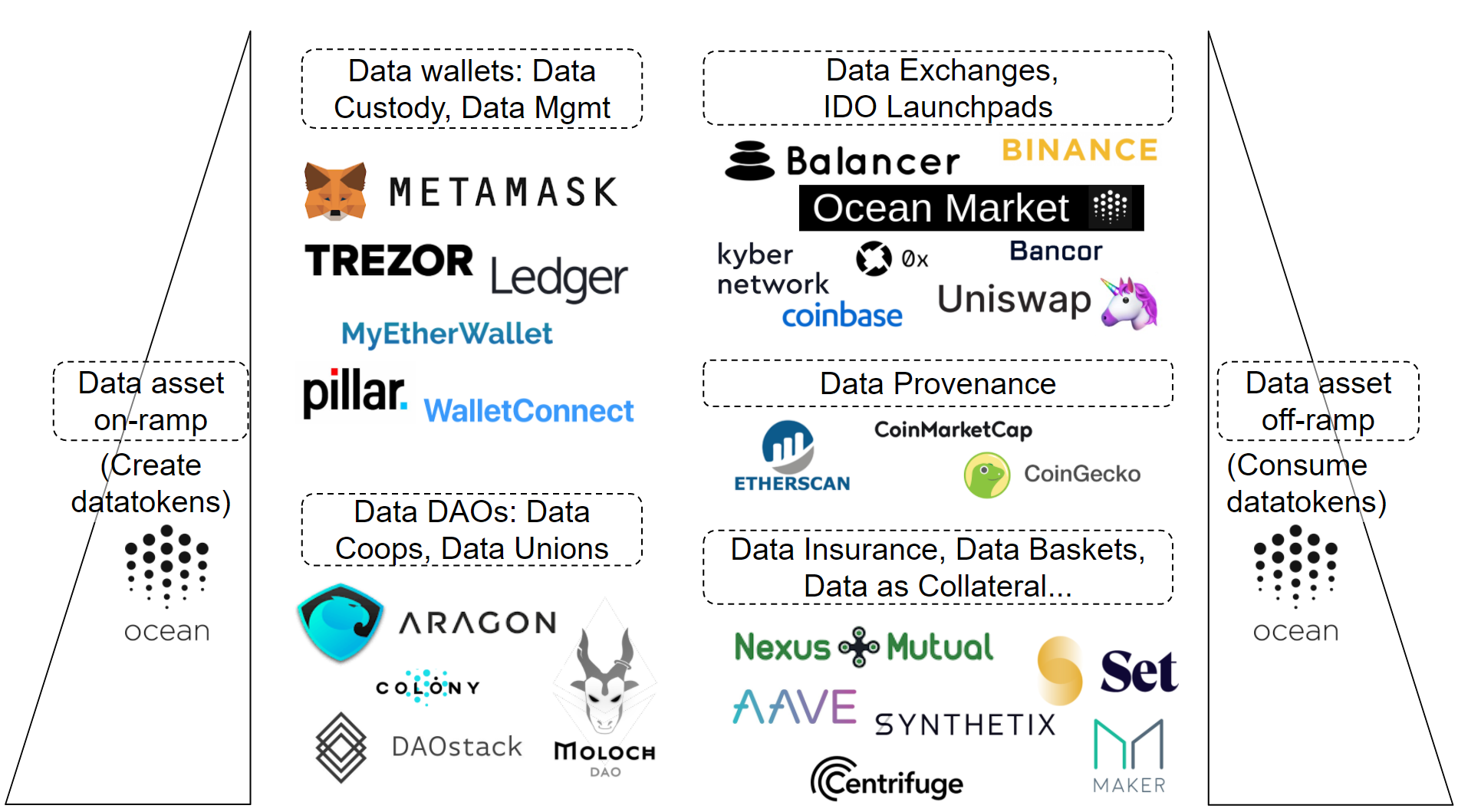
What this means is that we now have a way to take any piece of data out there, whether it started life on a blockchain or elsewhere (this was the mind blow for me) and assign all/any types of ownership/usage rights to it at the granular level that crypto affords.
Once a given piece of data has clear, immutable ownership, then the sky’s the limit in terms of monetization and financialization.
The Great Liquidity Unlocking becomes even greater because the number of assets that can be liquified will just explode.
Data with provable ownership becomes an asset that can be used as collateral, bought, sold, traded, and generate insurance products (Nexus Mutual ftw)
Ocean Drumroll, Please
And what makes all of this magic work?
What is the digital overlay protocol that connects the dots and allows for data to become a genuine asset class?
Yep, Ocean Protocol’s datatokens.
I originally wanted to title this post “Why the Opportunity for Ocean Protocol Datatokens is Bigger than the Pacific Ocean,” but I thought it was too long and it I would sound like I’m shilling.
(Disclosure: I own a nominal amount of Ocean tokens…but I’m thinking that it’s not enough :)
The blog post is long and requires focused attention, but it’s not inaccessible. The historical precedent is there, the logic is there, the tools are there.
Datatokens, from Ocean Protocol or someone else, are inevitable and will be a fixture in the economy of the future.
“The future is already here – it’s just not evenly distributed.
The Economist, December 4, 2003” ― William Gibson