The Metaverse, a network of 3D virtual worlds focused on social connection, has been the hottest keyword lately. The Metaverse aims to offer a connected and universal virtual world where people can entertain themselves, play games, work, exercise, and even study in an engaging virtual and augmented reality experience. These innovations reshape not only the entertainment industry but also impact all the economic sectors.
Facebook fully understood the potential of the Metaverse and was quick to change the name of the Facebook company to “Meta” in October 2021. Media articles followed one another, and the Metaverse is making headlines more than ever. As a result, Metaverse real estate boomed in the last quarter of 2021, topping $85 million in January 2022, with a value forecasted to grow at a compound annual growth rate (CAGR) of more than 31% for the next six years (2022–2028).
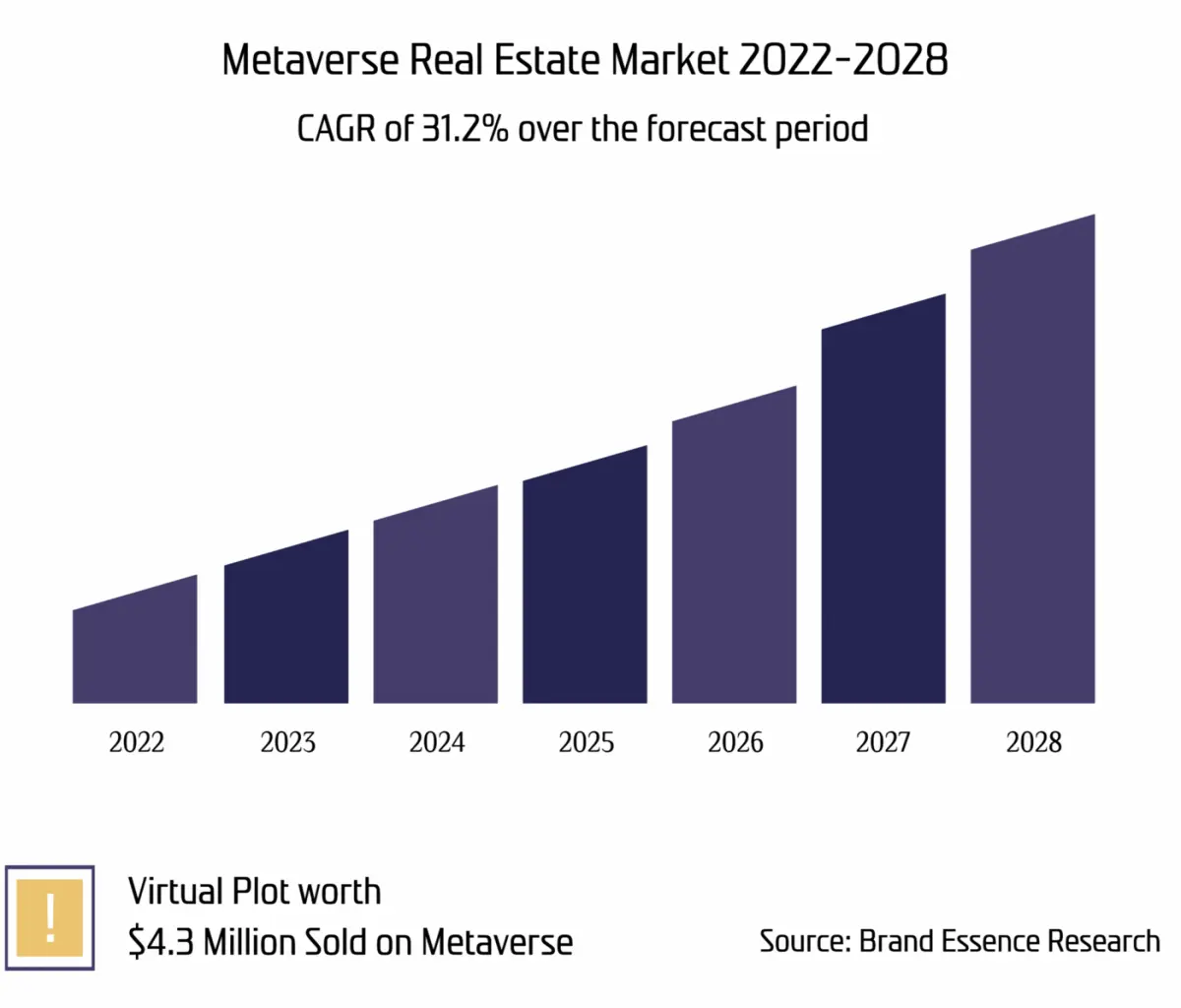
These forecasts encourage a continuous upwards trend, backed by experts predicting a large adoption of the Metaverse within the next few years. Bloomberg sees the Metaverse as the next big technology platform, estimating a market worth that can reach $800 billion in the near future.
Therefore, the Metaverse opens new perspectives, not only for individuals, by improving certain aspects of everyday life but also by adding value to the businesses of participating companies.
There is one particular sphere that the Metaverse and its innovation could disrupt: Intellectual Property. Intellectual Property (IP) includes assets ranging from copyrighted content to trademarks, including logos, music, and possibly even design patent protection.
Metaverses are built on Blockchain, a technology that enables distributed operations and lets users perform transactions without the need for centralized control. And if there is no longer a need to present Blockchain, in recent years, a new technology based on the Blockchain is the focus of all the attention, namely NFTs.
Non-fungible tokens (NFTs) are cryptographic assets on a blockchain. Built from smart contract, they have unique metadata that makes them identifiable from one another. The NFT market was initially based on collectibles, but new use cases are emerging based on utility.
Lately, NFTs have become an essential component of the new era of the virtual world. Indeed, Metaverses do not have infinite space; their surfaces are limited, and owning a Metaverse property, represented over NFTs, has a similar value to owning real estate in our physical world.
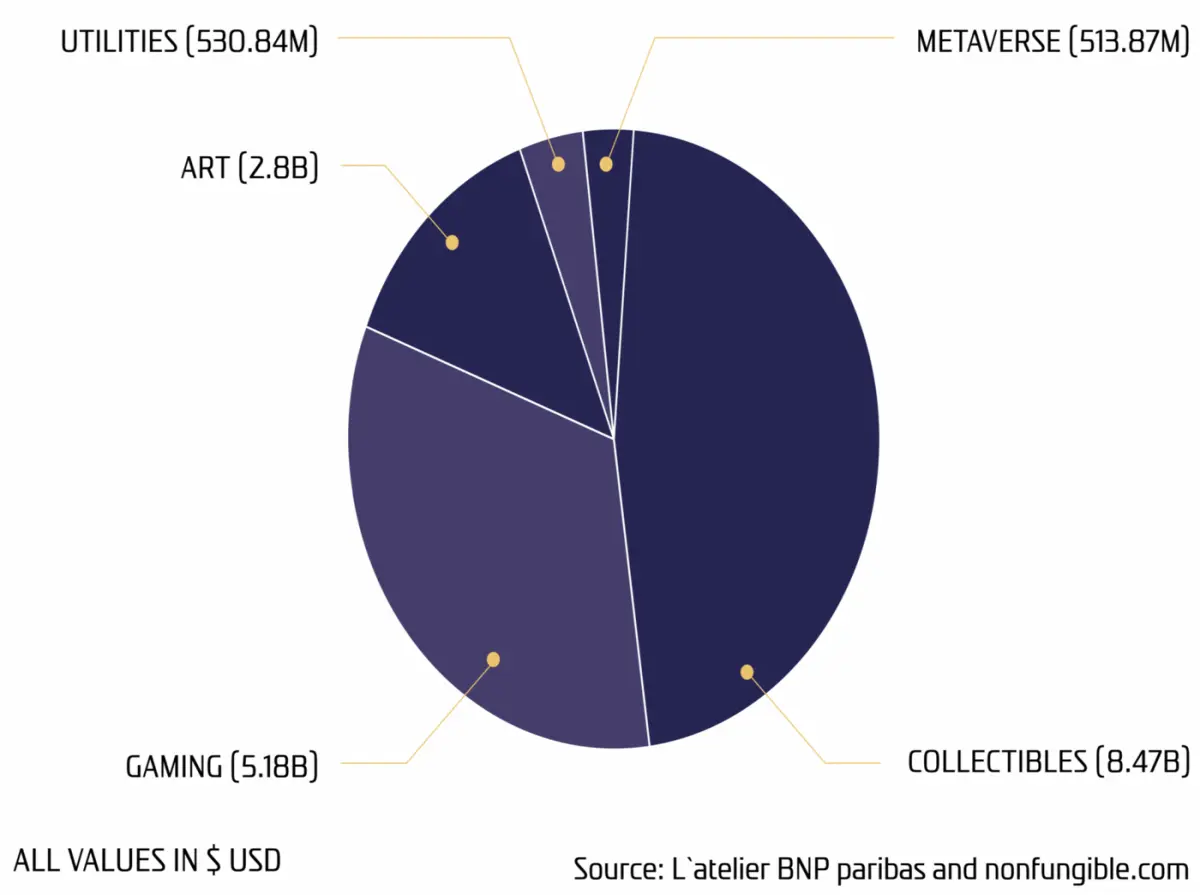
According to Fortune, total NFT sales reached $17.6 billion last year, representing an increase of over 200 fold year-on-year. While game-based NFTs account for a significant share, totaling $2.32 billion in the third quarter of last year, metaverse- based NFTs are in their infancy, with a total value that crossed the half-billion mark.
Intellectual Property
Intellectual property (IP) and copyright protection have been the nucleus of the entertainment world for decades. Owning, licensing, and monetizing blockbuster IPs such as ‘The Lord of the Rings’ or ‘The Fast and the Furious’ has fueled businesses and created billions of dollars in turnover. But Blockchain technology, smart contracts, and NFTs will fundamentally reshape how IP is created, distributed, and monetized. The tokenization of media over the blockchain presents a huge challenge to the traditional model, and especially for the rights holders, as it empowers the user to co-create and co-own a stake in their favorite story, movie, or lore moving away from a centralized model.
Web3 gives birth to three new trends:
IP goes bottom-up
The next Harry Potter could come from a decentralized group of individuals jointly developing a story without a central medium (e.g. book), instead of the writers’ room of a major studio or a brilliant individual.
Distributed Ownership
IP could be broken down in fractions of licenses, opening the ownership up for the public or exclusive to members. Those licenses could be traded as easily as (crypto) currency on the blockchain and over mobile phones.
Monetization
Traditional licensing won’t work with decentralized ownership. IP, usually a long-term asset, could become fluid — trade as assets on exchanges or become even a payment method.
Blockchain technology has created a new infrastructure, thousands of users have started to redefine ownership in their understanding. Similar to how user generated content (UGC) has shaped how creators can monetize their content and amplify video games, music or movies, the implications for IP and ownership through tokens are slowly becoming visible:
We are on the brink of a massive user owned IP flywheel, where a community drives attention and value towards the IP while every member co-owns a fraction of it. the ownership changes rapidly within the community, therefore staying decentralized and not being monetized or controlled by a single entity.
2022 will indicate how major IP owning corporations will tackle these challenges, and market to an emerging generation that will demand ownership of stories and narratives they create, push and market successfully.
THE REPUBLIK
Vision
In a virtual environment that is completely redefining ownership and copyright of intellectual property, legacy media will need help and learnings to activate IP in the Metaverse, while a new generation of fans and creators need tools and a breeding ground for their ideas and stories. This is where “The Republik” steps in.
Our goal is to provide the infrastructure that ensures that the intellectual property of partners meets the needs of content creators in the metaverse, whilst preserving the IP’s essence. It also gives birth to the first of its kind decentralized IP in the form of The Republik, representing ownership in the form of land of a City. To this end, we will provide a distributed infrastructure that lets users create new narratives and IP on top of The Republik, and companies can offer their services without facing the challenge of preventing unscrupulous actors from exploiting their IP. Users and fans will be able to utilize this distributed infrastructure to enjoy high-quality interactive experiences across the board.
The last century gave birth to IP conglomerates, which amassed IP, power and wealth by centralizing creative talent, resources, and rights. This century sees the rise of a new value chain, that starts with a user-centric economy that enables the community to create IP and products.
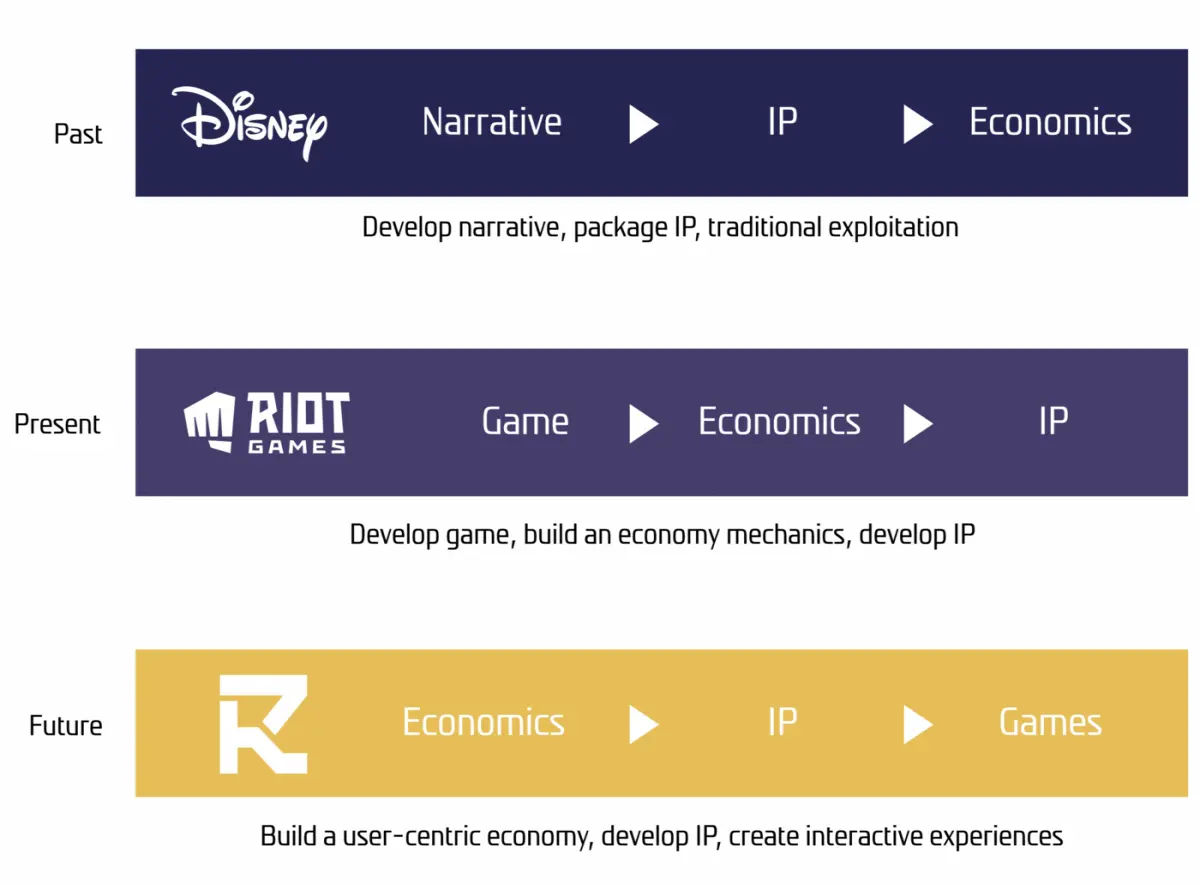
As the world, trends, technologies, and business models evolve, intellectual property is bound to be decentralized. The next Disney company will be born in Web3; it will be distributed, tokenized, owned by the community, and interactive.
Metaverse Land Scarcity
The Republik can be seen as the first of its kind decentralized IP-centric Metaverse: holding land property in the City of the Republik gives the user fractionalized ownership over the lore and the underlying decentralized infrastructure. This concept inherited properties from the physical world, to make ownership tangible and experienceable for a young and virtual demographic. Therefore, The Republik is the ideal hub to partner with media companies, while remaining user-owned, controlled, and transparent, thanks to the distributed technologies built on the blockchain.
Although the number of users entering the Metaverse is growing at a high rate, the virtual world does not have infinite space, and owning a Metaverse property is comparable to owning real estate in the most popular places in our physical world. Within the Republik, owning real estate and the attached ownership of the world represent a crucial factor for users and businesses: possessing land gives users the ability to co-create whilst owning a fraction of the world itself. For companies, possessing land in The Republik is necessary to build their virtual infrastructure and offer services and goods.
Properties owned in The Republik can be traded, sold, or rented, thus providing an income stream to their owners.
About the Virtual Worlds and The Republik
We believe that virtualization leads to essential questions about life — the more time we spend in virtual worlds, the more critical identity and well-being become.
Stories deepen empathy — they are the best vessel to talk about social issues, climate change, gender identity, racism, intersectionality, etc., with a younger audience increasingly familiar with living online.
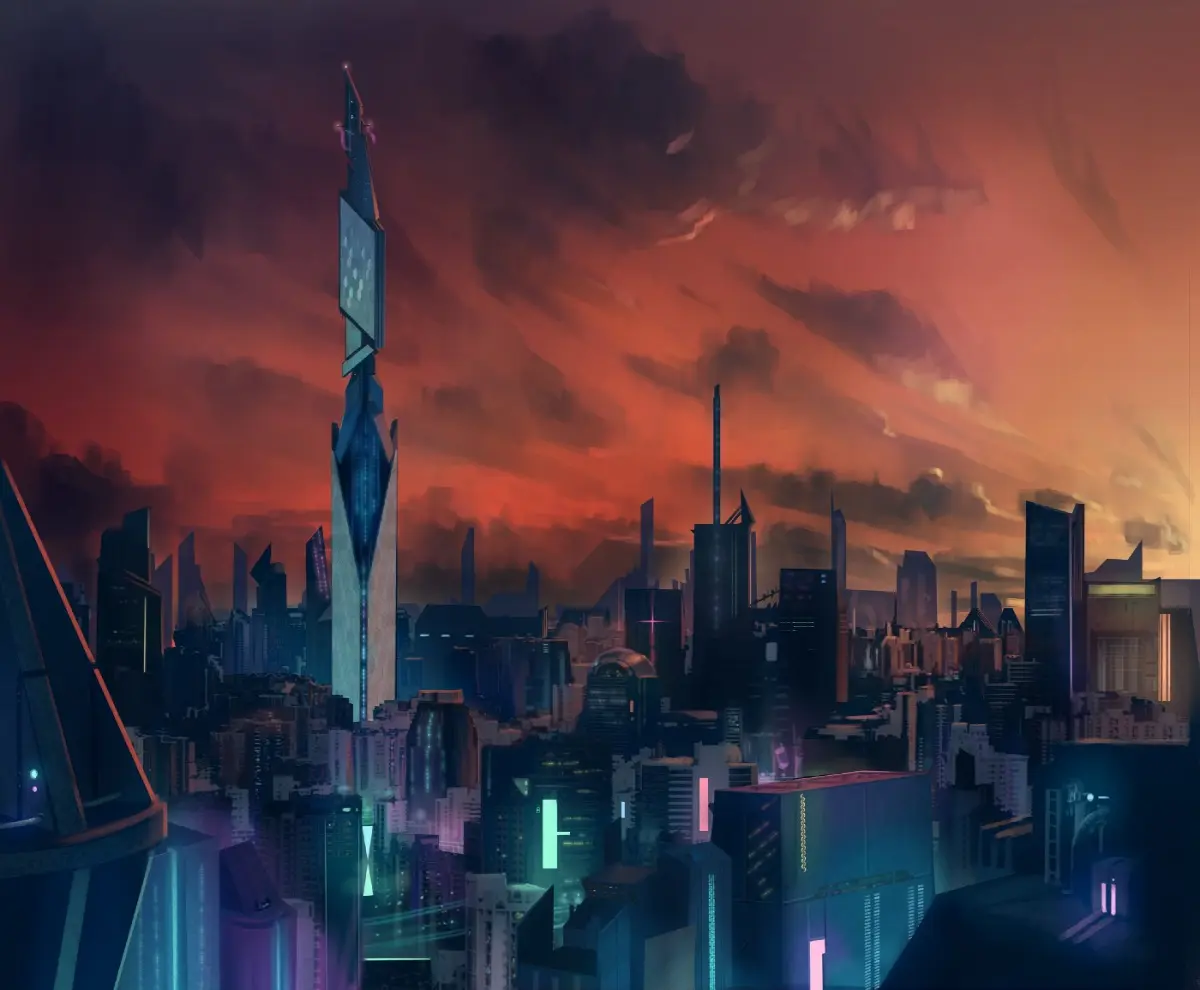
By building the Republik, we provide a place of inclusion, participation, and interaction to experience virtual worlds — in the 27th century.
The Republik: a world built on the blockchain as decentralized Intellectual Property.
Join the 27th century by claiming your parcel. It takes a city. 🌇
Join The Republik 🌎
Discord: http://discord.gg/theRepublik
More about The Republik:
Website: https://therepublik.io/
Twitter: https://twitter.com/RepublikNetwork
The Republik Playlists on Spotify: http://hyperurl.co/PR-Spotify
THE SALE
The lore of The Republik.
In the 27th century, the entire human race is living in one city: The Republik.
The city was created as a shelter to protect humanity from unlivable conditions brought on by pollution and overuse of the Earth’s resources. Those who remain survive thanks to Lynxium, a rare metal that allows them to build the robots and other machines necessary for their survival.
Using this resource, they rebuilt society within the walls of the Republik, complete with its own massive news network, education system, and crime syndicate. This microcosm of the old world has made many Remnants passive, while others haven’t quite lost their spark.
The Land Rights
As the city struggles with its growing number of citizens, real estate has become one of the essential needs — land is scarce in The Republik, so the Vox government has established rules to give citizens a chance to own their own land. If the lands in the most popular places are the most expensive, a system has been established to give everyone a chance to access the most attractive areas; this is the Land Rights.
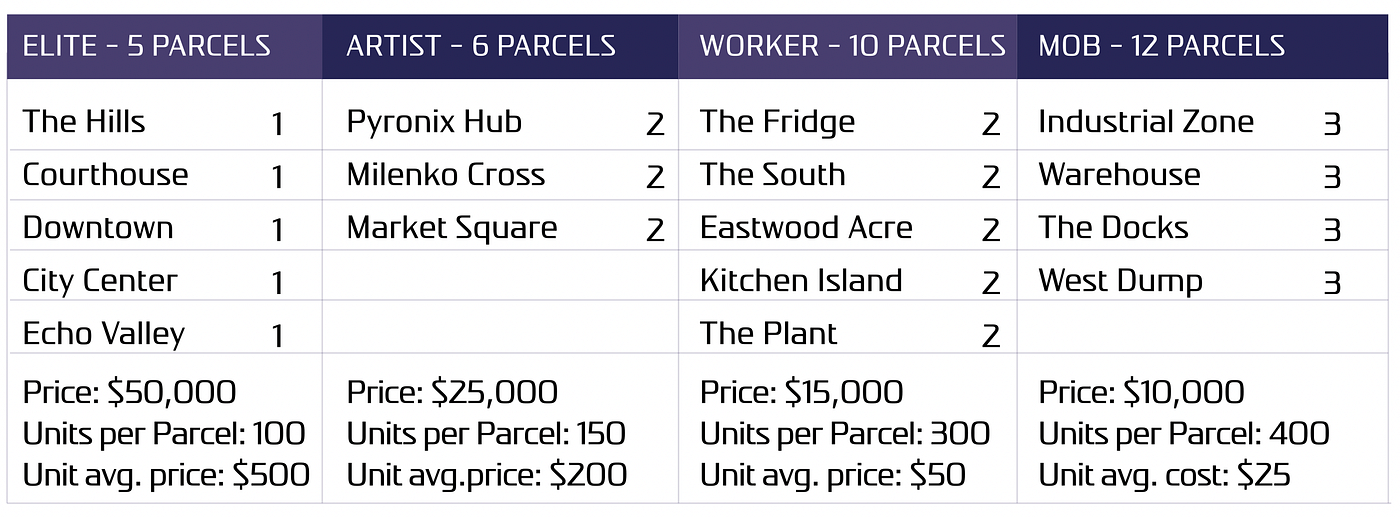
In The Republik, the land right of a citizen is defined according to his or her social class, therefore the parcels are organized as follows:
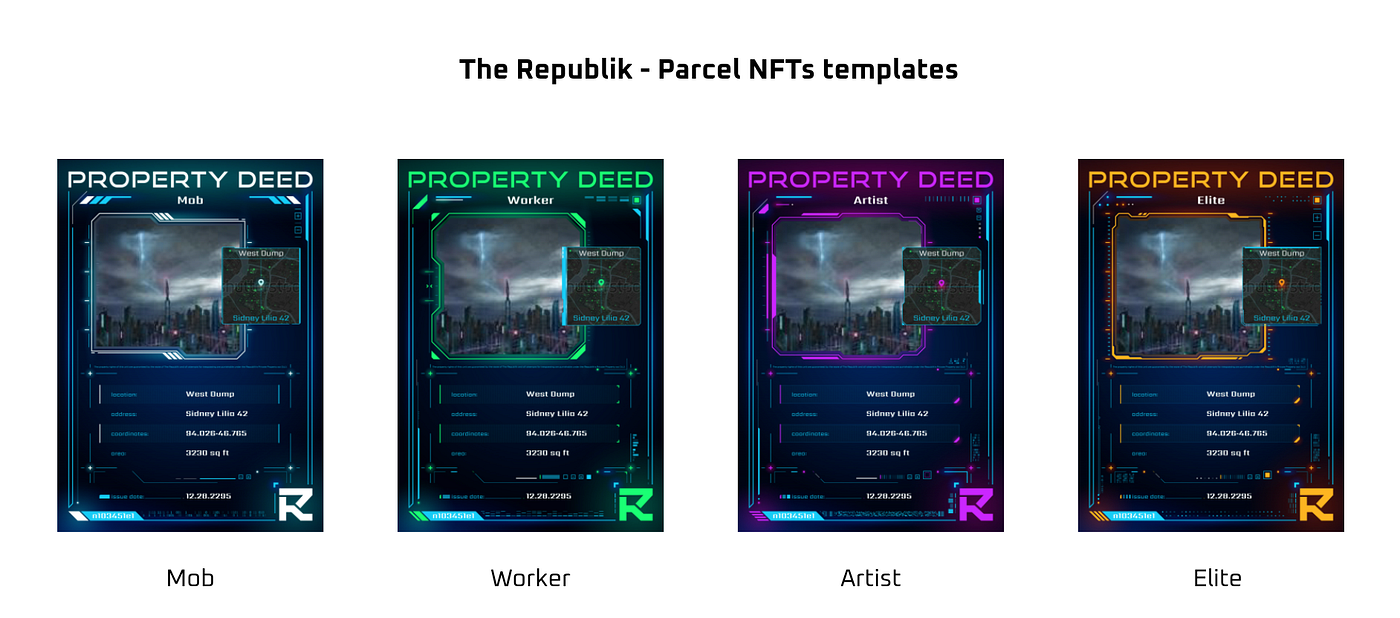
Each social class has access to predetermined districts. The parcels within the district will be allocated randomly to ensure equitable land distribution and optimal density within The Republik.
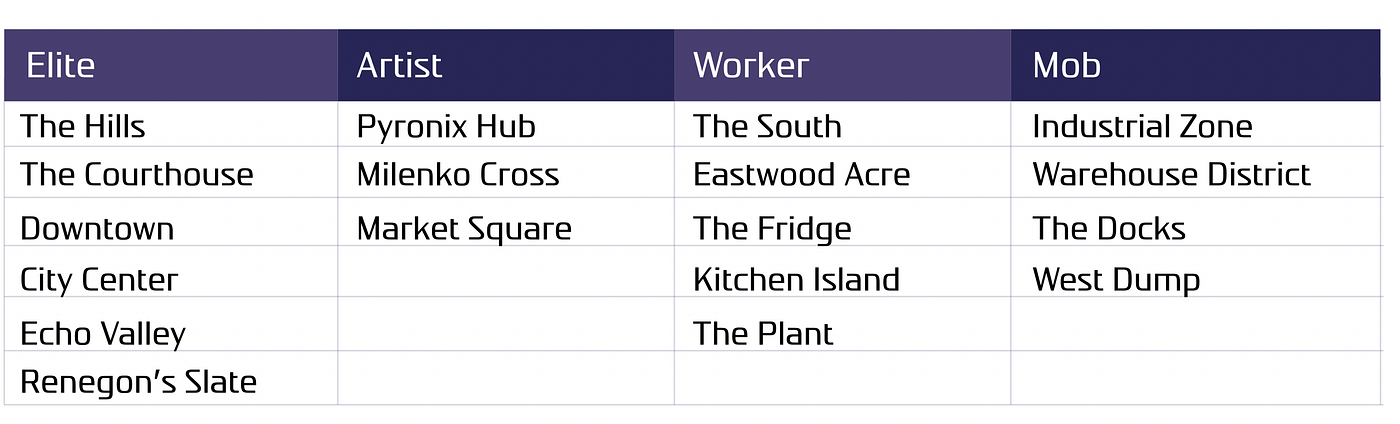
There are two types of properties in The Republik: parcels and units, each with its own specificities:
Parcels: include rights package for businesses.
Units: standardized and smaller, they are reserved for individuals.
The 1st Wave — Early Investors
The Vox government representatives held a special conference with the City Minister to launch a brand new Campaign of Action through Real Estate (CARE) to fund the city’s exterior defense. Thanks to a large-scale initiative aimed at real estate agents, promoters, and investors, Republik officials are confident they will be able to raise the funds necessary to protect our thriving and growing population from the dangers outside, while promoting private initiatives to build.
“Purchase a Republik Parcel today, and show you CARE.”
The CARE program consists of 380 parcels and will be rolled out in waves.
In the first wave, only a limited number of 33 parcels (8.1% of the total units) of The Republik’s land is allocated for sale in the “Early Investors’ Wave” program. Early investors get significant advantages, as this round is the only one of two where parcels can be purchased. The price is set at the lowest price point within all sales, as the next waves will be priced significantly higher than the first wave.
For the first wave the following structure was decided: