A non-fungible token is a special type of token that represents the deed of ownership and the certificate of authenticity written on the blockchain of a single asset; the non-fungible tokens are therefore not mutually interchangeable; this is in contrast to cryptocurrencies, such as Bitcoin and many network or utility tokens, which are inherently fungible.
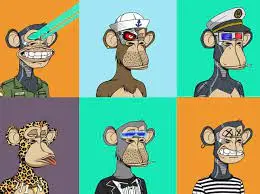
Non-fungible tokens first became popular when CryptoKitties went viral and that company subsequently raised a $ 12.5 million investment.
RareBits, a non-fungible token market and exchange, raised a $ 6 million investment. Gamedex, a trading card game platform made possible by NFTs, raised $ 800,000. Decentraland, a blockchain-based virtual world, raised $ 26 million in an initial coin offering and had an domestic economy of $ 20 million in September 2018.
Art was one of the earliest use cases for NFT, and blockchain in general, due to its ability to provide evidence of authenticity and ownership of digital art that would otherwise have had to contend with the potential of reproduction. mass distribution and unauthorized distribution of art over the Internet.
The hype raised in February 2021 began when US digital artist Beeple launched the work Everydays. The first 5000 days, which was considered the first NFT artwork to be listed at a major Christie's auction house. A few days earlier, the meme animation Nyan Cat had sold on an Internet market for 600,000. dollars. Subsequently, popular blockchain games such as CryptoKitties used NFT on the Ethereum blockchain.
Kings of Leon on March 5th 2021 release When You See Yourself, the first music album also sold through NFT.
On 17 March 2021 the Italians Belladonna become with their single New Future Travelogue the first in the world to include the rights of the song in the NFT, and the first artists in Italy to sell a piece of music as a single copy of the NFT.
On 21 December 2021, Vodafone auctioned the world's first SMS sent in 1992 as a non-fungible token: an anonymous bidder won it for 107,000 euros, which will be donated to the United Nations High Commissioner for Refugees.

Non-fungible tokens are used to create verifiable digital scarcity, digital ownership and / or the possibility of asset interoperability across multiple platforms.
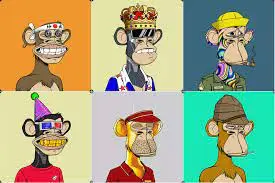
NFTs are used in several specific applications that require unique digital items such as cryptographic art, digital collectibles, and online games. NFTs are used to represent game assets and are controlled by the user, rather than the game developer. This allows you to trade assets on third-party markets without the game developer's permission.
Nike holds a patent for its blockchain-based NFT shoes called "CryptoKicks".
A German conceptual artist compared the early enthusiasm around NFT Art to 17th-century Tulip Mania and put up a single transparent pixel for sale to express his theory.
On April 6, 2021, Morgan launches an auction for her unreleased song Premessa della Premessa in NFT, which is sold for 10 ETH. The purchaser of the work, in addition to becoming the sole owner and exclusive owner, also receives directly from Morgan the unique and original prints autographed with the lyrics of the song.
On December 31, 2021, the Italian startup Reasoned Art brought the Arco della Pace in Milan to the Metaverse, the first monument in the world, transforming it into an NFT that will be auctioned in the coming months. The proceeds will be partly donated to charity and partly used to create a specific course of study on Crypto Art in line with the European Union's New European Bauhaus project.
NFTs have been a real revolution in the field of copyright, particularly in the cryptographic art sector.
Since their debut, which officially took place in 2014, it has been noted how this tool was extremely useful especially in those sectors that had implications for copyright in general: art, music, software, but also memes, tweets and gifs.
Surely the impact of new technologies on copyright has brought to light a series of problems linked on the one hand to the fragmented nature of the reference regulatory framework, and on the other to the inadequacy of some protection tools, certainly not designed to be adapted or adaptable to the current evolution in the digital field.
In the context of NFTs, through their use, whoever buys one does not purchase the copyright on the content covered by the token but purchases a certificate that allows him to keep track and prove the ownership of the digital copy purchased. Potentially, different NFTs can therefore be sold to different subjects of the same work, all owners of a single copy in the same way, but obviously not of the original. The latter will remain the exclusive property of the author, precisely by virtue of the legislation on copyright, with all the ensuing consequences, who will therefore have the opportunity to economically exploit his work an indefinite number of times, being remunerated for the purchase of a token connected to it.
Specific non-fungible token standards have been created to support the use of a blockchain in games. These include CryptoKitties' Ethereum ERC-721 standard and also the newer ERC-1155 standard.
ERC721 was the first standard to represent non-fungible digital assets. ERC721 is an inheritable smart contract standard written in Solidity, which means that developers can easily create new ERC721 compliant contracts by importing it from the OpenZeppelin library.
ERC1155, brings the idea of semi-fungibility to the NFT world and provides a superset of ERC721 functionality, which means that an ERC721 resource could be built using ERC1155.