
 Last winter, I stumbled across a story that’s been gnawing at me ever since—a tale so chilling it makes you question what we really know about the world. It’s about Antarctica, that frozen wasteland at the edge of the map, and the whispers of something hidden beyond its endless ice. Not just snow and penguins, but lands, worlds even, that no one’s supposed to know about. I’m not one for conspiracies, but this… this feels too real to ignore. Let me tell you about Elias, a surveyor who went too far south and saw something he shouldn’t have.
Elias was a regular guy, mid-30s, with a knack for surviving brutal climates. He’d worked on research stations in Antarctica for years, mapping ice shelves and drilling core samples. It was 2019, and he’d signed up for a routine gig: a solo trek to chart a remote glacier’s retreat. The job was simple—hike out, set up beacons, take readings, and get back to base before the weather turned. But the Antarctic doesn’t care about your plans. A storm rolled in, fiercer than anything he’d seen, and Elias got cut off from his team. His radio fritzed out, his GPS went haywire, and the whiteout was so thick he could barely see his own boots. He was alone, or so he thought.
For days, he trudged through the blizzard, rationing his food and praying for a break in the storm. On the fifth day, something strange happened. The wind died, and the snow parted like a curtain. Elias found himself standing at the edge of a massive ice wall, taller than any cliff he’d ever seen. It wasn’t on any of his maps. The wall stretched left and right as far as he could see, smooth and sheer, like it had been carved by something other than nature. He should’ve turned back—every instinct screamed it—but curiosity got the better of him. There was a narrow crevasse at the base, just wide enough for a man to slip through. Elias squeezed inside.
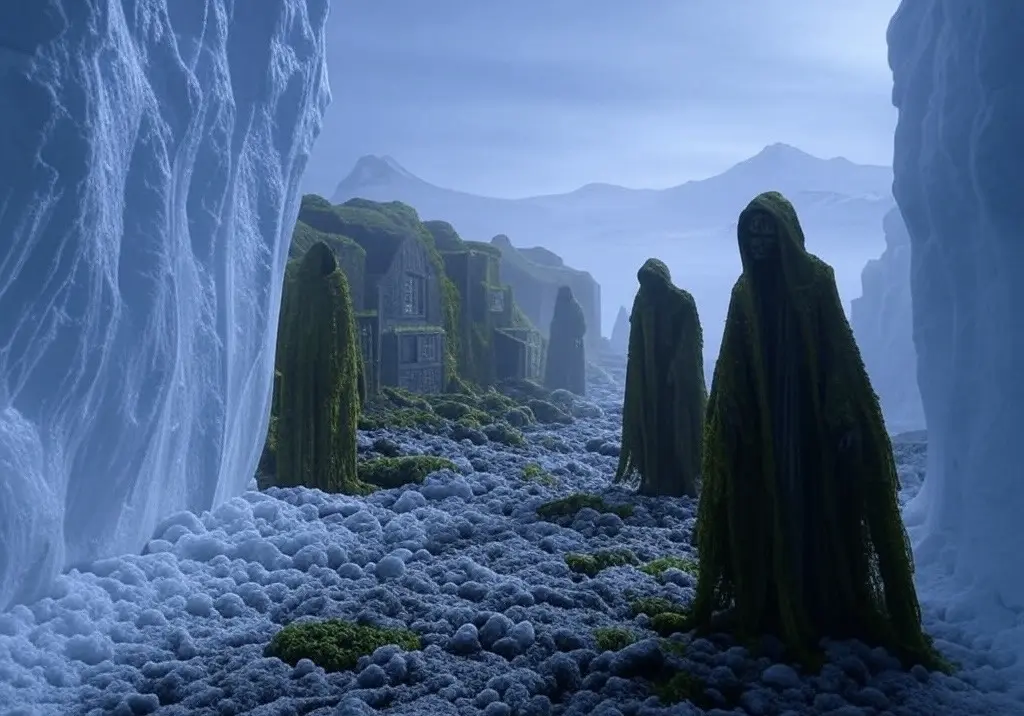
The passage was tight, the ice pressing against his chest, but it opened into a tunnel that sloped downward. He followed it, his headlamp casting jagged shadows on the walls. The deeper he went, the warmer it got, which made no sense. Antarctica doesn’t do warm. After what felt like hours, the tunnel spat him out into a place that turned his stomach to knots. It wasn’t ice anymore. It was a valley, green and alive, with grass underfoot and a faint mist curling through the air. The sky above was wrong—too bright, with a sun that didn’t move like it should. There were trees, twisted and gnarled, and in the distance, shapes that looked like buildings, but not the kind humans build. They were too tall, too angular, like they’d been grown instead of made.
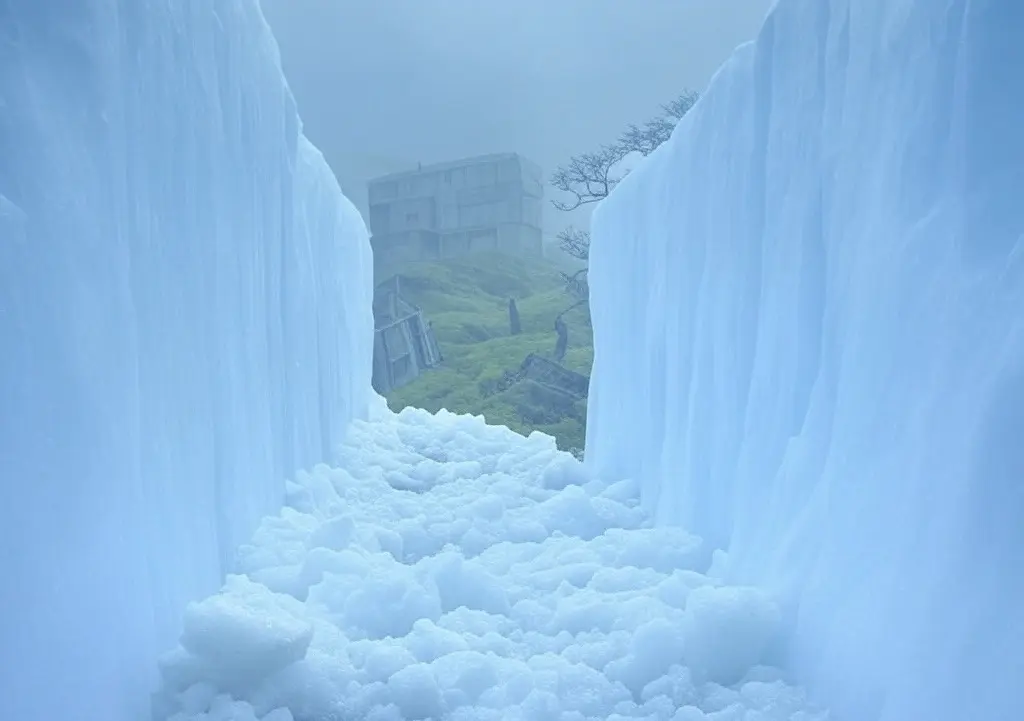
Elias’s first thought was that he’d lost his mind. Hypothermia, maybe, or starvation playing tricks. But the ground felt solid, the air smelled of damp earth, and when he touched one of those trees, its bark was rough under his gloves. Then he heard it—a low hum, like a machine but alive, pulsing through the valley. It wasn’t just sound; it was a feeling, crawling up his spine, telling him he didn’t belong. That’s when he saw them. Figures moving in the mist, tall and thin, their outlines blurry but wrong. They didn’t walk so much as glide, and though he couldn’t see their faces, he knew they were watching him.
Panic hit hard. Elias bolted back toward the tunnel, his boots slipping on the grass. The hum grew louder, sharper, like it was angry. He didn’t dare look back, but he could feel those things closing in, their presence heavy, like the air itself was trying to hold him down. He scrambled through the crevasse, cutting his hands on the ice, and kept running until he collapsed miles away, back in the familiar cold of the Antarctic waste.
When a rescue team found him days later, Elias was half-dead, babbling about a green valley and eyes in the mist. His gear was intact, but his journal was filled with sketches of those strange buildings and words like “beyond” and “not ours.” The official report said he’d suffered a psychotic break from isolation. They hushed it up, sent him home, and told him to keep quiet. But Elias couldn’t let it go. He reached out to anyone who’d listen—bloggers, forums, even me—begging them to believe him. He said the ice wall wasn’t natural, that it was hiding something, a whole world we’re not meant to find. He was scared, not just of what he’d seen, but of the people who came asking questions after. Men in suits, no names, telling him to forget it all.
Elias disappeared last year. No trace, no goodbye. His last message to me was a single line: “The ice is thin, and they know I talked.” I’ve tried digging into it since, looking for proof of his story. There’s not much, but there are old maps—really old ones—that hint at lands beyond Antarctica, places sailors swore they saw before the ice swallowed them. And every now and then, you hear rumors: pilots spotting green patches from the air, researchers vanishing on “routine” missions, strange signals picked up from the ice that no one can explain.
I don’t know what’s down there, but I can’t shake the feeling that Elias stumbled onto something real. Something hidden. The Antarctic is bigger than we think, and maybe it’s not just ice out there. Maybe there are worlds beyond the wall, watching us, waiting. Next time you hear about a missing expedition or a weird signal from the south, ask yourself: what’s really under all that ice? And why are they so desperate to keep it buried?
---
Thanks for dropping in!
Find me on X: @7SinsIsland
Fuel my work at CryptoGemGR—
Stellar XLM Address:
GCFCOAVF4GJGOPOOGH742WSHUMGUIIYKZJ4XZGHKLMSZUVZG6RVLIPYZ
Need more referral codes? I’ve got a stash for various crypto platforms! Explore them here:
https://www.publish0x.com/cryptogemgr/every-referral-code-a-crypto-lover-needs-xgvgrne
Trade low-cap gems on MEXC with my referral code: 1NuBb
Join Sl8, the crypto-powered social network (like X, but better), and earn $SSLX for your posts—not just likes! Use my referral code: asXHIP






