 To deal with this question I will consider what some influential people have said on both sides of the argument, 3 for and 3 against the notion of a free market / (unregulated) capitlism / libertarianism. While some claim that libertarianism is a system that guarantees the people's economic free (as suggested by the word's root liberty), others point out what catastrophes have come about because of our current state of capitalism. A free market without government intervention has never existed. Therefore, adherents of libertarian ideals look forward to it becoming a reality in the future. However, critics claim that it would not only make things worse than they are now, but that it is a mythical state which can never be achieved by a society. How should we analyse the power tradeoff between government and the market? Does it even make sense to consider them different in nature, or are they two sides of the same coin? What can we learn from the standpoints of the following commentators? I have summarised and paraphrased what I have heard them say on this topics from public appearances that can be found on YouTube.
 Let's start with Jordan Peterson, a professor of psychology at the University of Toronto. In an interview with Joe Rogan he claimed that no matter which industry you consider, in every creative endeavour the economy evolves in such a way that a few people rise to the top and the majority stack at the bottom. He cites the Paredo distribution to describe this phenomenon, where the horizontal axis shows the amount of people and the vertical axis is for the wealth per person.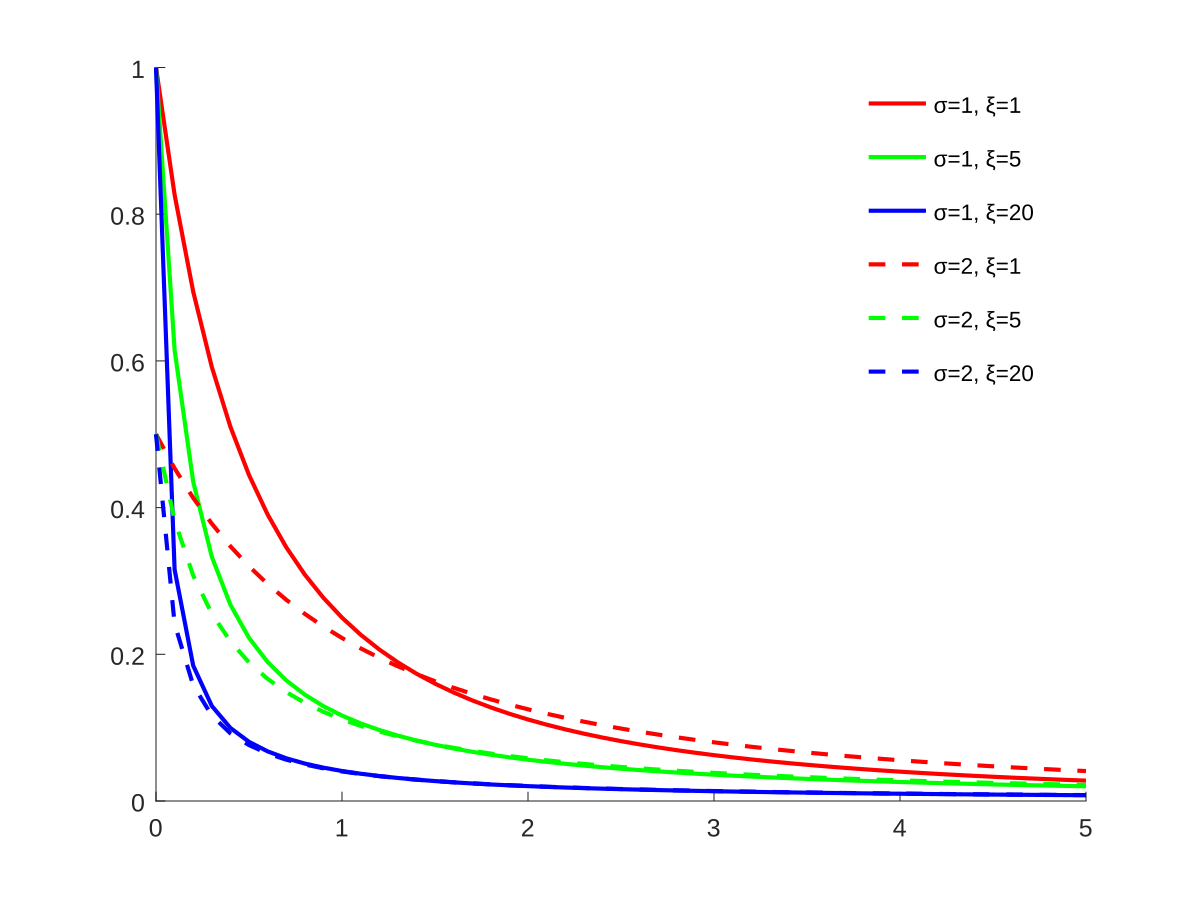
He admits that this inequality is a negative effect, but claims that it is a fundamental fact of nature. One point that he offers as advice to mitigate its repercussions is for everyone to get their life in order, build self-discipline and find an area of the market that suits their abilities and expertise. This makes it possible to slice the population into multiple Paredo distributions along many different dimensions, i.e. one per industry sector.
Of course this is not the only advice he has. In fact his book "12 Rules for Life" provides readers with more orientation, especially to young men who are trying to find their footing in today's business world. One message I take away from various public appearances by Jordan Peterson is that capitalism is the best socio-economic system there is and that any form of socialism leads to authoritarian communism, just as it did with the Soviet Union.
 People like Jeff Berwick go a step further. Also known as the Dollar Vigilante, Berwick is a staunch advocate of the purest form of capitalism: the free market economy. In interviews such as this one he expresses his disdain for any and all government institutions because of their habitual lying, manipulation and corruption. He is a libertarian in the anarchic sense. In anarcho-capitalism there is no intervention whatsoever by the government in the state's economy. In fact Berwick is opposed to the mere concept of nations, central banks, etc., this being the only form of true freedom. He gives the current monetary system only a few more years to survive, but remains optimistic because of modern technology that allows trustless systems such as crypto-currency.
 Similarly to him, the author and podcaster Stefan Molyneux considers all government regulation to be bad. If the market were truly free there would be much less inequality and misery. He discusses financial approaches to the needs of today's world with his guests and gives his audience advice on leading their own businesses. Molyneux likes to cite libertarian principles like this: by definition every voluntary exchange is advantageous to both trading parties. So in order to improve the life of everyone it is essential that nobody is forced into any exchange. He sees governing institutions as a major interference into this natural process and looks forward to a world of mutual respect in the marketplace. In his perspective, if people are raised right in a nurturing, moral household they will conduct their business transactions using ethical values such as the non-aggression principle. Ethics must not be imposed from government via regulations and punishment.
 These and other ideas featured in an interview with Peter Joseph who is the founder of the Zeitgeist Movement, a non-profit organisation whose mission is to make people aware of the wasteful and corrupt consequences of the current political and economic global system. In Joseph's view market economics has always and will always lead to a concentration of power among a handful of elites at the top, e.g. through monopolies and corrupt regulating bodies. His claim that the state and government is a natural outgrowth of every market economy makes the differentiation between government and the market a non-argument. He is not even as angry about the abuse by the top 1% because of his observation that this is inherent in the economic system, and not a matter of immoral behaviour. Competition eventually forces actors in a market society to choose between a respect for humanity and the environment on the one hand and a need for their own and their family's survival on the other hand. When such a point is reached, ethics and respect are out of the window because they are a luxury that can no longer be afforded, and exchanges can no longer be called voluntary. His vision of a peaceful future is void of competition, redundancy and waste. In the Zeitgeist Movement he advocates for many practical ways to live in harmony with the eco-system, making greed, corruption and wars a thing of the past.
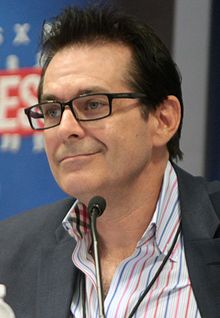 For another response to these libertarian ideas, I want to invite Jimmy Dore, a comedian who has gained attention and influence because he is outspoken against the crimes of the American government, domestically and internationally. In particular he likes to criticise the Democratic party and point out how they no longer represent the interest of common people. To him, the Republican party has gone so far off the rails, that it is more valuable to point out the many flaws of the Democrats, since many Americans are still under the illusion that they are the lesser of two evils and can save their nation and economy from its downward spiral. He was proud to vote for Jill Stein, the Green presidential candidate, in 2016. In this interview with George Galloway he proclaims that there is no such thing as a free market. Never has a capitalist market self-regulated so as to be of service for the population at large. In Dore's mind sociopaths rise to the top of power in every industry and every government institution. He sees only a slim hope for social democracy to save capitalism, through politicians such as Bernie Sanders. But he also educates his audience through interviews with guests who propose other strategies.
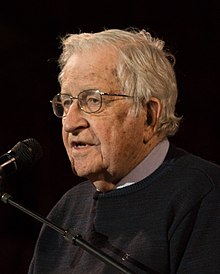 The linguistics professor at MIT, Noam Chomsky, also puts little stock in the current form of government, stating outright that it is not a democracy. In this talk he claims that libertarianism is in no way liberating. It exploits the workers and is merely a modern form of corporate feudalism. In other words capitalism is incompatible with democracy. To show how far the original postulates of Adam Smith have been twisted into today's market economy, he mentions that the Scottish economist never even claimed that the free market is good for everyone as by an "invisible hand".





