
The cryptocurrency world witnessed a significant event in 2016 when Ethereum, the second-largest cryptocurrency by market capitalization, split into two separate entities: Ethereum (ETH) and Ethereum Classic (ETC). This historic split, known as a hard fork, had a profound impact on the world of cryptocurrency.Let's see the reasons behind the Ethereum split, its consequences, and alternative paths such a division could have taken.
The DAO Hack and the Birth of Ethereum Classic: The Ethereum split originated from a contentious event known as the DAO (Decentralized Autonomous Organization) hack. The DAO, a smart contract-based investment fund built on the Ethereum blockchain, was compromised, resulting in the theft of a significant amount of Ether. To rectify the situation, the Ethereum community proposed a hard fork to reverse the hack and return the stolen funds. However, a faction within the community opposed this decision, arguing that the immutability of the blockchain should be preserved. This dissenting group continued on the original blockchain, forming Ethereum Classic.
Impact on Trust and Governance: The Ethereum split had a profound impact on the perception of trust and governance within the cryptocurrency community. It raised fundamental questions about the nature of blockchain immutability, consensus mechanisms, and the role of developers in altering the course of a cryptocurrency. The split highlighted the importance of community consensus and the need for clear governance protocols to prevent future conflicts and divisions.
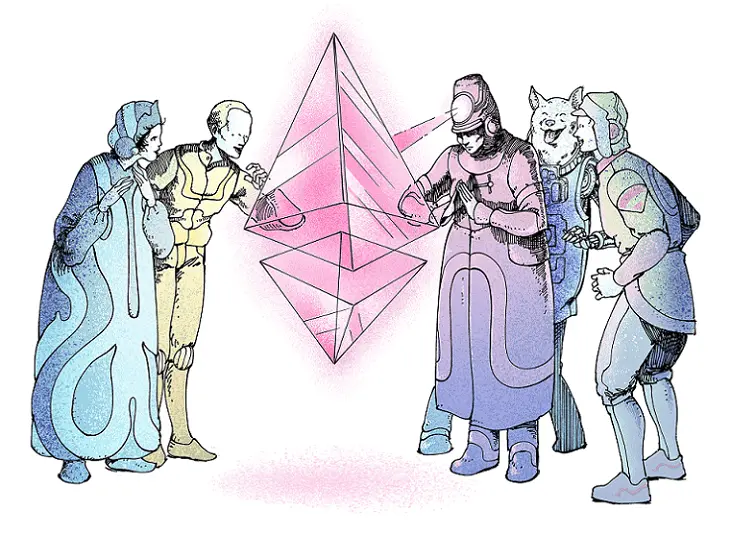
Market Consequences and Community Fragmentation: The split resulted in the fragmentation of the Ethereum community and the creation of two separate cryptocurrencies. Ethereum (ETH) continued with the hard fork, while Ethereum Classic (ETC) maintained the original blockchain. This division created market uncertainty, as investors and exchanges had to choose between the two cryptocurrencies. The split also led to a divergence in development efforts, with each blockchain pursuing its own roadmap and updates.
Could ther be an alternative paths for the split? While the Ethereum split took the form of a hard fork, alternative paths could have been pursued. One option could have been a soft fork, where the changes made to the blockchain are backward-compatible, allowing for a smoother transition and minimizing the potential for community division. Another possibility could have been the implementation of a decentralized governance mechanism, such as on-chain voting, to resolve conflicts and guide decision-making within the community.
The Ethereum split in 2016 marked a pivotal moment in the cryptocurrency landscape. It highlighted the challenges associated with consensus, governance, and immutability within blockchain networks. The split resulted in the formation of two distinct cryptocurrencies, Ethereum (ETH) and Ethereum Classic (ETC), with their own communities, development paths, and market trajectories. Exploring alternative paths for such splits, such as soft forks or decentralized governance mechanisms, may offer valuable insights for future blockchain projects seeking to avoid fragmentation and promote community cohesion. Ultimately, the Ethereum split serves as a reminder of the complex dynamics at play within the world of cryptocurrencies and the need for robust decision-making processes to navigate potential conflicts and divisions.






