
Decentralized Finance
To begin to understand DeFi it is important to note that the concept of a financial-system based on the same decentralizing properties of digital currencies (Bitcoin and Ether), came after the creation of those blockchain currencies. A need for the facilitation and use of these currency created DeFi. We can exploit the use of blockchain to make insurance protocols that are more transparent and automated. These technologies essentially eliminate the administrative costs of current insurance contracts, in exchange for gas fees that exists to run block-chain platforms.

Blockchain Essentials
Gas Fee is related directly to the cost of transmitting data to a block-chain, this information is essentially unchangeable without leaving signs of fraud, it is also designed to allow the contract maker to give public access to certain aspects of the block-chain; smart contract. These public viewed aspects do not charge a gas fee as they only view the block-chain rather than add another block of data.
Information on the block-chain, when it is conceived, cost money because it incentivizes people to mine (or confirm information on a block-chain in exchange for payment in that currency) and maintain the validation process of all the information contained in the chain.
Blockchain refers to a ledger of information that is, in some ways publicly viewed, and serves the purpose of generating and storing information. Blockchains are developed to provide a particular function and bitcoin is an example of this in motion. The bitcoin network was designed to validate the ownership and exchange of a digital-currency.
Blockchain networks are being used by regions of hospitals to store and pull patient information in a secure, fast and reliable manor. Block-chain use cryptography to verify the previous block; including a cryptographic hash of the previous block, a time-stamp and then information about the transactions often represented in a Merkle tree.
Each block contains these security measures of validation, along with nodes of data representing a string of information to be encoded. All the binary data transmitted and stored to a block-chain is encrypted and the computers in the network tasked at verifying and collectively recording the blocks don't have the ability to scrutinize anymore then its validity, not the actual transactional data.
The information goes through a hashing process that compares two instances of data in a block and returns the outcome of their binary division. This allows for large amounts of information to be stored in a single hash, this along with information about how many occurrences of hashes is the only was to verify all of the nodes in a set.
The process derives from cryptographic techniques that computers can do very well (in binary). This allows massive amounts of information to be securely and instantaneously available to those in which the contract is designed to be seen.
Practical uses for block-chain are vast, going back to the hospital systems example above, there are essentially limitless applications for block-chains. It will depend on which markets adapt to use this platform, it is in my opinion that eventually everywhere the use of block-chain is applicable, it will be used. The idea or concept backing it all is not complicated and can be visualized as cryptographic techniques that where adapted for use by computers.
Smart Contracts and their Implementation
Blockchain Smart Contracts can be used to; issue contracts, collect user input data, accept and hold payments in digital currency, automatically charge premiums and pay valid claims, withdrawal from the value of the policy to a designated wallet or designees. These contracts (in theory) can be used across all insurance applications, such as; life insurance, travel, property, automotive, business, group, etc.
These contracts are currently being developed in a programing language called 'Solidity'. This programming language runs on the Ethereum Blockchain. Note that the currency Ethereum is a digital-currency that runs on the Ethereum Blockchain, also. In fact, they were designed together to be used in this way. Leveraging the integrated network of the Ethereum Blockchain allows these contracts to use Ethereum for payment. All three of these concepts working on the same concept, but in use together in a complimentary way.
Some of the current challenges in the adaptation of blockchain is the complicated coding aspects, distrust in the concept, energy consumptions, lack of infrastructure and UI design.
Regulators are currently in place in many industries, but they are especially important in the deployment of smart contracts and in other aspects of DeFi. They currently need to have knowledge on both the programming languages and they're functions, but also of the financial laws that currently govern the space. With the ability to translate back and forth with business owners and programmers, a Regulator must keep the programs that are deployed within the scope of business who is developing it and not the programmer.
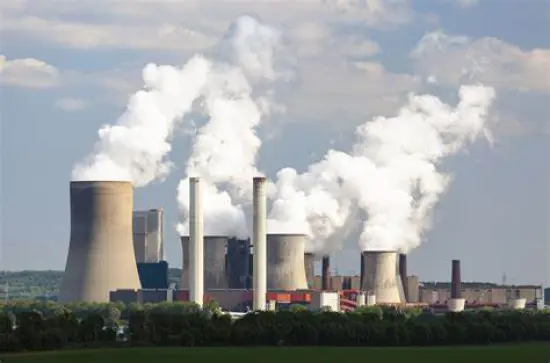
The environmental impact of running a blockchain is a measure of the actual, or estimated, electrical energy consumption of all the computers running the network. There are many factors that go into whether or not the net impact of these systems is negative. This goes back to the gas fee and the link of that being direct-payment for the energy-consumption of the verification (blockchain). These fees incentivizes that the systems' be used in the most efficient manor, much like interest paid on a loan incentivizes that money be used effectively.
It was estimated that the total energy consumption of all the blockchain networks currently uses the equivalent of 10 dedicated coal power plants.
Being a relatively new concept altogether means that the systems that are built are relatively new and widely untested. This being said the avenues that have adopted these systems have thrived and the funding currently going into Blockchain developments is vast but falls on each organization to adopt. To elaborate, in the case of Walmart the question of using blockchain isn't if but rather who will be first. Walmart is shifting the responsibility on its individual suppliers rather than trying to tackle the giant itself.
The User Interface is a vital role in most applications and has been developed since the beginning of programming. It can be thought of as a user-friendly projection of programs so one can use its functions without having to know the specific coding language. It is an integral aspect of how a product or idea is received by its users. There are many facets of user interfaces but an important adaptation for use in DeFi will be a unique approach to how data is analyzed from the blockchain and to whom the information can be accessed. Smart Contracts allow for these user restrictions to be built directly or indirectly into the contract.






